Sliding Sleeve Applications in Well Completion Types & Selection Guide
Published:
Sliding sleeves have evolved from simple open/close mechanisms into precision multi-zone flow control devices, and understanding their applications is now central to modern well completion design. This guide covers what a sliding sleeve does, the main types, real downhole applications, and how to select the right one — written for engineers trying to understand the basics and go a level deeper, not for a sales pitch.
Sliding sleeves have evolved from simple open/close mechanisms into precision multi-zone flow control devices, and understanding their applications is now central to modern well completion design. This guide covers what a sliding sleeve does, the main types, real downhole applications, and how to select the right one — written for engineers trying to understand the basics and go a level deeper, not for a sales pitch.
A sliding sleeve is a downhole flow control device, run as part of the production tubing, that opens or closes ports to establish or shut off communication between the tubing string and the casing annulus. Also called a sliding side door (SSD), it enables selective-zone production, stimulation, circulation, and well-kill operations in multi-zone completions.
Why Sliding Sleeves Matter in Flow Control
Flow control equipment is where a multi-zone completion either earns or loses its production potential. Interest in the category is rising sharply — flow control search demand has climbed several hundred percent year over year — as operators push more wells into multi-zone and selective-production designs.
Getting sleeve selection wrong carries operational cost: a sleeve that cannot be reliably shifted, or that fails to seal across a packer, forces intervention or leaves a zone stranded. For an engineer just trying to understand the basics, the starting point is simple — a sliding sleeve manages which zones talk to the tubing, and when.
What Is a Sliding Sleeve (SSD) and How Does It Work?
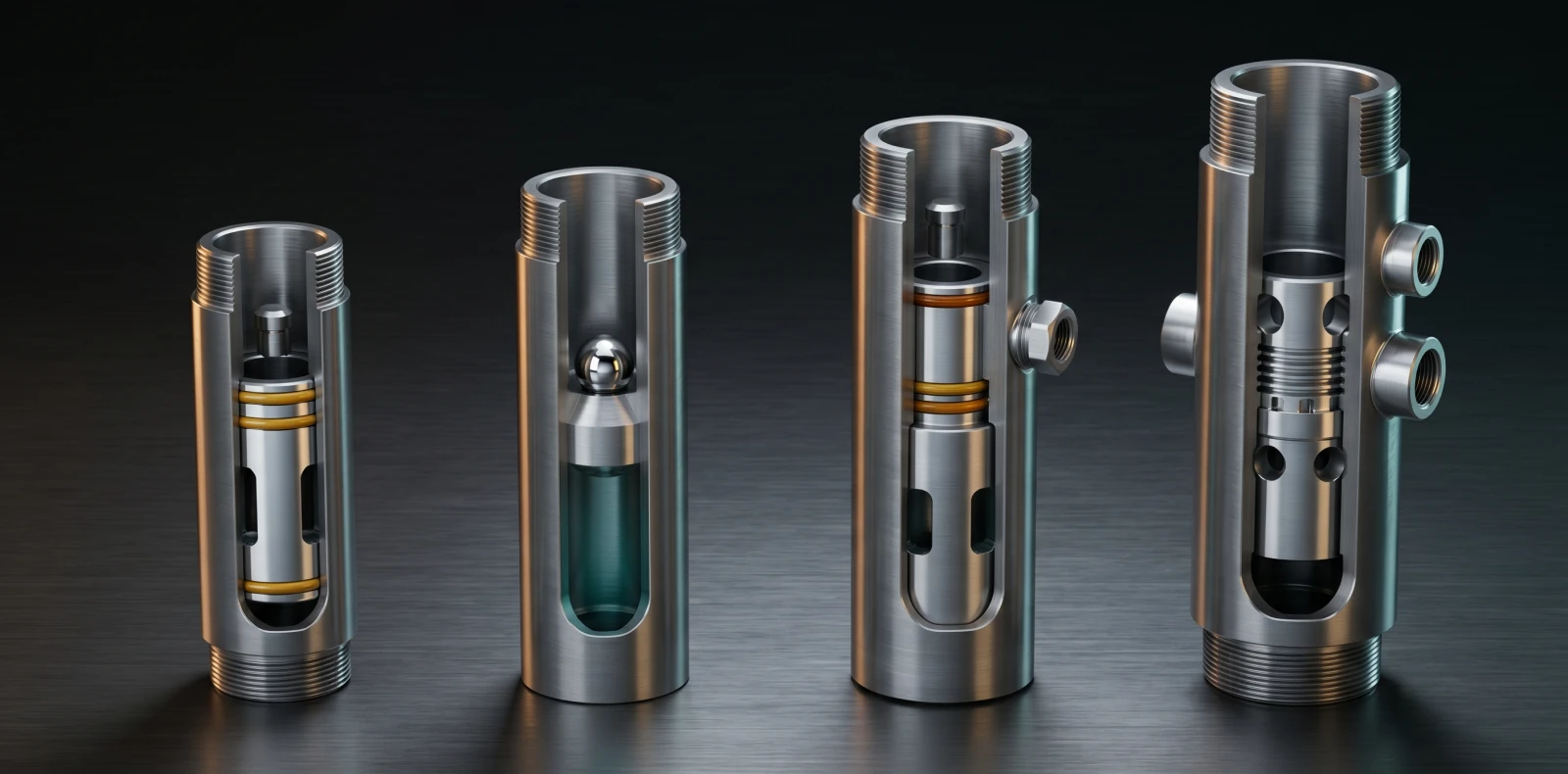
A sliding sleeve consists of an inner ported sleeve that shifts between open and closed positions inside an outer housing, with seal packings isolating flow when closed. A landing nipple profile in the upper body lets a wireline shifting tool engage and move the sleeve, opening or closing the communication ports on demand.
In plain terms a sliding sleeve is a valve built into the tubing string. When the inner sleeve is shifted open, ports line up and fluid can pass between tubing and annulus; when closed, the seal packings above and below the ports block flow, and equalizing slots balance tubing-annulus pressure as the sleeve moves.
The sleeve is typically shifted by an Otis-type “B” (Model B) shifting tool run on slickline or coiled tubing, in shift-down-to-open or shift-up-to-open configurations. The nipple profile inside the sleeve does double duty: it actuates the sleeve and also lands blanking plugs, pack-offs, and separation tools. SLB and other completion accessory references describe this tubing-annulus communication as the sleeve's core function.
Types of Sliding Sleeves
Sliding sleeves fall into two primary categories: open/close sleeves that shift fully between open and closed, and choking sleeves that are hydraulically actuated for incremental flow control. Actuation methods include wireline or coiled-tubing shifting tools, ball-drop seats for staged fracturing, and hydraulic control lines for intelligent, surface-operated multi-zone completions.
Mechanically actuated sleeves are simple and inexpensive, shifted by a lock run on wireline or coiled tubing. Hydraulically actuated sleeves are driven from a surface pump through control lines, can require shift forces exceeding 10,000 lb, and fail in the as-is position rather than fail-safe open or closed — so they usually retain a nipple profile for slickline or coiled-tubing backup.
Ball-drop sleeves open when a dropped ball lands on a seat, hydraulically isolating the lower zone; seats step smaller down-hole so some systems treat up to ten zones in sequence. Intelligent and ICV choking sleeves add multiple intermediate choke positions and non-elastomeric sealing, with pressure ratings reaching 7,500 to 15,000 PSI. The open/close versus choking split is documented in neutral references such as the sliding sleeve entry on Wikipedia.
| Type | Actuation | Best For | Pressure / Temp Note |
| Open/close — mechanical | Wireline / coiled-tubing shifting tool | Simple selective production or shut-off; low cost | Standard service ratings |
| Choking — hydraulic | Surface pump via control lines (>10,000 lb shift force) | Incremental flow regulation; intelligent completions | Fails as-is; backup nipple profile retained |
| Ball-drop / ball-actuated | Dropped ball lands on stepped seat | Staged multi-zone fracturing (up to ~10 zones) | Sequential seat sizes down-hole |
| Intelligent / ICV | Electro-hydraulic; multiple choke positions | Real-time multi-zone flow management | Non-elastomeric; 7,500–15,000 PSI; to ~375 deg F |
Sliding Sleeve Applications and How to Select One
Sliding sleeve applications include selective-zone production and shut-off, multi-stage hydraulic fracturing and acidizing, fluid displacement and well killing, gas lift, chemical injection for corrosion control, and pressure equalization across packers. In multi-zone wells, one sliding sleeve per producing zone lets operators manage water cut and pressure depletion without intervention.
A common multi-zone arrangement places one sliding sleeve per producing zone between isolating packers, then selectively opens or closes sleeves to balance water cut and pressure depletion as the field matures. A practical placement rule keeps at least 10 m (30 ft) between adjacent sleeves so a shifting tool cannot accidentally actuate the wrong one.
So what should you know before specifying this equipment? Selection comes down to matching the actuation method, the open/close-versus-choking choice, the pressure and temperature rating, and the metallurgy to the well's service — sweet versus sour or HPHT. Confirm nipple-profile compatibility and seal type, and decide whether the completion needs selective or non-selective control and intervention or intervention-less operation.
| Selection Criterion | What to Consider |
| Actuation method | Wireline / coiled tubing vs hydraulic control line vs ball-drop |
| Control type | Open/close (full) vs choking (incremental flow regulation) |
| Pressure / temperature rating | Matched to well conditions, including HPHT margins |
| Metallurgy | 4140 / 9Cr / 13Cr / S13Cr / Super Duplex for sweet vs sour service |
| Nipple profile & seal | Profile compatibility; elastomer vs non-elastomeric sealing |
| Selectivity & intervention | Selective vs non-selective; intervention vs intervention-less |
Need expert guidance on the right solution?
Talk to our engineers about your project requirements.
Maximus OIGA SpectraMax Flow Control
Maximus OIGA manufactures SpectraMax sliding sleeves, landing nipples, and circulating sleeves as part of an integrated flow control line, engineered to interface with its packer systems. API Q1 and ISO 14310 certified, the SpectraMax range supports complete-string supply from a single specialist with over 200 installations across India, the Middle East, and Southeast Asia.
The line includes the SpectraMax ML and MXA sliding sleeves alongside MX, MXN, MF, MR, and MORN landing nipple profiles, constructed from high-strength 4140 low-alloy steel with polished sealbores and selective or non-selective profiles. Because packers, sliding sleeves, circulating sleeves, and landing nipples come from one SpectraMax sliding sleeve range, the complete string is matched for compatibility from a single source.
Common Misconceptions
“A sliding sleeve and an SSD are different tools.” They are not — sliding side door is simply another name for a sliding sleeve, and the terms are used interchangeably across the industry.
“Hydraulic sleeves are fail-safe.” They fail in the as-is position, not open or closed, which is why a backup nipple profile for mechanical intervention is standard practice.
“All sliding sleeves use elastomer seals.” Non-elastomeric designs exist specifically for hostile and HPHT service. And the assumption that Indian manufacturers cannot meet API standards does not hold — Maximus OIGA is API Q1 and ISO 14310 certified.
Frequently Asked Questions
What is a sliding sleeve used for in well completion?
A sliding sleeve opens or closes ports to control communication between the tubing string and the casing annulus. That single function supports a wide range of operations: selective-zone production and shut-off, stimulation, circulation, well-kill, gas lift, and chemical injection. In multi-zone wells it is a central tool for managing water cut and pressure depletion, letting operators bring zones on or off line without pulling the completion.
What is an SSD (sliding side door) in oil and gas?
SSD stands for sliding side door, which is another name for a sliding sleeve installed in the production tubing string. It provides a controlled communication path between the tubing and the annulus. An SSD can be actuated by wireline shifting tools, coiled tubing, hydraulic control lines, or pressure and ball-drop methods, depending on the completion design and how often the sleeve needs to be operated.
What are the different types of sliding sleeves?
Sliding sleeves fall into two primary categories: open/close sleeves that shift fully between open and closed, and choking sleeves that are hydraulically actuated for incremental flow control. Actuation methods include wireline or coiled-tubing shifting tools, ball-drop seats for staged fracturing, and hydraulic control lines for intelligent, surface-operated multi-zone completions. Intelligent and ICV variants add multiple choke positions and non-elastomeric seals for hostile service.
How is a sliding sleeve opened and closed?
A shifting tool of the Otis or Model B type, run on slickline or coiled tubing, engages the nipple profile and moves the inner sleeve. Sleeves are built in shift-down-to-open or shift-up-to-open configurations, and equalizing ports balance pressure across the sleeve as it opens. Hydraulically actuated sleeves shift instead from a surface pump through control lines, while retaining a nipple profile so mechanical backup is always available.
How do I select the right sliding sleeve for my well?
Match the actuation method (wireline, hydraulic, or ball-drop), the open/close-versus-choking control type, the pressure and temperature rating, and the metallurgy to the well's service conditions. Confirm the nipple profile and seal type — elastomer or non-elastomeric — suit the environment. Maximus OIGA supplies sliding sleeves, landing nipples, and packers as a matched complete string, which removes the compatibility guesswork of mixing single-source components from different vendors.
Next Steps
Want to go deeper on the equipment itself? Explore the SpectraMax flow control line from Maximus OIGA, an API Q1 and ISO 14310 certified sliding sleeve manufacturer.
Related Blogs


More Information
Related News & Insights
Best bridge plug manufacturers in Asia
Thirteen bridge plug manufacturers in Asia — China, India and the UAE — compared on seven points, across drillable, retrievable, composite and dissolvable plug types.
October 20, 2026
Best downhole tool manufacturers in Asia
Fourteen downhole tool makers in Asia — China, India, Indonesia and the UAE — compared on seven points and on which of the six completion-tool families each one builds.
October 20, 2026
API 11D1 vs ISO 14310 - what a V0 rating actually certifies
What a V0 rating really means under API 11D1 and ISO 14310 — and ten checks that take a packer or bridge plug claim from the brochure line to the validation record behind it.
October 20, 2026
Indian downhole completion tool manufacturers compared: API status, plants, catalogue and lead times
Most Indian suppliers list packers, bridge plugs and liner hangers. The harder question is who actually makes the goods, where, and what documents arrive with the order. This comparison puts six Indian downhole tool manufacturers side by side on manufacture, plant location, catalogue breadth, published lead times and the documentation pack, using only what each company publishes about itself.
September 25, 2026
Zonal isolation systems
A bridge plug, a packer, a cement retainer, a straddle packer or a stage cementing collar can each be the right way to isolate an interval in a cased well. Which one depends on where the zone sits, how long the isolation must hold, and whether cement goes through the tool. This guide maps each isolation job to its tool class and its named SpectraMax models, then covers what to specify, how each tool sets and seals, and where each option stops working. It also sets out the records that ship with the order and the lead-time bands by product class, so you can plan the run before the quotation arrives.
September 25, 2026
Casing scrapers
A packer, bridge plug or cement retainer only grips and seals on a clean casing wall, and the scraper that cleans it has to fit your casing on the way down and at depth. This guide covers how a casing scraper cleans, the three main configurations, and how to size one to your casing OD and weight range, with worked ID and drift figures for 5-1/2 in, 7 in and 9-5/8 in casing. It then matches each configuration to its well condition, sets out where every option stops working, and lists the records that should ship with the order.
September 25, 2026

Gas anchors
Low fillage, fluid pound or a gas-locked rod pump usually points to the same tool below the pump: a gas anchor. Which configuration fits depends on whether the pump can sit below the perforations, how much liquid it displaces, and whether solids or deviation are in play. This guide works through the four configurations by well condition, then covers the sizing rule, the specifications a quotation has to fix, and where each option stops working. It also sets out the records that should ship with the part and the SpectraMax lead-time bands by product class.
September 25, 2026
Coiled tubing tools
"Coiled tubing tools" covers three different things: the surface spread, the intervention bottom-hole assembly, and the completion tools coiled tubing conveys and sets. Only the third group is manufactured completion equipment, and it is the group this page is about. It covers what conveyance changes about the tool itself, which of the three families (bridge plug, cement retainer, packer) suits which job, and the six inputs a supplier needs to quote one. It also sets out where each option stops, the records to ask any supplier for, and the lead-time bands by product class.
September 21, 2026
Saudi Aramco vendor registration for completion equipment suppliers
Saudi Aramco vendor registration is a prequalification on Aramco's e-Marketplace that ends in a Vendor ID, and being registered is not the same as being qualified. This guide walks the out-of-Kingdom route for a completion equipment manufacturer: how Aramco weighs financial strength, technical qualification and IKTVA local content, and which documents an international supplier actually files instead of the Saudi statutory set. It also sets out what a manufacturer can carry for your submission, what stays with you, and the records to ask any supplier for before a purchase order.
September 21, 2026
ONGC vendor registration for downhole tool suppliers: the actual sequence
Selling downhole tools to ONGC starts with a commercial gate, not the technical bid: you complete supplier self-registration on ONGC e-Procurement, get a bidder User-ID, then finish vendor enlistment before you can bid on a single tender. This guide walks the actual sequence, the documents an Indian or overseas applicant submits, how ONGC weighs a bid once local content is applied, and a realistic timeline. It is honest about what a manufacturer can and cannot do for your bid, and what to ask any supplier for in writing.
September 21, 2026