Swellable Packer Applications- Open Hole, HPHT & Water Shutoff Guide
Published:
When an operator needs to isolate an open hole section in a horizontal well without cementing, swellable packer applications offer the most direct route to a reliable annular seal. Across open hole zonal isolation, multistage fracturing, and water shutoff, the swellable packer has become the interventionless tool completion engineers reach for when running cement or mechanical packers is impractical or costly
When an operator needs to isolate an open hole section in a horizontal well without cementing, swellable packer applications offer the most direct route to a reliable annular seal. Across open hole zonal isolation, multistage fracturing, and water shutoff, the swellable packer has become the interventionless tool completion engineers reach for when running cement or mechanical packers is impractical or costly.
This guide is the technical reference engineers can trust for that decision: how swellable packers work, the three elastomer classes, the HPHT specifications that govern selection, and the use cases where they outperform the alternatives. It is written for evaluation, not as a brochure.
What Is a Swellable Packer and How It Works
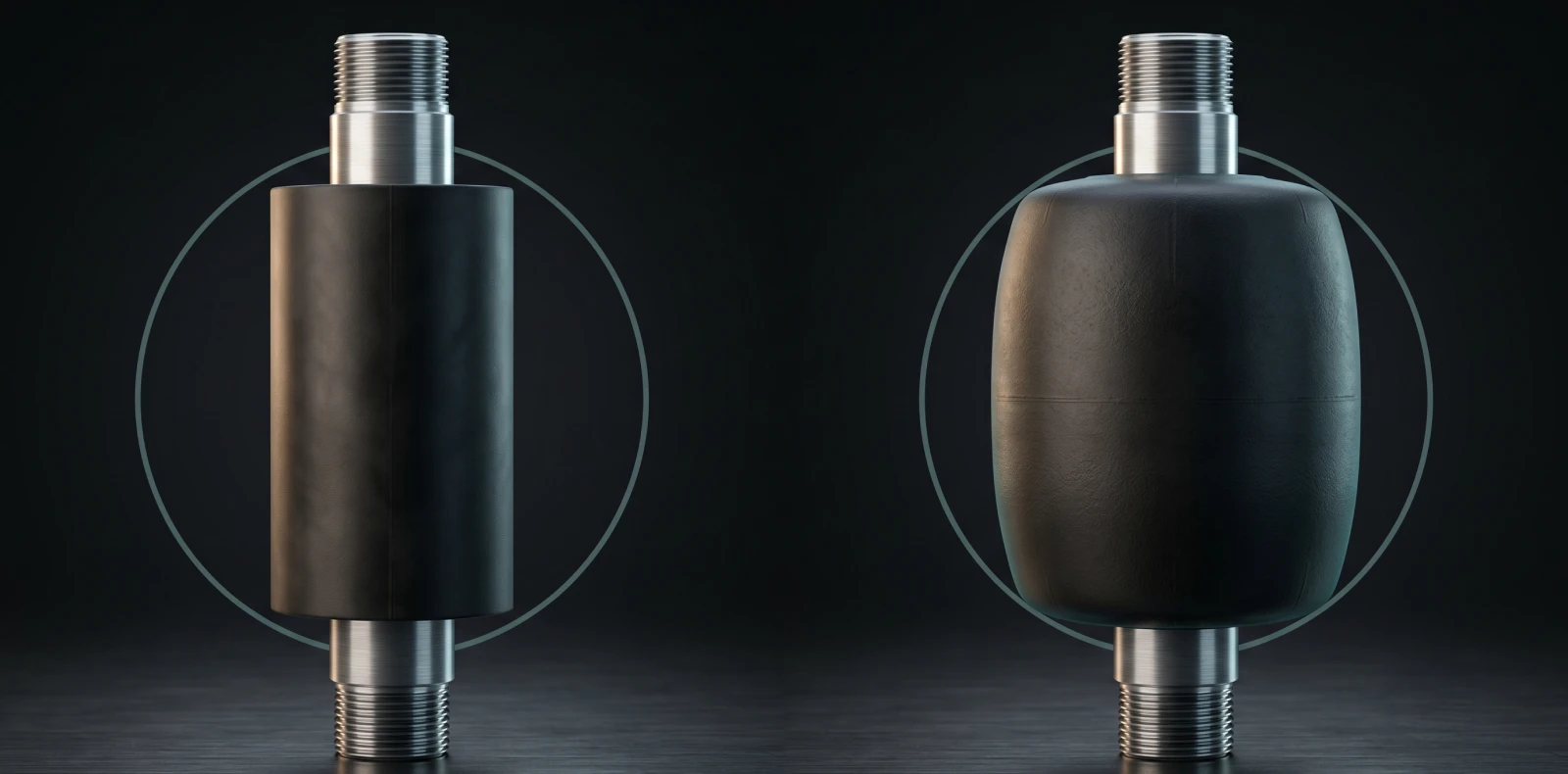
A swellable packer carries an elastomer element on a tubing or casing mandrel. The element absorbs a specific well fluid, oil or water, expands radially, develops contact pressure, and forms a long compliant annular seal. There are no mechanical parts and no specialist is required to operate it.
The element may be bonded to the mandrel, fully or partially, or wrapped and molded. The rubber is self-healing, so it adapts to formation shifts over the life of the well and maintains seal integrity where a rigid seal would fail. To prevent premature swelling while running in hole, the element can be protected by a temporary outer sheath or film that delays activation.
Types: Oil-Swell, Water-Swell, and Hybrid Elastomers
Swellable packer elements fall into three elastomer classes. Oil-swelling elastomers react with hydrocarbons; water-swelling elastomers react with water or brine; hybrid elastomers respond to both. Premium systems swell up to 200 percent of their original volume while retaining the self-healing flexibility that keeps the seal intact.
Selection is driven by the trigger fluid present in the well, whether oil-based mud, brine, or produced fluid. Hybrid compounds add flexibility where the fluid type is mixed or uncertain and work in freshwater, oil-based, and hybrid fluids with no loss of final swell volume. Choosing the elastomer that matches the well conditions is the single most consequential decision, because the wrong compound will not seal.
| Elastomer type | Trigger fluid | Typical use | Notes |
|---|---|---|---|
| Oil-swelling | Hydrocarbons / oil-based mud | Open hole isolation in oil zones | Reacts with produced or drilling oil |
| Water-swelling | Water / brine | Water-bearing or brine-completed wells | Reacts with formation or completion water |
| Hybrid | Both oil and water | Mixed or uncertain fluid systems | No loss of final swell volume across fluids |
| FFKM (high-temp) | Fluid + HPHT service | Ultra-HPHT above 450 deg F | Highest temperature and chemical resistance |
Specifications and Selection Criteria for HPHT Packer Applications
Swellable packer performance is rated by three parameters: differential pressure, temperature, and trigger fluid. For engineering evaluation, the specifications that matter are the pressure the seal can hold across a washed-out open hole, the temperature envelope the elastomer can survive, and the fluid that activates it. The differential pressure rating is set by the seal-element volume and length, so longer or additional elements raise the rating.
HPHT in this context means 15,000 to 20,000 psi and 350 to 450 deg F, while ultra-HPHT exceeds 20,000 psi and 450 deg F. High-temperature FFKM elastomers rate above 450 deg F and offer the best chemical resistance, and delayed-swell designs manage the fast swell rate that high temperature would otherwise cause. SPE and IPTC field data record oil-swell packers deployed in oil-based mud to roughly 36,000 ft total depth, holding more than 1,000 psi across open hole.
Swellable packers are validated under API 11D1 / ISO 14310, which defines packer validation V-grades from V0, the highest gas-tight grade tested with air or nitrogen, down to V6, with V3 a liquid test and a modified V3 used for HPHT permanent packers. API 11D1 carries dedicated HPHT annexes for HPHT equipment and operational tools, so a credible HPHT rating should cite the V-grade and test medium, not just a pressure number.
Applications and Use Cases: Open Hole, Water Shutoff, and Zonal Isolation
Open hole zonal isolation is the defining application. In a horizontal lateral, swellable packers compartmentalize the open hole so each interval can be fractured or produced independently, supporting multistage fracturing without a cemented liner. The same compartmentalization isolates water or gas zones, shutting off unwanted production without an intervention trip.
Beyond isolation, swellable packers serve as sand-screen annular barriers in sand control, as cement-assurance backup behind a primary cement job, and as the isolation element between inflow control devices that balance flow along a long lateral. Because the well fluid sets the seal, these applications need fewer trips than mechanical or cemented alternatives, which is the cost-and-risk advantage that put swellables into thousands of frac applications since the early 2000s.
Swellable packers are one element of a broader completion string, and selecting them alongside mechanical and hydraulic packers is a system decision. A specialist oilfield packer manufacturer can match the swellable element to the rest of the packer program rather than supplying it in isolation.
Need expert guidance on the right solution?
Talk to our engineers about your project requirements.
Why Maximus OIGA
Maximus OIGA is a well completion specialist - depth over breadth - rather than a broad multi-product generalist, and that focus carries into its swellable packer program. As a certified swellable packer manufacturer, it backs the SpectraMax branded line and PAK VI series with an in-house, ISO-certified test facility in Vadodara, Gujarat, and a pressure-testing-to-failure protocol
The track record is concrete: 200+ packer installations across India (ONGC, Oil India, Cairn, Vedanta, RIL), the US Permian basin, the Middle East, and Southeast Asia. Certifications - API Q1, ISO 14310 for packer systems, and ISO 9001 - are current and verifiable.
Full traceable documentation, including material test reports, inspection reports, and test certificates, ships with every order, which is the level of evidence completion engineers need when they specify a swellable element for HPHT or open hole service. Request technical specifications to match an elastomer grade to your well conditions.
Common Misconceptions
Myth: swellable packers set instantly. Reality: swelling is time-dependent, taking hours to weeks, and depends on temperature and fluid; designs deliberately delay the swell to allow safe running in hole.
Myth: one elastomer fits any well. Reality: oil, water, and hybrid compounds must match the trigger fluid present, and the wrong choice produces no seal at all.
Myth: swellables replace all isolation methods. Reality: they are often combined with cement or mechanical methods and are chosen specifically where interventionless open hole isolation is the goal, not as a universal substitute.
Frequently Asked Questions
What are swellable packers used for?
Swellable packers are used for open hole zonal isolation, multistage fracturing, water and gas shutoff, sand control, cement replacement or assurance, and inflow control device compartmentalization. They are preferred where interventionless isolation is needed without cement or mechanical setting, especially in long horizontal laterals where running tools and trips are costly. Maximus OIGA supplies swellable packers across these completion applications, matched to the well's fluid and pressure conditions.
How does a swellable packer work?
A swellable packer works by absorbing a specific well fluid into its elastomer element, which is bonded to a base pipe. The element swells radially and develops contact pressure to seal the annulus, with no mechanical or hydraulic setting sequence; the well fluid itself activates the seal over time. The rubber is self-healing, so it maintains the seal as the formation shifts over the life of the well.
What is the difference between oil-swell and water-swell packers?
The difference is the trigger fluid. Oil-swelling elastomers react with hydrocarbons, water-swelling elastomers react with water or brine, and hybrid elastomers respond to both. The choice is dictated by the fluid present in the well, because the wrong elastomer will not seal. Hybrid compounds add flexibility where the fluid type is mixed or uncertain, working across freshwater, oil-based, and hybrid fluids.
Can swellable packers be used in HPHT wells?
Yes, swellable packers can be used in HPHT wells when the elastomer grade and element design are matched to the HPHT envelope of 15,000 to 20,000 psi and 350 to 450 deg F, and validated under API 11D1 / ISO 14310. High-temperature FFKM elastomers rate above 450 deg F, and delayed-swell designs manage the fast swell rate at high temperature. Maximus OIGA's SpectraMax line and in-house testing target these harsh-well conditions.
Next Steps
Choosing the right swellable packer applications strategy comes down to matching the elastomer to the trigger fluid, sizing the element to the differential pressure, and verifying the HPHT rating against API 11D1 and ISO 14310. The next step is to specify those parameters against a certified manufacturer's range.
Match an elastomer grade and element length to your well conditions with a specialist that documents every test. request swellable packer specifications from Maximus OIGA to begin evaluation.
Related Blogs

More Information
Related News & Insights
Best bridge plug manufacturers in Asia
Thirteen bridge plug manufacturers in Asia — China, India and the UAE — compared on seven points, across drillable, retrievable, composite and dissolvable plug types.
October 20, 2026
Best downhole tool manufacturers in Asia
Fourteen downhole tool makers in Asia — China, India, Indonesia and the UAE — compared on seven points and on which of the six completion-tool families each one builds.
October 20, 2026
API 11D1 vs ISO 14310 - what a V0 rating actually certifies
What a V0 rating really means under API 11D1 and ISO 14310 — and ten checks that take a packer or bridge plug claim from the brochure line to the validation record behind it.
October 20, 2026
Indian downhole completion tool manufacturers compared: API status, plants, catalogue and lead times
Most Indian suppliers list packers, bridge plugs and liner hangers. The harder question is who actually makes the goods, where, and what documents arrive with the order. This comparison puts six Indian downhole tool manufacturers side by side on manufacture, plant location, catalogue breadth, published lead times and the documentation pack, using only what each company publishes about itself.
September 25, 2026
Zonal isolation systems
A bridge plug, a packer, a cement retainer, a straddle packer or a stage cementing collar can each be the right way to isolate an interval in a cased well. Which one depends on where the zone sits, how long the isolation must hold, and whether cement goes through the tool. This guide maps each isolation job to its tool class and its named SpectraMax models, then covers what to specify, how each tool sets and seals, and where each option stops working. It also sets out the records that ship with the order and the lead-time bands by product class, so you can plan the run before the quotation arrives.
September 25, 2026
Casing scrapers
A packer, bridge plug or cement retainer only grips and seals on a clean casing wall, and the scraper that cleans it has to fit your casing on the way down and at depth. This guide covers how a casing scraper cleans, the three main configurations, and how to size one to your casing OD and weight range, with worked ID and drift figures for 5-1/2 in, 7 in and 9-5/8 in casing. It then matches each configuration to its well condition, sets out where every option stops working, and lists the records that should ship with the order.
September 25, 2026

Gas anchors
Low fillage, fluid pound or a gas-locked rod pump usually points to the same tool below the pump: a gas anchor. Which configuration fits depends on whether the pump can sit below the perforations, how much liquid it displaces, and whether solids or deviation are in play. This guide works through the four configurations by well condition, then covers the sizing rule, the specifications a quotation has to fix, and where each option stops working. It also sets out the records that should ship with the part and the SpectraMax lead-time bands by product class.
September 25, 2026
Coiled tubing tools
"Coiled tubing tools" covers three different things: the surface spread, the intervention bottom-hole assembly, and the completion tools coiled tubing conveys and sets. Only the third group is manufactured completion equipment, and it is the group this page is about. It covers what conveyance changes about the tool itself, which of the three families (bridge plug, cement retainer, packer) suits which job, and the six inputs a supplier needs to quote one. It also sets out where each option stops, the records to ask any supplier for, and the lead-time bands by product class.
September 21, 2026
Saudi Aramco vendor registration for completion equipment suppliers
Saudi Aramco vendor registration is a prequalification on Aramco's e-Marketplace that ends in a Vendor ID, and being registered is not the same as being qualified. This guide walks the out-of-Kingdom route for a completion equipment manufacturer: how Aramco weighs financial strength, technical qualification and IKTVA local content, and which documents an international supplier actually files instead of the Saudi statutory set. It also sets out what a manufacturer can carry for your submission, what stays with you, and the records to ask any supplier for before a purchase order.
September 21, 2026
ONGC vendor registration for downhole tool suppliers: the actual sequence
Selling downhole tools to ONGC starts with a commercial gate, not the technical bid: you complete supplier self-registration on ONGC e-Procurement, get a bidder User-ID, then finish vendor enlistment before you can bid on a single tender. This guide walks the actual sequence, the documents an Indian or overseas applicant submits, how ONGC weighs a bid once local content is applied, and a realistic timeline. It is honest about what a manufacturer can and cannot do for your bid, and what to ask any supplier for in writing.
September 21, 2026