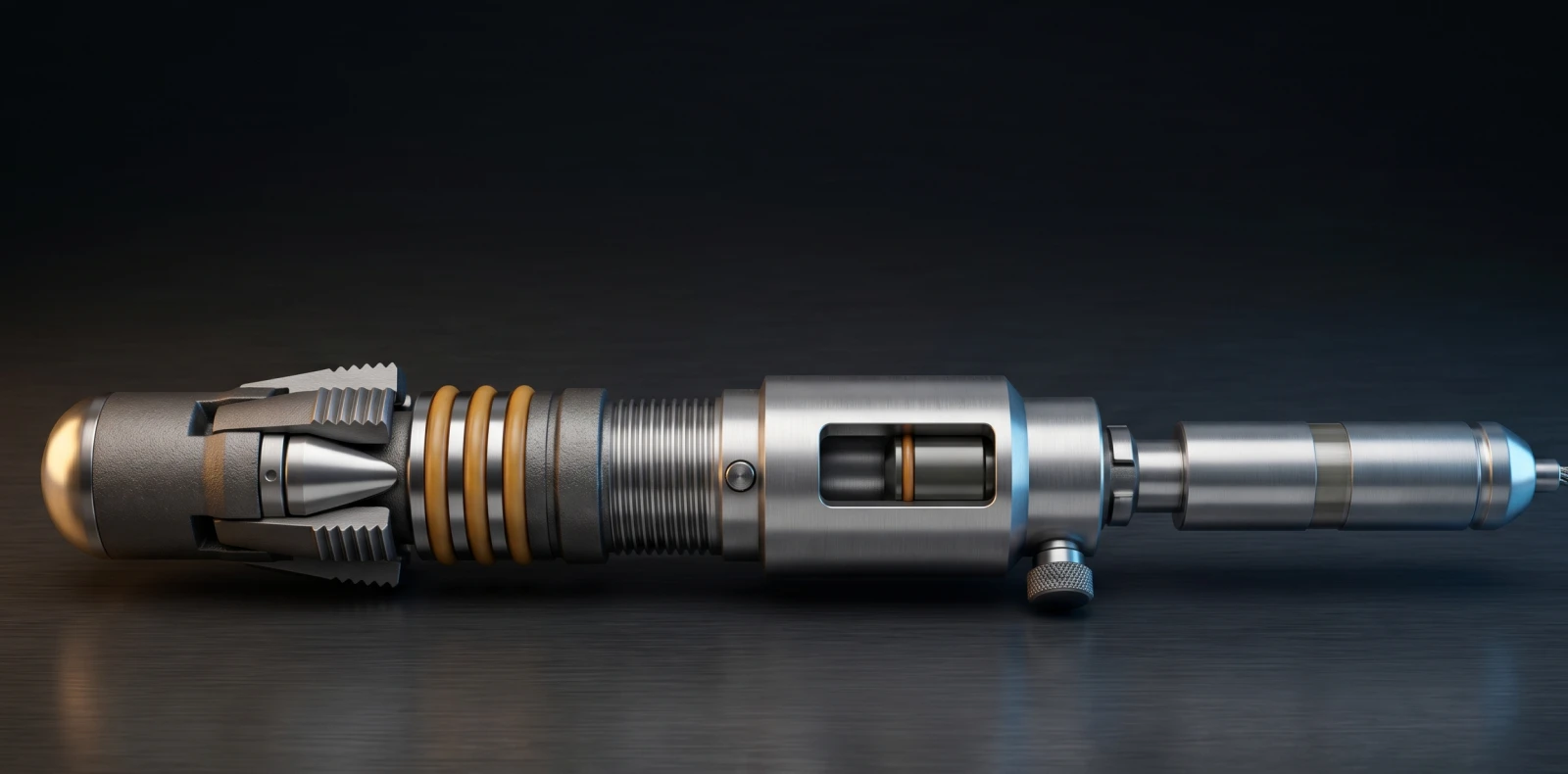
Bridge Plug Setting Procedure Step-by-Step Guide for Wireline Operations
Published:
How do you properly set a bridge plug using wireline? This step-by-step procedure covers tool string assembly, depth correlation, setting tool activation, and pressure testing for confirmed well isolation. It is written for field engineers who need the exact sequence right the first time, with 200+ Maximus OIGA installations across India, the Middle East, and Southeast Asia behind it
Overview: What the Bridge Plug Setting Procedure Achieves
How do you properly set a bridge plug using wireline? This step-by-step procedure covers tool string assembly, depth correlation, setting tool activation, and pressure testing for confirmed well isolation. It is written for field engineers who need the exact sequence right the first time, with 200+ Maximus OIGA installations across India, the Middle East, and Southeast Asia behind it.
A bridge plug is a downhole tool set to isolate the lower part of a wellbore, available in permanent and retrievable configurations. Wireline setting reduces rig time, risk, and cost compared with tubing-set methods, and the set plug holds pressure from both above and below.
A bridge plug setting procedure isolates a section of cased wellbore using a wireline-deployed mechanical plug. The plug is run on a pressure setting tool, positioned by casing collar locator, then set when the tool's gas charge expands the slips and packing element against the casing — sealing pressure from above and below for testing or abandonment.
What Tools and Equipment Do You Need Before Starting?
The bridge plug must fall within the setting tool's certified temperature and pressure limits before any run begins, and the well must meet defined surface conditions. Pre-job data required includes setting depth, casing size and weight, bottom-hole static temperature at depth, hole deviation, and pressure-test requirements, with the bit/scraper and gauge-ring run already completed.
Casing should have close to 100% cement bond before the plug is run, and the casing bore must be clean — no scale, mud, rust, or cuttings — at the set depth. The correct plug must be selected for the temperature, pressure, casing size, casing weight, and well environment, with the correct crossovers confirmed on location.
| Equipment / Requirement | Function |
| Bridge plug (cast iron or composite) | Mechanical isolation element — permanent or drill-through |
| Wireline pressure setting tool (WLPSA) | Gas-generating tool that develops hydraulic force to set the plug |
| Casing collar locator (CCL) | Correlates exact setting depth against a known log |
| Lubricator + wireline BOP/rams | Pressure containment and well control during the run |
| Stuffing box / pressure control head | Seals the moving cable; adds containment above the wellhead |
| Clean casing, ~100% cement bond | Bit/scraper and gauge-ring run completed; no scale, mud, or cuttings |
| E-line crew + field engineer | Plug confirmed within certified temperature/pressure limits |
Step 1: Tool String Assembly
Make up the bridge plug to the wireline pressure setting tool, snug-tight only. Install the lock spring or nut according to the setting tool make, and avoid any right-hand rotation at the tool during makeup and run-in.
Verify: the connection is snug, not over-torqued, and the lock device is correctly seated. What can go wrong: over-tightening cracks the slips and can cause premature setting before the plug reaches depth — snug-tight makeup is sufficient.
Step 2: Rig Up and Run-In Hole
Hoist the assembled plug into the lubricator, connect the lubricator to the wellhead, and purge it before running to depth. Guide the tool string through the lubricator, wellhead, and BOP as it is run in.
Verify: the lubricator is purged and pressure-tested before opening to the well. Safety note: the lubricator and wireline rams maintain well control throughout the run-in.
Step 3: Depth Correlation
Use the casing collar locator to correlate the exact setting depth against a known reference log. The final movement to depth must be upward to stretch the wireline and remove slack, fixing the plug at the planned depth before activation.
Accurate setting depth is established with a casing collar locator (CCL), correlating tool position against a known reference log. The final movement to depth must be upward to stretch the wireline and remove slack, ensuring the plug sets at the exact planned depth before the setting tool is activated.
Step 4: Set the Plug
Activate the WLPSA: electrical ignition of the power charge develops hydraulic force gradually. The slips drive into the casing wall, the packing element compresses, and the release stud shears to disconnect the tool.
A wireline pressure setting tool sets the bridge plug by igniting a gas-generating power charge that develops hydraulic force gradually. This force drives the slips into the casing wall and compresses the packing element, then shears a release stud to disconnect the tool — leaving the plug set and the wireline free to recover.
As a certified-limit reference, a Weatherford ISO Ultra Extreme bridge plug has been set at 14,800 ft, 338 deg F (170 deg C), and 15,000 PSI differential to ISO 14310 V0, while the Baker Hughes Model E-4 HP/HT setting tool is rated to 450 deg F (232 deg C) and 25,000 PSI.
Need expert guidance on the right solution?
Talk to our engineers about your project requirements.
Step 5: Release and Recover
Confirm the shear and disconnect, then bleed off tool pressure through the bleeder valve before recovering the wireline and setting tool. Verify: a clean disconnect at surface and stable wellhead pressure.
What can go wrong: failure to bleed off contained pressure before disassembly is a safety hazard — always release pressure through the bleeder valve first.
Step 6: Pressure-Test Verification
Apply pressure above the set plug and hold it for a defined period. No pressure decline confirms the seal holds its rated differential and zonal isolation is achieved.
Verify: a stable, non-bleeding reading over the hold period. A documented Weatherford HPHT case observed no pressure increase or decrease across the test, confirming a competent barrier before further operations proceeded.
Common Mistakes to Avoid
The most common bridge plug failure is premature (preset) setting, caused by over-tightening the plug onto the setting tool or failed setting-tool O-rings that let wellbore pressure stroke the tool early. Snug-tight makeup is sufficient; over-torque cracks the slips and compromises the seal before the plug reaches depth.
Resting the setting-tool weight on the plug after makeup also cracks the slips, and debris between a slip and the casing can crack slips and trigger a preset. Dirty casing — scale, mud, rust, or cuttings — creates an uneven surface and a leak path under pressure.
Setting force not matched to casing hardness and geometry leaves slips under-engaged and the seal shaky, while over-set damages internals. Right-hand rotation at the setting tool during run-in can back the plug off or prematurely actuate J-systems.
Safety Considerations
The lubricator and wireline rams maintain well control during the run, and those rams are pressure-tested annually by third parties under
well-servicing safety practice. The governing standard, API RP 54, covers occupational safety for well servicing, including wireline service unit placement, lubricators, and wireline operations.
The stuffing box seals the moving cable and the pressure control head adds containment above the wellhead. The WLPSA contains an explosive, gas-generating power charge, so it must be handled per the igniter safety procedure, and tool pressure must be bled off through the bleeder valve before disassembly.
Before the run, confirm the plug is within its certified temperature and pressure limits — a safety-critical check with no performance guarantees implied.
Frequently Asked Questions
How do you set a bridge plug on wireline?
The plug is made up snug-tight to a wireline pressure setting tool, then run into the lubricator and down to depth. A casing collar locator correlates the exact setting depth, with the last movement upward to remove wireline slack. The power charge then fires, developing gradual hydraulic force that sets the slips and packing element, after which the release stud shears and frees the wireline for recovery.
How do you verify a bridge plug is set correctly?
Successful bridge plug setting is confirmed by a pressure test against the set plug: pressure is applied above the plug and held for a defined period with no decline, verifying the seal holds the rated differential. A stable, non-bleeding pressure reading confirms zonal isolation before further operations proceed. For long-term verification, optional pressure/temperature monitoring below the plug can track barrier integrity over time.
What causes a bridge plug to fail or preset?
Over-tightening the plug onto the setting tool cracks the slips and causes premature setting. Failed or missing setting-tool O-rings let wellbore pressure stroke the tool early, producing a preset before the plug reaches depth. Debris between a slip and the casing, or dirty casing at the set depth, prevents a flush seal and creates a leak path under pressure.
What is the difference between a retrievable and a permanent bridge plug?
A retrievable bridge plug (RBP) is run and recovered on wireline or tubing for temporary isolation, equalizing pressure before release. A permanent bridge plug — cast iron or composite — is drilled through or milled out and provides a long-term seal for abandonment. Maximus OIGA supplies both material types, cast iron and composite, for either application.
What equipment is needed to set a bridge plug?
The core string is the bridge plug, a wireline pressure setting tool (WLPSA), and a casing collar locator. Well control and pressure containment require a lubricator, wireline BOP/rams, and a stuffing box. Before the run, a bit/scraper and gauge-ring run must be completed and the casing cleaned, with good cement bond confirmed.
Need Engineering Support With This Procedure?
Maximus OIGA manufactures cast iron and composite bridge plugs to API Q1 and ISO 14310, with 200+ installations on record. Need quality bridge plugs for reliable isolation? Request the Maximus OIGA bridge plug product range.
Related Blogs
More Information
Related News & Insights
Best bridge plug manufacturers in Asia
Thirteen bridge plug manufacturers in Asia — China, India and the UAE — compared on seven points, across drillable, retrievable, composite and dissolvable plug types.
October 20, 2026
Best downhole tool manufacturers in Asia
Fourteen downhole tool makers in Asia — China, India, Indonesia and the UAE — compared on seven points and on which of the six completion-tool families each one builds.
October 20, 2026
API 11D1 vs ISO 14310 - what a V0 rating actually certifies
What a V0 rating really means under API 11D1 and ISO 14310 — and ten checks that take a packer or bridge plug claim from the brochure line to the validation record behind it.
October 20, 2026
Indian downhole completion tool manufacturers compared: API status, plants, catalogue and lead times
Most Indian suppliers list packers, bridge plugs and liner hangers. The harder question is who actually makes the goods, where, and what documents arrive with the order. This comparison puts six Indian downhole tool manufacturers side by side on manufacture, plant location, catalogue breadth, published lead times and the documentation pack, using only what each company publishes about itself.
September 25, 2026
Zonal isolation systems
A bridge plug, a packer, a cement retainer, a straddle packer or a stage cementing collar can each be the right way to isolate an interval in a cased well. Which one depends on where the zone sits, how long the isolation must hold, and whether cement goes through the tool. This guide maps each isolation job to its tool class and its named SpectraMax models, then covers what to specify, how each tool sets and seals, and where each option stops working. It also sets out the records that ship with the order and the lead-time bands by product class, so you can plan the run before the quotation arrives.
September 25, 2026
Casing scrapers
A packer, bridge plug or cement retainer only grips and seals on a clean casing wall, and the scraper that cleans it has to fit your casing on the way down and at depth. This guide covers how a casing scraper cleans, the three main configurations, and how to size one to your casing OD and weight range, with worked ID and drift figures for 5-1/2 in, 7 in and 9-5/8 in casing. It then matches each configuration to its well condition, sets out where every option stops working, and lists the records that should ship with the order.
September 25, 2026
Gas anchors
Low fillage, fluid pound or a gas-locked rod pump usually points to the same tool below the pump: a gas anchor. Which configuration fits depends on whether the pump can sit below the perforations, how much liquid it displaces, and whether solids or deviation are in play. This guide works through the four configurations by well condition, then covers the sizing rule, the specifications a quotation has to fix, and where each option stops working. It also sets out the records that should ship with the part and the SpectraMax lead-time bands by product class.
September 25, 2026
Coiled tubing tools
"Coiled tubing tools" covers three different things: the surface spread, the intervention bottom-hole assembly, and the completion tools coiled tubing conveys and sets. Only the third group is manufactured completion equipment, and it is the group this page is about. It covers what conveyance changes about the tool itself, which of the three families (bridge plug, cement retainer, packer) suits which job, and the six inputs a supplier needs to quote one. It also sets out where each option stops, the records to ask any supplier for, and the lead-time bands by product class.
September 21, 2026
Saudi Aramco vendor registration for completion equipment suppliers
Saudi Aramco vendor registration is a prequalification on Aramco's e-Marketplace that ends in a Vendor ID, and being registered is not the same as being qualified. This guide walks the out-of-Kingdom route for a completion equipment manufacturer: how Aramco weighs financial strength, technical qualification and IKTVA local content, and which documents an international supplier actually files instead of the Saudi statutory set. It also sets out what a manufacturer can carry for your submission, what stays with you, and the records to ask any supplier for before a purchase order.
September 21, 2026
ONGC vendor registration for downhole tool suppliers: the actual sequence
Selling downhole tools to ONGC starts with a commercial gate, not the technical bid: you complete supplier self-registration on ONGC e-Procurement, get a bidder User-ID, then finish vendor enlistment before you can bid on a single tender. This guide walks the actual sequence, the documents an Indian or overseas applicant submits, how ONGC weighs a bid once local content is applied, and a realistic timeline. It is honest about what a manufacturer can and cannot do for your bid, and what to ask any supplier for in writing.
September 21, 2026