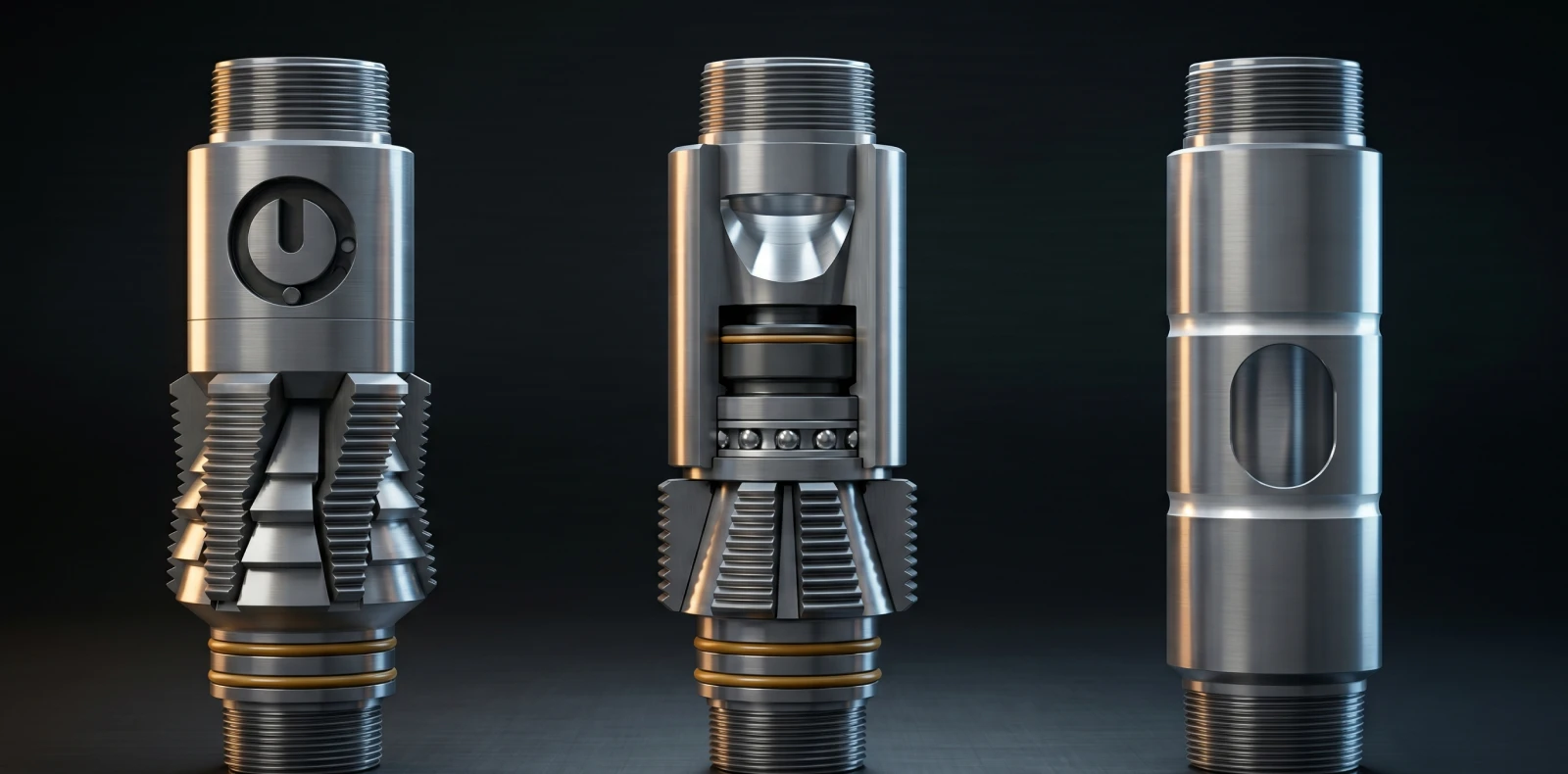
Liner Hanger Types & Selection: Complete Engineering Reference
Published:
What type of liner hanger does your well design require? The answer depends on setting depth, liner weight, and whether hydraulic or mechanical actuation suits the hole. For an engineer just trying to understand the basics, the liner hanger types break down into three categories — and knowing how they differ is the first step toward specifying the right one.
What type of liner hanger does your well design require? The answer depends on setting depth, liner weight, and whether hydraulic or mechanical actuation suits the hole. For an engineer just trying to understand the basics, the liner hanger types break down into three categories — and knowing how they differ is the first step toward specifying the right one.
Why Liner Hangers Matter
A liner is a casing string that does not extend to surface; instead, it hangs off the inside of the casing already in the well. The space between the top of the liner and the shoe of the host casing is the liner lap, and the liner hanger system is what holds the whole string in place.
Most wells drilled today include liners, and modern well designs factor them in from the planning stage. A deepwater or ultra-deepwater well may use five or six liners of various sizes rather than long, heavy casing strings that stress rig equipment and tubular budgets.
If you need to explain this to non-technical stakeholders, the value is straightforward: running a liner instead of a full casing string saves tubular cost, weight, and rig time. The flip side is that getting the selection wrong carries a remediation cost that far exceeds the price of the equipment itself — which is why the choice deserves engineering attention.
Conventional Types: Mechanical vs Hydraulic Liner Hangers
Conventional liner hangers set their slips against the host casing using one of two actuation methods. Mechanical-set hangers engage through pipe rotation or reciprocation, while hydraulic-set hangers actuate by drillpipe pressure on a setting ball, requiring no rotation. Both are governed by API Specification 19LH for liner hanger equipment.
A mechanical liner hanger sets its slips through physical pipe manipulation — rotation or reciprocation of the drillpipe drives the slips up the cones until they grip the host casing. This approach is well suited to simpler well configurations, and low-profile staggered-slip designs reduce the risk of deployment damage while maximizing bypass area. Mechanical sets are governed by API Specification 19LH, the standard for liner hanger equipment.
A hydraulic liner hanger actuates differently. A setting ball is dropped or circulated to a seat, and applied drillpipe pressure drives a piston that pushes the slips up the cones to set them. The key advantage is that no liner rotation is needed to set the slips — a decisive benefit where doglegs or poor hole geometry make rotation impractical.
Hydraulic designs are available with a single cone or with tandem cones, depending on the hanging capacity and bypass area required. Some include a tapered roller bearing assembly so the liner can rotate while cementing. A hybrid setting approach also exists, moving the hydraulic mechanism off the hanger body into the running tool, which raises the pressure rating toward mechanical levels and eliminates potential leak paths.
| Factor | Mechanical-Set | Hydraulic-Set |
| Setting method | Pipe rotation / reciprocation | Drillpipe pressure on a setting ball |
| Rotation needed to set | Yes | No |
| Best for | Simpler well geometry, many liner-to-casing size combinations | Deviated holes, doglegs, where rotation is impractical |
| Cementing rotation option | Design-dependent | Available via tapered roller bearing assembly |
| Governing standard | API 19LH | API 19LH |
Expandable Liner Hangers
Where conventional hangers grip with slips and cones, an expandable liner hanger relies on solid expansion to form a metal-to-metal seal and anchor in a single mechanism. Gulf of Mexico case histories credit the technology with materials cost savings, reduced installation time, improved reliability, and greater versatility compared with slip-and-cone systems.
The metal-to-metal liner top seal is the standout feature: it prevents gas migration and is less prone to swabbing off than all-elastomer seals during running and cementing. That makes expandables a strong fit for deepwater, extended-reach (ERD), HPHT, large-bore, and geothermal applications where seal integrity is paramount.
The constraint is geometric. Expandables depend on a narrower, more consistent host-casing inner-diameter range to create the interference fit, whereas conventional systems tolerate a broader diameter range. As one qualification reference, a 7-5/8 by 12-1/4 HPHT expandable hanger/packer was ISO 14310 V0 qualified at 15 ksi internal pressure under 1,000 kips tension at 375 deg F, with a low-temperature test to 21.75 ksi at 60 deg F.
How to Select a Liner Hanger — and Its Key Components
What should you know before specifying this equipment? Selection comes down to matching the hanger to the well, and understanding the assembly that does the work downhole.
Selecting a liner hanger depends on setting depth, hanging capacity, hole geometry, and pressure-temperature rating. A complete assembly typically includes the hanger body, slips and cones, a liner top packer for annular isolation, and a polished bore receptacle (PBR) that accommodates tubing movement and tie-back sealing.
The primary selection drivers are setting depth, liner weight and hanging capacity, hole geometry (deviation and doglegs), the pressure-temperature envelope, and whether rotation while cementing is required. Industry environmental envelopes run from moderate service around 10,000 psi and 300 deg F up to HP/HT systems at 15,000 psi and 450 deg F, with ultrahigh-temperature designs reaching 650 deg F.
Seal integrity matters as much as the set. The liner top packer seals the annulus at the liner top and maintains pressure integrity between the liner top and host casing — a V0 gas-tight rating under ISO 14310 is the benchmark engineers look for here.
A complete liner hanger assembly is more than the hanger itself. It includes the hanger body, slips (the expandable gripping elements), cones and ramps, the setting mechanism, a liner top packer for annular isolation, and a polished bore receptacle (PBR) — a precision-honed bore that accommodates tubular movement and provides a tie-back and tubing seal surface. A running tool deploys and sets the hanger, then releases.
- Setting depth and hanging capacity
- Hole geometry — deviation and doglegs
- Pressure-temperature envelope
- Rotation while cementing — required or not
- API 19LH validation grade and quality system (API Q1 / ISO 14310)
Need expert guidance on the right solution?
Talk to our engineers about your project requirements.
The Maximus OIGA Approach
Maximus OIGA is a well-completion specialist — depth over breadth, rather than a generalist catalog. As an API Q1 and ISO 14310 certified manufacturer based in Vadodara, Gujarat, the company has supported 200+ installations across India, the Middle East, and Southeast Asia. As a liner hanger manufacturer, Maximus OIGA offers both hydraulic and mechanical liner hanger configurations, giving engineers a flexible path to the right set for the well.
Every shipment carries material traceability and documentation, including mill test reports and inspection and test certificates. The reference above is written by people who actually manufacture this equipment — manufacturer authority, not a third-party summary.
Common Misconceptions
Myth: all liner hangers are basically the same. In reality, mechanical, hydraulic, and expandable types differ fundamentally in actuation, pressure integrity, and the hole geometry they suit — treating them as interchangeable is how isolation problems start.
Myth: expandable is always the better choice. Expandables need a narrow, consistent host-casing inner diameter and carry higher cost; conventional mechanical and hydraulic systems remain the right call across a broader diameter range and in simpler wells.
Myth: the liner hanger does the sealing. The hanger anchors and suspends the liner; annular sealing is the liner top packer's job — or, on expandables, the metal-to-metal seal. Myth: Indian manufacturers cannot meet API standards. API Q1 and ISO 14310 certification is independently auditable, and API 19LH validation grades are universal.
Frequently Asked Questions
What are the main types of liner hangers?
There are three primary types: mechanical-set, hydraulic-set (both conventional), and expandable. Mechanical hangers are set by pipe rotation or reciprocation, while hydraulic hangers are set by drillpipe pressure on a setting ball and need no rotation. Expandable hangers use solid expansion to create a metal-to-metal seal and anchor, suiting deepwater and HPHT wells. All three are governed by API 19LH, and Maximus OIGA offers both hydraulic and mechanical configurations.
What is the difference between mechanical and hydraulic liner hangers?
Mechanical hangers actuate the slips through physical pipe manipulation — rotation or reciprocation — which suits simpler well geometry. Hydraulic hangers use applied drillpipe pressure on a piston via a setting ball and need no liner rotation to set, making them valuable in deviated holes and doglegs. Hydraulic designs can include a roller bearing to allow rotation while cementing, and mechanical designs offer high reliability across many liner-to-casing size combinations. The choice depends on hole geometry, hanging capacity, and whether rotation is available.
What is a PBR in a liner hanger assembly?
PBR stands for Polished Bore Receptacle — a precision-honed internal bore in the liner-hanger or completion assembly. It accommodates tubular movement from thermal and pressure expansion and contraction, and provides a sealing surface for tie-back strings and tubing seals. It is often paired with the liner top packer to maintain annular pressure integrity, and it falls within the scope of API 19LH.
How do you select the right liner hanger for a well?
Match the hanger to setting depth, liner weight and hanging capacity, and hole geometry such as deviation and doglegs. Consider the pressure-temperature envelope and whether rotation while cementing is required. Expandables suit deepwater and HPHT wells with a consistent host-casing inner diameter, while conventional mechanical and hydraulic systems suit a broader inner-diameter range and simpler wells. Before specifying, verify the API 19LH validation grade and confirm the manufacturer's quality system, such as API Q1 or ISO 14310.
Next Steps
Once the liner hanger types are clear, the next step is matching a configuration to your well. Maximus OIGA manufactures both hydraulic and mechanical liner hangers and can supply the validation and documentation engineers need to specify with confidence. Explore the full liner hanger manufacturer range to take the next step.
Related Blogs
More Information
Related News & Insights
Best bridge plug manufacturers in Asia
Thirteen bridge plug manufacturers in Asia — China, India and the UAE — compared on seven points, across drillable, retrievable, composite and dissolvable plug types.
October 20, 2026
Best downhole tool manufacturers in Asia
Fourteen downhole tool makers in Asia — China, India, Indonesia and the UAE — compared on seven points and on which of the six completion-tool families each one builds.
October 20, 2026
API 11D1 vs ISO 14310 - what a V0 rating actually certifies
What a V0 rating really means under API 11D1 and ISO 14310 — and ten checks that take a packer or bridge plug claim from the brochure line to the validation record behind it.
October 20, 2026
Indian downhole completion tool manufacturers compared: API status, plants, catalogue and lead times
Most Indian suppliers list packers, bridge plugs and liner hangers. The harder question is who actually makes the goods, where, and what documents arrive with the order. This comparison puts six Indian downhole tool manufacturers side by side on manufacture, plant location, catalogue breadth, published lead times and the documentation pack, using only what each company publishes about itself.
September 25, 2026
Zonal isolation systems
A bridge plug, a packer, a cement retainer, a straddle packer or a stage cementing collar can each be the right way to isolate an interval in a cased well. Which one depends on where the zone sits, how long the isolation must hold, and whether cement goes through the tool. This guide maps each isolation job to its tool class and its named SpectraMax models, then covers what to specify, how each tool sets and seals, and where each option stops working. It also sets out the records that ship with the order and the lead-time bands by product class, so you can plan the run before the quotation arrives.
September 25, 2026
Casing scrapers
A packer, bridge plug or cement retainer only grips and seals on a clean casing wall, and the scraper that cleans it has to fit your casing on the way down and at depth. This guide covers how a casing scraper cleans, the three main configurations, and how to size one to your casing OD and weight range, with worked ID and drift figures for 5-1/2 in, 7 in and 9-5/8 in casing. It then matches each configuration to its well condition, sets out where every option stops working, and lists the records that should ship with the order.
September 25, 2026
Gas anchors
Low fillage, fluid pound or a gas-locked rod pump usually points to the same tool below the pump: a gas anchor. Which configuration fits depends on whether the pump can sit below the perforations, how much liquid it displaces, and whether solids or deviation are in play. This guide works through the four configurations by well condition, then covers the sizing rule, the specifications a quotation has to fix, and where each option stops working. It also sets out the records that should ship with the part and the SpectraMax lead-time bands by product class.
September 25, 2026
Coiled tubing tools
"Coiled tubing tools" covers three different things: the surface spread, the intervention bottom-hole assembly, and the completion tools coiled tubing conveys and sets. Only the third group is manufactured completion equipment, and it is the group this page is about. It covers what conveyance changes about the tool itself, which of the three families (bridge plug, cement retainer, packer) suits which job, and the six inputs a supplier needs to quote one. It also sets out where each option stops, the records to ask any supplier for, and the lead-time bands by product class.
September 21, 2026
Saudi Aramco vendor registration for completion equipment suppliers
Saudi Aramco vendor registration is a prequalification on Aramco's e-Marketplace that ends in a Vendor ID, and being registered is not the same as being qualified. This guide walks the out-of-Kingdom route for a completion equipment manufacturer: how Aramco weighs financial strength, technical qualification and IKTVA local content, and which documents an international supplier actually files instead of the Saudi statutory set. It also sets out what a manufacturer can carry for your submission, what stays with you, and the records to ask any supplier for before a purchase order.
September 21, 2026
ONGC vendor registration for downhole tool suppliers: the actual sequence
Selling downhole tools to ONGC starts with a commercial gate, not the technical bid: you complete supplier self-registration on ONGC e-Procurement, get a bidder User-ID, then finish vendor enlistment before you can bid on a single tender. This guide walks the actual sequence, the documents an Indian or overseas applicant submits, how ONGC weighs a bid once local content is applied, and a realistic timeline. It is honest about what a manufacturer can and cannot do for your bid, and what to ask any supplier for in writing.
September 21, 2026