Best completion tool manufacturers supplying Kuwait
Completion tool manufacturers supplying Kuwait face two gates: a place on the Kuwait Oil Company vendor list and KUCAS import checks on every shipment. This guide explains both gates and how to check any vendor's licence on the API Composite List. Maximus OIGA Private Limited ships its SpectraMax line from its Manjusar / Savli plant in Vadodara and has no office or agent in Kuwait. SpectraMax lead time bands run 1 to 4, 4 to 12, and 8 to 16 weeks or more by product class.
Buying completion tools for a well in Kuwait turns on two things that have nothing to do with the quotation. Kuwait Oil Company buys from an approved vendor list, so a supplier who is not on it cannot sell to you directly whatever price it puts forward. And every consignment of regulated goods needs its own conformity reports before customs will release it.
This page sets out how manufacturers supplying Kuwait reach the market, how to check any vendor's certification on a public register in a few minutes, and what vendor registration and import conformity ask of an overseas supplier.
How does buying completion tools into Kuwait work, and who supplies the market
Completion tool manufacturers supplying Kuwait sell export-to-order against a quotation, complete vendor registration with Kuwait Oil Company or KNPC to reach the operators, and clear import conformity under KUCAS with a Technical Evaluation Report and a Technical Inspection Report. A lead time band and a documentation pack come with the order, and certification status is checked on the API Composite List.
The Kuwait market is served mainly by local trading and oilfield-service companies, several of which run machine shops for repair and re-manufacture. Few completion-tool manufacturers operate from Kuwait itself, so the tools generally come from outside. Maximus OIGA Private Limited has no office or agent in Kuwait and supplies by export from its own plant, which makes registration the gate rather than a formality.
That makes the shortlist question a practical one: who serves this market, and what do you compare them on?
Who actually supplies the Kuwait completion tool market
The Kuwait completion tool supply market is served mostly by local trading and oilfield-service companies rather than by completion-tool manufacturers. Several of the local firms run machine shops that repair and re-dress oilfield equipment, which is a real capability and a different thing from new manufacture. Regional Gulf suppliers serve Kuwait from the UAE and further afield. The tools themselves are generally built by overseas manufacturers who export to order.
Kuwait Oil Company buys through an approved vendor list, so whichever layer you shortlist has to hold a registration position somewhere in the chain. These are the points worth comparing across all three.
| What to check | Kuwait trading and oilfield-service company | Regional Gulf supplier | Overseas manufacturer exporting to order |
|---|---|---|---|
| Where the tools are made | Bought in from manufacturers outside Kuwait. Ask who made the tool and where that plant is. | Mixed. Some manufacture, some supply or re-dress tools made elsewhere. | Its own plant abroad. Maximus OIGA Private Limited builds at Manjusar / Savli GIDC, Vadodara, India. |
| Repair and re-manufacture | Several local firms run machine shops for repair and re-dressing. Useful turnaround, but establish whether your item is new or reworked. | Often a core part of what they sell, alongside rental. | New manufacture only. The SpectraMax line covers eight families across the completion string. |
| API Composite List status | Usually none of its own. It resells, so the licence sits with the plant that made the tool. | Check each facility separately. A group entry is not a plant entry. | Check the plant address, not the group name. As at 07 Sept 2026 the list showed no active API Monogram licence for Maximus OIGA Private Limited. |
| Published lead times | Not published by any Kuwait supplier checked for this page. A stocked item may ship the same week. | Not published by any regional supplier checked for this page. | Maximus OIGA Private Limited publishes bands of 1 to 4, 4 to 12, and 8 to 16 weeks or more by product class. |
| KOC approved vendor status | Usually already registered and on the list. That position is much of what you are buying. | Varies. Ask for the current vendor record rather than accepting a claim. | Needs its own KOC overseas supplier registration, or it reaches the operator through a registered Kuwaiti vendor. |
| Presence in Kuwait | Registered Kuwaiti entity, local staff, a yard or workshop in country. | Usually a Gulf entity serving Kuwait from outside it. | No office or agent. Supplies by export to order. |
| Ask for first | The manufacturer's name, the plant that made the tool, and whether the item is new or reworked. | The same, plus the test records for anything re-dressed. | The lead time in writing, the documentation pack, the KUCAS route, and who clears customs. |
No row above declares a winner. On registration and turnaround the local layer is ahead, because being on the list and holding stock is most of the service. On a tool that has to be built to the well, the layer that can build it is the one that matters, wherever the plant sits.
Whichever layer supplies the completion tools, the licence sits with the plant that made them, and that is the first thing to check.
How do you verify a completion-tool manufacturer before you approve them
The API Composite List is the public register where you confirm whether a manufacturer holds a current API Monogram licence, and for which specification. It is published by the American Petroleum Institute, it updates in real time, and it is searchable by company name, certificate number, specification and status.
Verify every vendor the same way. In Kuwait that matters twice over, because the company selling you the tool is often not the company that made it, and being on a KOC vendor list says nothing about whether a licence exists.
- Search the company, then check the address on the entry. A licence belongs to the facility that made the tool, not to the group name above it. A supplier with several works may hold a licence at one of them and not the others.
- The status word is the answer, not the existence of an entry. Active means a valid licence is held. Applicant means an application is in and the audit is unfinished. Withdrawn means the licence or registration is no longer valid and the facility cannot use the marks.
- Match the specification on the entry to your tool class. Licences are granted specification by specification, so cover on one class says nothing about another.
- Ask for the licence number and match it to the entry yourself. A certification claim with no number behind it cannot be checked, which makes it useless in a procurement file.
- Write down the date. Status changes, and a dated record is what your file needs when the tender is audited.
Two things catch buyers out. Not every specification a vendor quotes sits inside the Monogram programme. API 19LH is one of them. It is not a Monogram specification, so no facility anywhere can hold a Monogram licence against it, and a claim to one fails before you check anything else.
API also runs a public fraud alerts page covering known counterfeit and unauthorised use of its marks. Read it on any vendor you have not bought from before.
With the register check done, the next question is time.
What lead times can you expect on completion tools into Kuwait
Completion-tool lead times into Kuwait fall into three published bands by product class: 1 to 4 weeks, 4 to 12 weeks, and 8 to 16 weeks or more. Maximus OIGA Private Limited publishes those bands for the SpectraMax line.
Which band applies comes down to how far the tool sits from something already made.
- 1 to 4 weeks covers a standard SpectraMax configuration in a common casing size and material.
- 4 to 12 weeks covers an engineered to order build that changes the size, the elastomer, the metallurgy or the setting method.
- 8 to 16 weeks or more covers anything needing new tooling, a long material lead time, or a wider test and documentation scope.
Two things sit outside the band. Sea freight is added to the manufacturing time rather than included in it, and KUCAS conformity has to be arranged for the consignment before customs will release it, which puts a second dependency on the schedule. Stock is a separate question: a Kuwait supplier holding the item beats any manufacturing band, and on a standard part that is often the right call.
Published lead times are rare here. Across the Kuwait suppliers and directories on the search results checked on 15 Sept 2026, and the wider manufacturer set checked on 07 Sept 2026, not one published a lead time. Use that when you compare quotes: a supplier who will not put a date in writing is asking you to carry the schedule risk.
What travels with the order, and what customs needs, comes next.
What documentation and import conformity ship with an order into Kuwait
The documentation and conformity pack for Kuwait has two halves. One half proves what the tool is: the material test report, the inspection and test plan, heat traceability, the test and inspection reports, the certificate of origin and the shipping documents. The other half gets the consignment released. KUCAS, the Kuwait Conformity Assurance Scheme, is run by the Public Authority for Industry to verify that regulated products meet Kuwait's technical regulations, and it is mandatory.
What each record proves:
- Material test report (MTR). The mill's record of chemistry and mechanical properties for the steel, which ties the finished tool to a heat of material.
- Inspection and test plan (ITP). What was inspected and tested, at which stage, against which standard, and who signed it off. The document an auditor opens first.
- Heat traceability. The link between the heat number on the MTR and the serial number stamped on the tool in front of you.
- Test and inspection reports. Results against the plan, including pressure testing where the tool class calls for it.
- Certificate of origin. Needed at customs and in local content reporting.
- Commercial and shipping documents. Invoice, packing list, and the bill of lading or air waybill.
The KUCAS side works per consignment, which is the part that catches first-time shippers. Every consignment of imported goods containing regulated products must carry a Technical Evaluation Report (TER) and a Technical Inspection Report (TIR) for customs clearance. The authorities also take random samples to verify compliance, so the documents and the goods have to agree. A consignment arriving without a valid TER and TIR sits at the port, and the cost of that falls on whoever agreed the incoterm.
Specify all of it on the purchase order rather than chasing it after shipment. A record produced later is a reconstruction, and on audit it is worth less than one issued at the time.
Where a vendor quotes a pressure or temperature rating, ask which standard it was validated against and ask to see the report behind it. A figure in a brochure and a figure on a validation report are different things, and only one of them belongs in a procurement file.
Documentation clears the consignment. Vendor registration is what lets you sell at all.
Need expert guidance on the right solution?
Talk to our engineers about your project requirements.
How do you register to supply Kuwait Oil Company and the KPC operators
Kuwait Oil Company (KOC) vendor registration is how a foreign manufacturer gets in front of the upstream operator at all. KOC runs an Overseas Suppliers Registration process and maintains an approved vendor list, and a supplier who is not on that list does not get invited to quote. Kuwait National Petroleum Company (KNPC) covers the refining side, and both sit under the parent Kuwait Petroleum Corporation (KPC).
Public-sector oil contracts run through the Central Agency for Public Tenders (CAPT), which is the route most sizeable purchases follow. Kuwait also applies a local content weighting, so where a supplier sits on local content affects how a tender is scored rather than only whether the bid is admissible.
For an overseas manufacturer that leaves two workable routes. It completes KOC's overseas supplier registration in its own right and joins the approved vendor list, or it reaches the operator through a Kuwaiti vendor who already holds the registration. Which route applies depends on the operator and the category, so put the question to the operator's contracts team before you build a bid around either one.
Ask any overseas manufacturer, including Maximus OIGA Private Limited, whether it holds a current KOC vendor record today. If the answer is that it supplies through a registered Kuwaiti vendor, ask who that vendor is, because their registration position becomes part of yours.
With registration mapped, what remains is how the tools physically arrive.
How does shipping completion tools into Kuwait work
Shipping completion tools into Kuwait runs by sea to one of the country's two principal commercial ports. Shuwaikh Port sits beside Kuwait City and handles most general cargo, and Shuaiba Port to the south serves the industrial belt. Air freight is the option when a well is waiting and the item is small enough to justify the cost.
Customs clearance runs against the documentation pack and the KUCAS reports together, on agreed incoterms. Neither half releases a consignment on its own, and the random sampling check means the paperwork has to match what is in the crate.
Four things are worth fixing at quotation stage rather than after the tools are built.
- The delivery location. A price to Shuwaikh Port is not a price to a yard in the north or to a wellsite.
- The incoterm. It sets who books the freight, who insures it, who clears customs, and the point at which risk passes to you.
- Whether duties, port charges and handling sit inside the quoted figure or outside it.
- Who is named as importer of record, and whose name the KUCAS reports are raised against.
The sailing from an Indian west coast port into the northern Gulf is short next to the manufacturing band. It is the conformity documents and the importer-of-record detail that usually hold up delivery, so settle both while the quotation is still open.
That leaves the question of what you can buy.
Which completion tool product families can you get for the Kuwait market
The SpectraMax completion-tool line covers eight product families across the completion string. They are packer systems, liner hangers, flow control equipment, float equipment, stage cementing tools, cast iron and composite bridge plugs, cement retainers, and the accessories that run alongside them. Maximus OIGA Private Limited lists more than forty named models across those families.
Each family is supplied two ways. A standard configuration comes from the existing range in a common casing size and material. An engineered to order build changes the size, the elastomer, the metallurgy or the setting method to suit the well. That second route is why a manufacturer answers requirements a stock list cannot, and it is why the lead time bands exist.
On ratings, keep the question narrow. The packer and bridge plug classes are governed by ISO 14310, which sets validation grades running from V6 up to V0, with V0 the most demanding gas-tight grade. A grade is earned by a specific tool that was tested to it. It does not attach to a product line, a catalogue or a company, and it does not carry across sizes.
So the question for every vendor on your shortlist is the same one: which grade was this particular tool validated to, and can you see the report? Compare the reports rather than the brochures. A liner hanger, a packer and a bridge plug are judged against different criteria, so the answer has to come tool by tool.
What does a manufacturer like this not have in Kuwait
Maximus OIGA Private Limited has no office, no local entity and no appointed agent in Kuwait. It supplies the market by export to order from its plant at Manjusar / Savli GIDC, Vadodara, India. In plain terms: no local office, no agent, and no stock held in the country.
A second limit matters more in Kuwait than the first. To supply Kuwait Oil Company directly, a manufacturer has to hold KOC vendor registration and sit on the approved vendor list. That registration is not a formality and it is not instant. An overseas supplier without it reaches the operator through a registered Kuwaiti vendor, and that arrangement should be named openly rather than left for a buyer to discover at award stage.
Four consequences follow for a buyer.
- No same-day stock. A Kuwait supplier holding the part will win on a standard item.
- No personnel at the well. The tools are supplied. Running them is the operator's or the service company's job.
- No local machine shop. Repair and re-dressing run through the local layer, not through the manufacturer.
- Registration, conformity and clearance follow the routes set out above rather than a local branch.
A page that skips those limits reads better and helps less. The first tender is where the gap shows up, and by then the well programme is already built around it.
Every claim above, including the unflattering ones, comes from a source you can open.
Frequently asked questions
How do I check if a completion tool is genuinely licensed to an API specification?
Search the API Composite List for the plant that made the tool rather than the company that sold it, then read the status. Active means a valid licence is held, Applicant means the audit is unfinished, and Withdrawn means it is no longer valid.
Confirm the specification on the entry matches your tool class, ask the vendor for the licence number, and match it to the entry yourself. Note the date. That sequence is also the practical defence against a counterfeit, because a counterfeit carries a mark but never a matching register entry.
Do I need KOC vendor registration to supply?
The supplier needs it rather than the buyer. Kuwait Oil Company maintains an approved vendor list and runs an Overseas Suppliers Registration process, KNPC covers the refining operators, and both sit under Kuwait Petroleum Corporation.
An overseas manufacturer either completes that registration itself or reaches the operator through a registered Kuwaiti vendor. Confirm which applies before the bid rather than after.
What KUCAS documents does a shipment need?
Every consignment of imported goods containing regulated products needs a Technical Evaluation Report (TER) and a Technical Inspection Report (TIR) for customs clearance, under the Kuwait Conformity Assurance Scheme run by the Public Authority for Industry.
The documents are raised per consignment rather than once per product, and the authorities take random samples to verify compliance. Budget time for both on the delivery schedule.
What lead times apply to completion tools supplying Kuwait?
Three bands by product class: 1 to 4 weeks, 4 to 12 weeks, and 8 to 16 weeks or more. Standard configurations sit at the short end, engineered to order builds in the middle, and anything needing new tooling or a wide test scope at the long end.
Sea freight and KUCAS conformity are both added on top of the band rather than included in it, so ask for all three figures.
Does Maximus OIGA Private Limited have an office in Kuwait?
No. It has no office, no local entity and no appointed agent in Kuwait, and it supplies the market by export to order from its plant at Manjusar / Savli GIDC, Vadodara, India.
To supply Kuwait Oil Company directly it would also need KOC vendor registration. Ask for the current position before you build a schedule around it.
Related Blogs

More Information
Related News & Insights
Coiled tubing tools
Coiled tubing tools fall into three groups, and this guide covers the completion tools coiled tubing sets: bridge plugs, cement retainers and packers. It explains how coiled tubing changes reach and setting force, how to choose between the three, and the six details a quote needs. Maximus OIGA Private Limited builds these SpectraMax tools to order at its Manjusar / Savli plant in Vadodara but does not supply the coiled tubing or run the job. SpectraMax lead time bands run 1 to 4, 4 to 12, and 8 to 16 weeks or more by product class.
September 21, 2026
ADNOC ICV certification: what a completion-tool supplier actually needs
No ADNOC ICV certificate means a 0% In-Country Value score at tender award. This guide explains how a MoIAT-approved body scores your audited accounts, what documents you need, and why you renew each year. It also shows why an overseas maker cannot hold the certificate for you, and what its paperwork can add. Maximus OIGA Private Limited builds the SpectraMax line to order at its Manjusar / Savli plant in Vadodara and ships each order with that paperwork.
September 21, 2026
Liner Hanger Manufacturers Supplying UAE Operators
Shortlisting liner hanger manufacturers supplying UAE operators starts with checks you can run yourself. This guide shows how to check a maker's licence on the API Composite List and how ADNOC ICV and vendor registration work. Maximus OIGA Private Limited ships SpectraMax liner hangers from its Manjusar / Savli plant in Vadodara and has no office or agent in the UAE. SpectraMax lead time bands run 1 to 4, 4 to 12, and 8 to 16 weeks or more by product class.
September 17, 2026
Best oilfield equipment manufacturers supplying Qatar
Oilfield equipment manufacturers supplying Qatar face three gates: QatarEnergy registration, a Tawteen ICV score, and import checks for regulated goods. This guide explains each gate and how to check any vendor's licence on the API Composite List. Maximus OIGA Private Limited ships its SpectraMax line from its Manjusar / Savli plant in Vadodara and has no office or agent in Qatar. SpectraMax lead time bands run 1 to 4, 4 to 12, and 8 to 16 weeks or more by product class.
September 17, 2026
Best downhole tool manufacturers supplying Saudi Arabia
Downhole tool manufacturers supplying Saudi Arabia face three gates: Aramco registration, IKTVA local content, and SABER import checks. This guide explains each gate and how to check any vendor's licence on the API Composite List. Maximus OIGA Private Limited ships its SpectraMax line from its Manjusar / Savli plant in Vadodara and has no office or agent in the Kingdom. SpectraMax lead time bands run 1 to 4, 4 to 12, and 8 to 16 weeks or more by product class.
September 17, 2026
Best oil well tool manufacturers supplying Oman
Shortlisting oil well tool manufacturers supplying Oman starts with checks you can run yourself. This guide shows how to read a vendor's licence status on the API Composite List, what export paperwork to ask for, and how JSRS vendor registration works. Maximus OIGA Private Limited ships its SpectraMax line from its Manjusar / Savli GIDC plant in Vadodara and has no office or agent in Oman. SpectraMax lead time bands run 1 to 4, 4 to 12, and 8 to 16 weeks or more by product class.
September 17, 2026
ISO 14310 & API 11D1 Validation Grades: V6 to V0 Explained
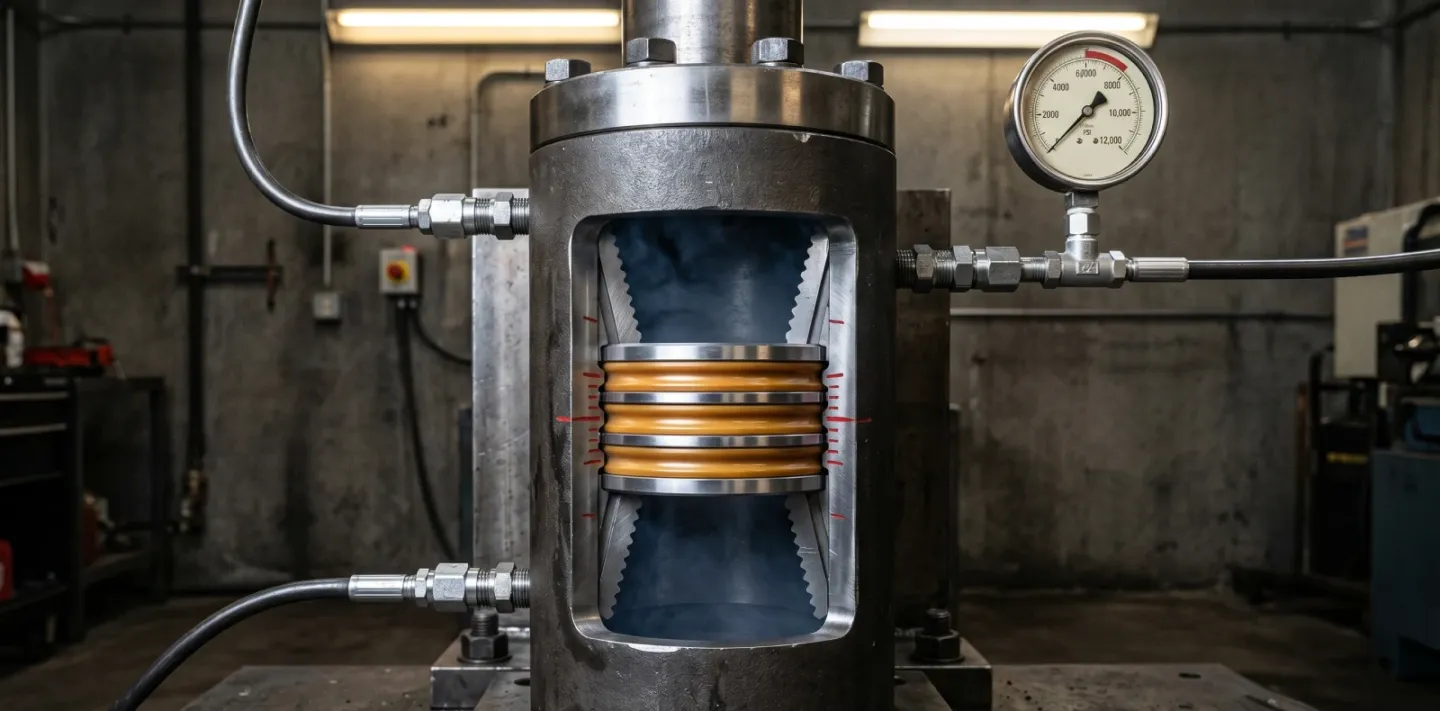
Many engineers assume a higher V-number means a tougher packer. It is the opposite. Under ISO 14310 packer validation grades, the scale runs from V6, the minimum, down to V0, the most demanding gas-tight grade — so a lower number means more severe testing, not less. For anyone just trying to understand the basics, that inversion is where most confusion starts.
June 8, 2026
Intelligent Well Completion: Systems, Components and Equipment
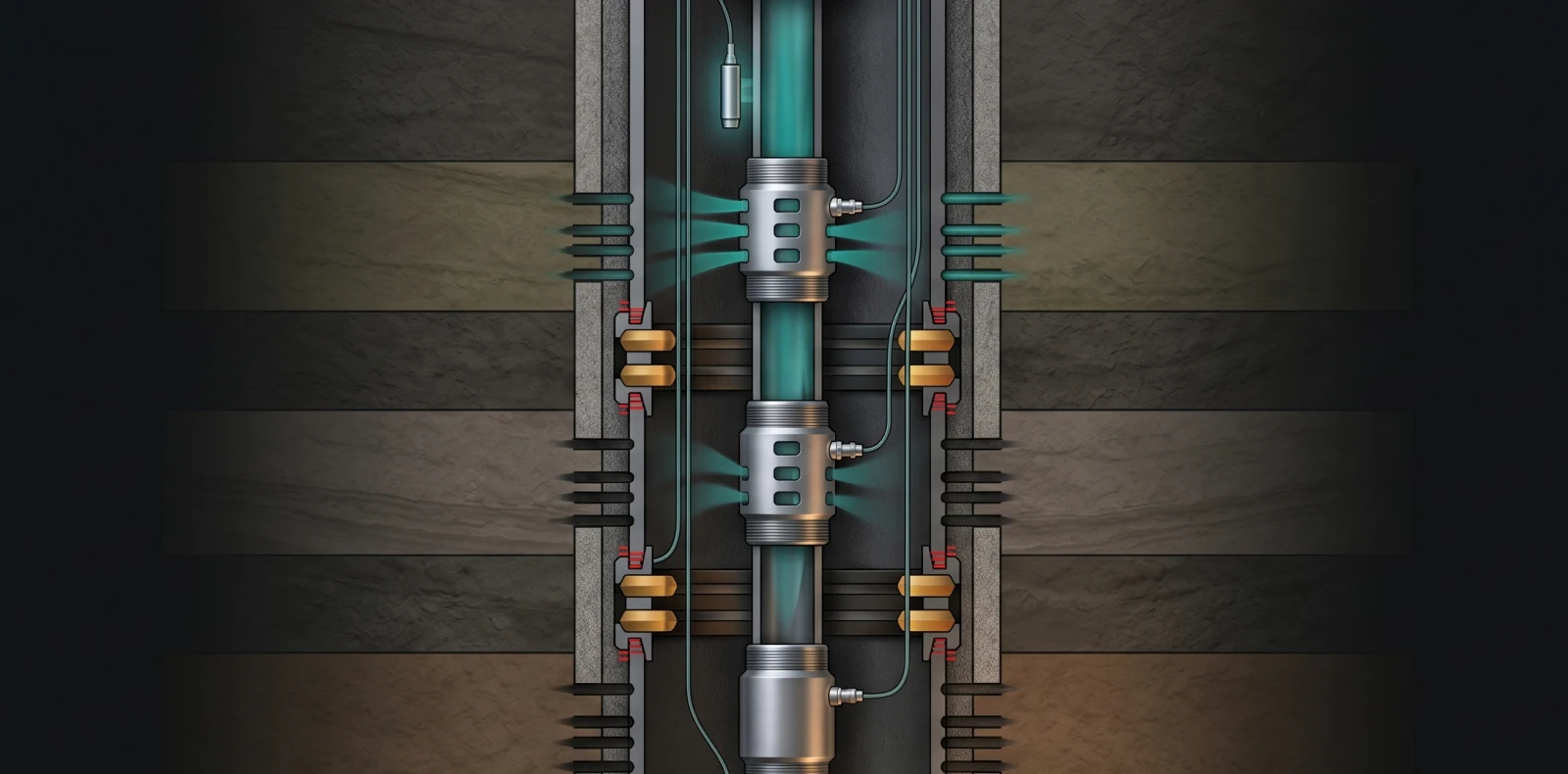
Imagine adjusting flow from each zone of a multi-zone reservoir in real time, from surface, without ever sending a rig downhole. That is the promise of intelligent well completion, and for an engineer just trying to understand the basics, the concept is more concrete than the marketing suggests once you see how the pieces connect.
June 8, 2026
Oil & Gas Equipment Companies in India: Manufacturer Directory 2026
Navigating India's oilfield equipment landscape is challenging without a comprehensive directory, and procurement teams asking "who are the best manufacturers for this?" often lose weeks to vendor research. This directory profiles the key oil and gas equipment companies in India with verified capabilities, so you can build a qualified shortlist faster.
June 8, 2026
Liner Hanger Types & Selection: Complete Engineering Reference
What type of liner hanger does your well design require? The answer depends on setting depth, liner weight, and whether hydraulic or mechanical actuation suits the hole. For an engineer just trying to understand the basics, the liner hanger types break down into three categories — and knowing how they differ is the first step toward specifying the right one.
June 6, 2026