Thermal Packer Specifications: Temperature Ratings, Materials & Selection Criteria
hermal packer specifications determine well isolation performance in high-temperature environments including SAGD, geothermal, and steam injection operations.
With 200+ thermal packer installations across SAGD and geothermal wells, Maximus OIGA has documented the critical thermal packer specifications that separate reliable well isolation from premature seal failure. This guide consolidates temperature ratings across major manufacturers, elastomer material performance tiers, API 11D1 V0 testing requirements, and selection criteria into one technical reference. It is the resource completion engineers need when no sales brochure provides the full picture.
Standard production packers use general-purpose NBR elastomers rated 250–300°F (121–149°C). Thermal packers replace these with specialized compounds (HNBR, FKM, FFKM) paired with metallic anti-extrusion backup rings to maintain seal integrity at 350°F and above. The difference is not incremental; it is the difference between a packer that holds and one that fails within weeks of steam injection.
Why Thermal Packer Specifications Matter Now
Thermal packer demand has surged +200% over the past three months with +40% year-over-year growth, driven by expanding SAGD operations and accelerating geothermal energy development. SAGD wells operate at approximately 500°F (260°C). Geothermal wells commonly exceed 400°F (204°C) with corrosive fluid chemistry that compounds thermal stress on downhole equipment.
The DOE GeoVision Report estimates that the geothermal sector will require 500 to several thousand packers annually as new projects come online. Packer failures at the FORGE 58-32 injection well in Utah, including elastomer degradation and slip damage, demonstrated that equipment rated for oil and gas thermal service does not automatically qualify for geothermal duty. Understanding thermal packer temperature ratings and material limits before specifying equipment prevents costly intervention and recompletion.
Thermal Packer Types and Temperature Ratings
Thermal packers are classified by setting mechanism (mechanical, hydraulic, swellable) and temperature capability. Standard thermal packers operate at 350–450°F using specialized elastomers with wire mesh anti-extrusion backup. Advanced designs from manufacturers like D&L Oil Tools and NOV extend ratings to 600–650°F for extreme geothermal applications.
The following table compares thermal packer specifications across major manufacturers, organized by maximum temperature rating. These ratings represent manufacturer-stated maximums under controlled test conditions; field performance depends on well-specific factors including differential pressure, fluid chemistry, and thermal cycling frequency.
| Manufacturer | Model | Max Temp | Setting | Key Feature |
| Ballycatter | MJS Thermal | 680°F (360°C) | Mechanical | 2,800 PSI at 680°F, double-grip |
| Steelhaus | TBL Thermal Liner | 650°F (343°C) | Mechanical | Metal-only seal, no elastomers, 21 MPa |
| D&L Oil Tools | IE Thermal | 650°F (343°C) | Mechanical | Double-grip retrievable, 450°F standard |
| NOV | Flash Point | 600°F (315°C) | Hydraulic | Drains work string, rotating liner compatible |
| SLB | LHP 650 | 650°F | Hydraulic | High torque/axial load liner hanger |
| Maximus OIGA | SpectraMax Set | 400°F (204°C) | Mechanical | 7" casing, L80/4140/13Cr, Aflas/Viton |
| TAM International | FREECAP GT | SAGD-rated | Swellable | GFR/FFR configs, geothermal/SAGD |
Emerging packer concepts push thermal limits further. The DAMORPHE design, documented in 750°F packer design for EGS (OTC-31895) (external), targets 750°F (400°C) at 15,000 PSI using gel insulation and nano-metallic skin. This elastomer-energized approach challenges the assumption that metal-to-metal seals are the only path above 600°F.
Maximus OIGA manufactures the SpectraMax Set Thermal Packer rated to 400°F for standard SAGD service, with metallurgy options in L80, 4140, and 13Cr. For detailed product specifications and configuration options, see the thermal packer manufacturer (→LP-03) product page.
High-Temperature Packer Elastomer Materials
High-temperature packer elastomer selection follows a tiered approach: HNBR compounds serve applications to approximately 350°F, FKM (Viton) extends capability to 400°F, and FFKM (Kalrez) enables operation to 450°F and beyond. Research published in Polymer Testing confirms that Aflas and Kalrez maintain sealing properties at elevated temperatures where standard NBR compounds degrade rapidly.
Elastomer compound selection is the single most consequential specification decision in thermal packer engineering. The compound determines maximum operating temperature, chemical resistance, and long-term seal retention under thermal cycling. Engineers evaluating specifications for engineering evaluation should reference the following material performance tiers.
| Compound | Type | Max Temp | Application | Limitation |
| NBR | Nitrile | 250–300°F | Standard production packers | Unsuitable for thermal service |
| HNBR | Hydrogenated Nitrile | ~350°F | Moderate thermal wells | Degrades sharply above 150°C; brittle |
| FKM (Viton) | Fluoroelastomer | ~400°F | SAGD, steam injection | Excellent chemical resistance |
| FFKM (Kalrez) | Perfluoroelastomer | ~450°F+ | Extreme thermal, geothermal | Premium cost |
| Aflas (FEPM) | Tetrafluoroethylene | ~400°F+ | Thermal packers (SpectraMax) | Maintains mechanical properties at elevated temp |
| EPDM | Ethylene Propylene | Geothermal range | Geothermal wells | Lower elongation than standard rubber |
HNBR aging behavior is well documented: above 150°C (302°F), mechanical properties degrade sharply, with chain scission dominating at 175°C (347°F) and compound becoming brittle. This degradation pattern is why thermal packers operating above 350°F transition to FKM or FFKM compounds despite the higher material cost.
Wire mesh backup rings prevent elastomer extrusion under differential pressure at elevated temperatures. Additive manufactured backup rings using an overlapping flower petal design provide greater containment than conventional foldback rings. Peer-reviewed data on elastomer mechanical response at high temp (external) confirms Aflas and Kalrez retain sealing function where NBR compounds fail.
API 11D1 V0 Packer Testing and Certification
API 11D1 and ISO 14310 establish six standard design validation grades (V6 through V1) plus a special V0 grade for gas-tight applications. V0 testing requires zero gas bubbles during pressure hold at maximum rated temperature and pressure, using nitrogen as the test medium, with mandatory temperature cycling and pressure reversals.
Thermal cycling packer performance under standardized testing determines whether a packer is qualified for SAGD, geothermal, or steam injection service. API Spec 11D1 and ISO 14310 provide the framework for packer selection, manufacture, and design verification.
| Grade | Test Rigor | Test Medium | Application |
| V6 | Minimum validation | Liquid | Low-risk, shallow wells |
| V5–V2 | Progressive increase in cycles, pressure, temperature | Liquid | Standard to HPHT production |
| V1 | Highest standard grade | Liquid | High-performance production |
| V0 | Zero gas bubbles at max rated temp/pressure; temp cycling + pressure reversals + both-direction testing | Gas (nitrogen/air) | SAGD, geothermal, gas-tight critical |
Quality control grades range from Q3 (minimum inspection) to Q1 (highest verification). For detailed grade descriptions and test protocol requirements, refer to API 11D1 packer testing standards (external) on PetroWiki.
Ultra-HPHT V0 qualification has been demonstrated at 470°F and 20,000 PSI in documented SPE and OTC papers. HPHT is defined as 15,000–20,000 PSI and 350–450°F. Ultra-HPHT exceeds 20,000 PSI and 450°F. Baker Hughes offers a complete V0-rated well barrier portfolio validated to ANSI/API 11D1 ISO 14310 V0.
Current API 11D1 testing requires only a 15-minute hold and 1 cycle, a protocol that underestimates real-world geothermal conditions. The University of Oklahoma/FORGE test setup subjects packers to 660°F (349°C), 10,000 PSI differential pressure, and 6 weeks of continuous operation with multiple thermal cycles. This gap between standard qualification and field reality is driving the next revision of packer testing protocols.
Need expert guidance on the right solution?
Talk to our engineers about your project requirements.
Maximus OIGA: Thermal Packer Engineering and Manufacturing
Maximus OIGA manufactures the SpectraMax Thermal Packer series at its Vadodara, Gujarat facility with dedicated machining, elastomer processing, and full material traceability. The SpectraMax is rated to 400°F+ and has been deployed in 200+ installations across India, the Middle East, and Southeast Asia.
The SpectraMax thermal packer uses thermoplastic wire braided Aflas/Viton elastomer elements with anti-extrusion backup, available in 7-inch casing configurations with L80, 4140, and 13Cr metallurgy options. Development involved 18 months of dedicated R&D, with design verification under ISO 14310 and quality management under API Q1 and ISO 9001.
Maximus OIGA operates a purpose-built in-house test facility capable of testing at up to 500°F and 15,000 PSI, exceeding the rated envelope of current SpectraMax products. This test
Maximus OIGA operates a purpose-built in-house test facility capable of testing at up to 500°F and 15,000 PSI, exceeding the rated envelope of current SpectraMax products. This test capability enables qualification testing, thermal cycling validation, and custom configuration verification without third-party dependency.
Explore the full SpectraMax thermal packer range for detailed product configurations and specification sheets.
Common Misconceptions in Thermal Packer Selection
Thermal packer selection criteria are frequently distorted by assumptions that do not hold above 350°F. Three misconceptions cause the most specification errors.
All Thermal Packers Perform the Same Above 350°F
Elastomer compound selection creates performance differences measured in hundreds of degrees. HNBR degrades sharply above 150°C (302°F), becoming brittle through chain scission, while FFKM maintains seal integrity to 230°C+ (450°F+). Specifying a “thermal packer” without verifying the elastomer compound is specifying by label, not by engineering data.
Metal Packers Are Always Better for High Temperature
Metal-to-metal packers eliminate elastomer degradation but do not seal reliably against corroded or irregular casing. Elastomer-energized designs with thermal insulation, such as the DAMORPHE concept at 750°F, demonstrate that metal-only is not the only viable path for extreme thermal service. The question engineers should ask is which type fits their well conditions, not which material category is universally “better.”
Indian Manufacturers Cannot Match API Standards
Maximus OIGA holds API Q1 quality management certification, ISO 14310 design verification, and ISO 9001 quality system certification. The company operates a purpose-built test facility that exceeds current product ratings. Certification is binary: a manufacturer either holds it or does not.
Frequently Asked Questions: Thermal Packer Specifications
What is a thermal packer and how does it differ from a standard packer?
A thermal packer is a well isolation tool engineered for sustained operation at 350°F+ in SAGD, CSS, geothermal, and steam injection wells. Standard packers use general-purpose NBR elastomers rated 250–300°F that degrade under sustained thermal load. Thermal packers replace NBR with specialized compounds (HNBR, FKM, or FFKM) paired with metallic anti-extrusion backup rings that prevent seal extrusion under differential pressure at elevated temperatures. The SpectraMax series from Maximus OIGA operates at 350–450°F+ with V0 gas-tight certification, engineered specifically for thermal cycling resistance.
What temperature can thermal packers handle?
Thermal packer temperature ratings range from 350°F (177°C) to 680°F (360°C) depending on design and elastomer compound. Standard thermal packers with HNBR/FKM/FFKM elastomers cover the 350–450°F range. Advanced designs push higher: NOV Flash Point at 600°F (315°C), Steelhaus TBL at 650°F (343°C) using a metal-only seal with no elastomers, and Ballycatter MJS at 680°F (360°C). The SpectraMax from Maximus OIGA is rated to 400°F, the standard SAGD threshold. Emerging concepts such as DAMORPHE target 750°F (400°C) using gel insulation and nano-metallic skin.
What does API 11D1 V0 rating mean for packers?
V0 is the highest design validation grade under API 11D1/ISO 14310. It requires zero gas bubbles during pressure hold at the packer’s maximum rated temperature and pressure, using gas (nitrogen or air) as the test medium rather than liquid. This gas-medium requirement makes V0 substantially more stringent than V1 through V6 grades. V0 testing mandates temperature cycling, pressure reversals, and both-direction pressure testing. V0 certification is critical for SAGD and geothermal applications where gas migration must be completely eliminated.
How does thermal cycling affect packer performance?
Thermal cycling, meaning repeated heating and cooling such as 400°F to 90°F and back in SAGD huff-and-puff operations, causes elastomer fatigue, dimensional change, and progressive seal degradation. Current API 11D1 standards require only a 15-minute hold and 1 cycle, which does not replicate geothermal or SAGD field conditions. Advanced qualification testing at the University of Oklahoma/FORGE facility subjects packers to 660°F, 10,000 PSI differential, and 6 weeks of continuous operation with multiple thermal cycles. The SpectraMax thermal packer is designed for thermal cycling resistance using wire braided Aflas/Viton elements with anti-extrusion backup.
Are thermal packers suitable for geothermal wells?
Thermal packers are suitable for geothermal wells with caveats. Geothermal temperatures commonly exceed 400°F (204°C) with corrosive fluid chemistry. Standard elastomeric thermal packers serve geothermal applications to approximately 450°F; beyond that threshold, metal expandable or insulated designs are required. Packer failures at the FORGE 58-32 injection well in Utah demonstrated the need for geothermal-specific qualification beyond standard oil and gas testing. The SpectraMax is positioned for geothermal service at 400°F, suitable for lower-temperature geothermal applications and SAGD-to-geothermal crossover projects.
Related Blogs
More Information
Related News & Insights
Coiled tubing tools
Coiled tubing tools fall into three groups, and this guide covers the completion tools coiled tubing sets: bridge plugs, cement retainers and packers. It explains how coiled tubing changes reach and setting force, how to choose between the three, and the six details a quote needs. Maximus OIGA Private Limited builds these SpectraMax tools to order at its Manjusar / Savli plant in Vadodara but does not supply the coiled tubing or run the job. SpectraMax lead time bands run 1 to 4, 4 to 12, and 8 to 16 weeks or more by product class.
September 21, 2026
ADNOC ICV certification: what a completion-tool supplier actually needs
No ADNOC ICV certificate means a 0% In-Country Value score at tender award. This guide explains how a MoIAT-approved body scores your audited accounts, what documents you need, and why you renew each year. It also shows why an overseas maker cannot hold the certificate for you, and what its paperwork can add. Maximus OIGA Private Limited builds the SpectraMax line to order at its Manjusar / Savli plant in Vadodara and ships each order with that paperwork.
September 21, 2026
Best oil well tool manufacturers supplying Oman
Shortlisting oil well tool manufacturers supplying Oman starts with checks you can run yourself. This guide shows how to read a vendor's licence status on the API Composite List, what export paperwork to ask for, and how JSRS vendor registration works. Maximus OIGA Private Limited ships its SpectraMax line from its Manjusar / Savli GIDC plant in Vadodara and has no office or agent in Oman. SpectraMax lead time bands run 1 to 4, 4 to 12, and 8 to 16 weeks or more by product class.
September 17, 2026
ISO 14310 & API 11D1 Validation Grades: V6 to V0 Explained
Many engineers assume a higher V-number means a tougher packer. It is the opposite. Under ISO 14310 packer validation grades, the scale runs from V6, the minimum, down to V0, the most demanding gas-tight grade — so a lower number means more severe testing, not less. For anyone just trying to understand the basics, that inversion is where most confusion starts.
June 8, 2026
Intelligent Well Completion: Systems, Components and Equipment
Imagine adjusting flow from each zone of a multi-zone reservoir in real time, from surface, without ever sending a rig downhole. That is the promise of intelligent well completion, and for an engineer just trying to understand the basics, the concept is more concrete than the marketing suggests once you see how the pieces connect.
June 8, 2026
Oil & Gas Equipment Companies in India: Manufacturer Directory 2026
Navigating India's oilfield equipment landscape is challenging without a comprehensive directory, and procurement teams asking "who are the best manufacturers for this?" often lose weeks to vendor research. This directory profiles the key oil and gas equipment companies in India with verified capabilities, so you can build a qualified shortlist faster.
June 8, 2026
Liner Hanger Types & Selection: Complete Engineering Reference
What type of liner hanger does your well design require? The answer depends on setting depth, liner weight, and whether hydraulic or mechanical actuation suits the hole. For an engineer just trying to understand the basics, the liner hanger types break down into three categories — and knowing how they differ is the first step toward specifying the right one.
June 6, 2026
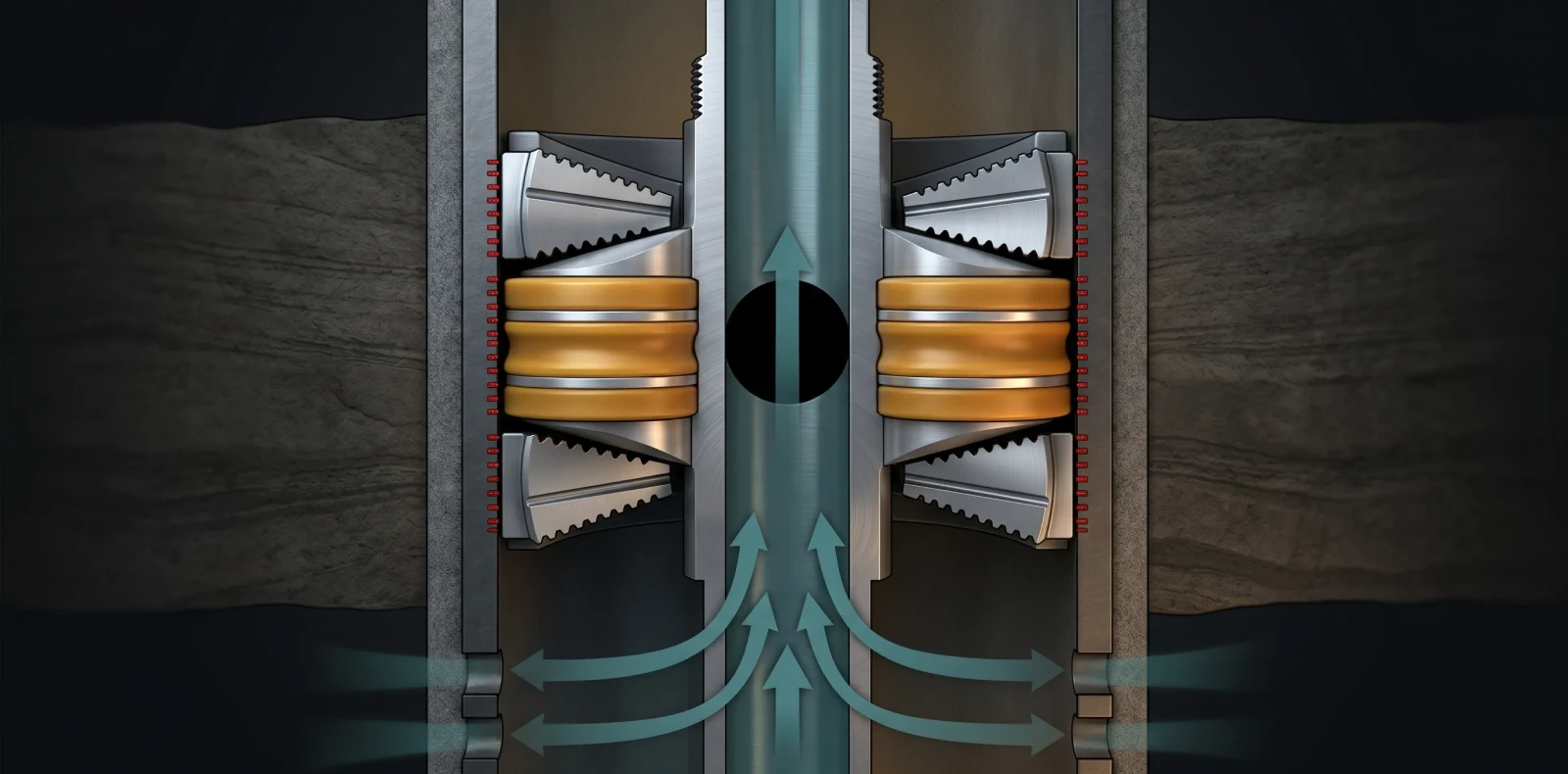
Packer in Well Completion- Functions & How to Select the Right One
Packers are installed in nearly every cased-hole completion worldwide, yet the packer in well completion remains one of the most consequential pieces of downhole hardware to understand. For anyone just trying to understand the basics, the packer is the component that makes controlled production possible by sealing the space between the tubing and the casing.
June 6, 2026
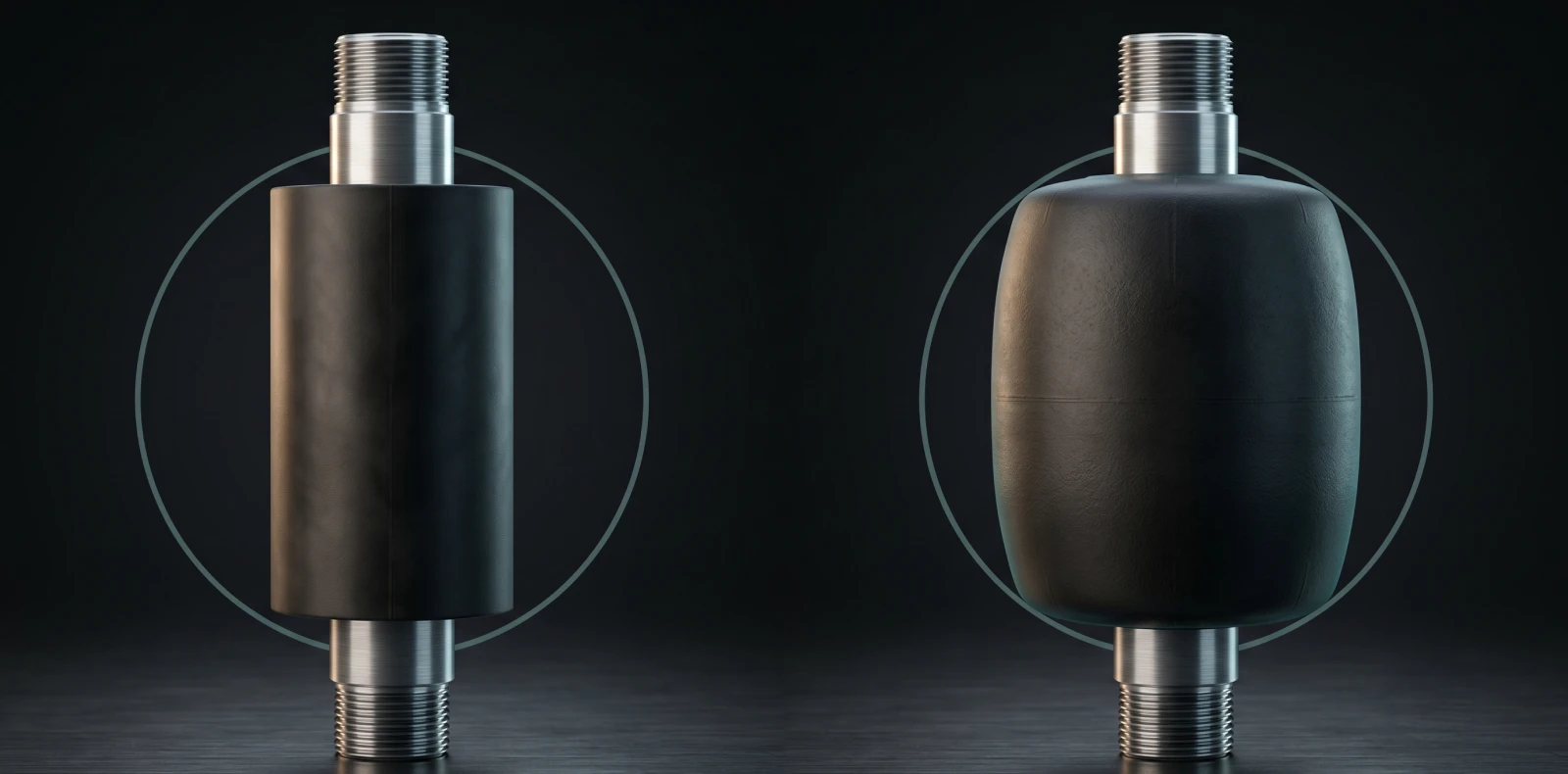
Swellable Packer Applications- Open Hole, HPHT & Water Shutoff Guide
When an operator needs to isolate an open hole section in a horizontal well without cementing, swellable packer applications offer the most direct route to a reliable annular seal. Across open hole zonal isolation, multistage fracturing, and water shutoff, the swellable packer has become the interventionless tool completion engineers reach for when running cement or mechanical packers is impractical or costly
June 6, 2026
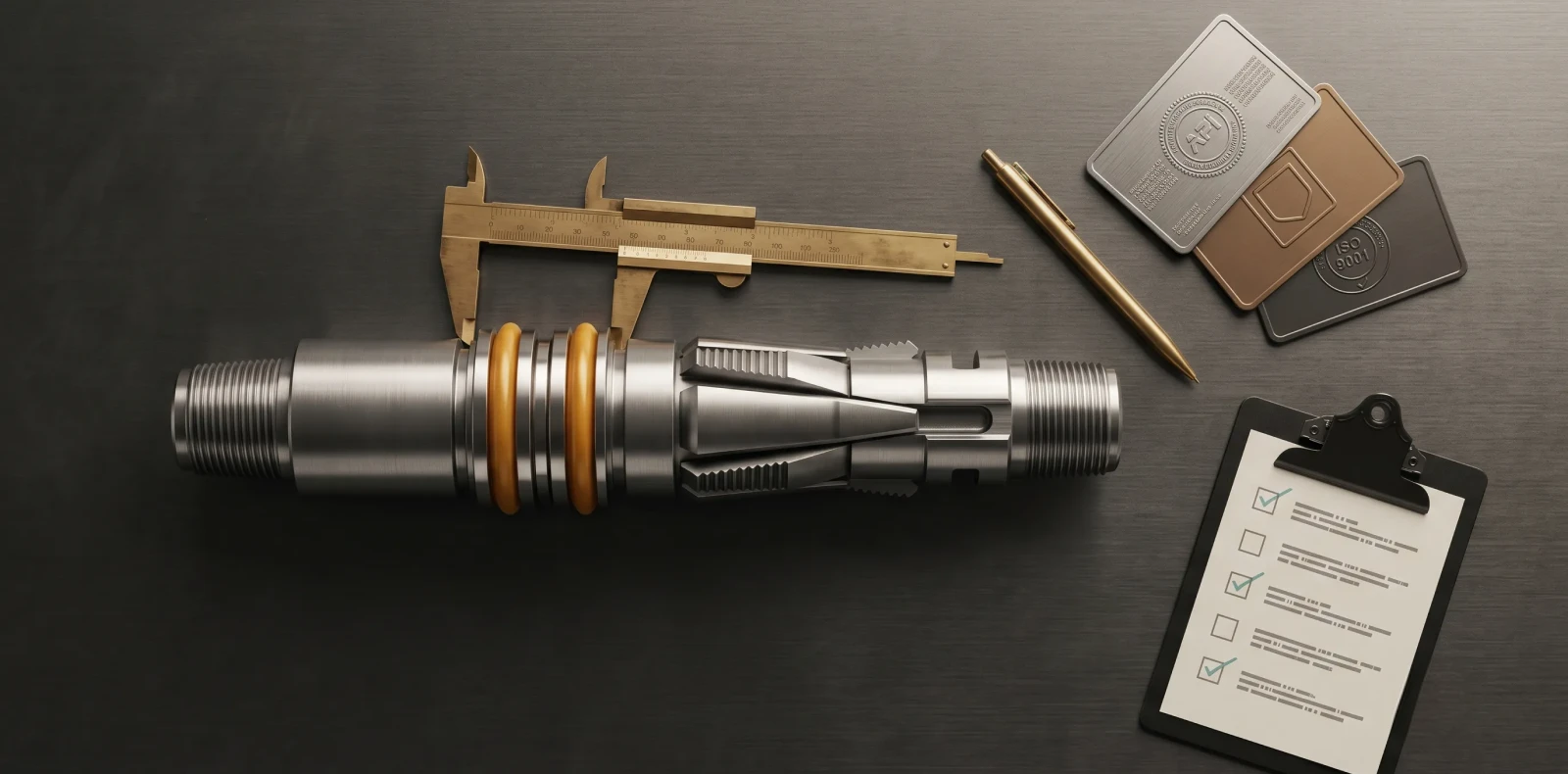
How to Choose an Oilfield Equipment Supplier A Procurement Guide
Choosing the wrong oilfield equipment supplier does not just waste procurement budget; it risks downhole failures that cost ten times the equipment price. Knowing how to choose an oilfield equipment supplier means looking past the catalog and the quotation to the evidence that a vendor can actually deliver safety-critical completion equipment. Procurement engineers who get this right treat the decision as risk management, not purchasing
June 6, 2026