Top Bridge Plug Manufacturers in India & Worldwide 2026
Published:
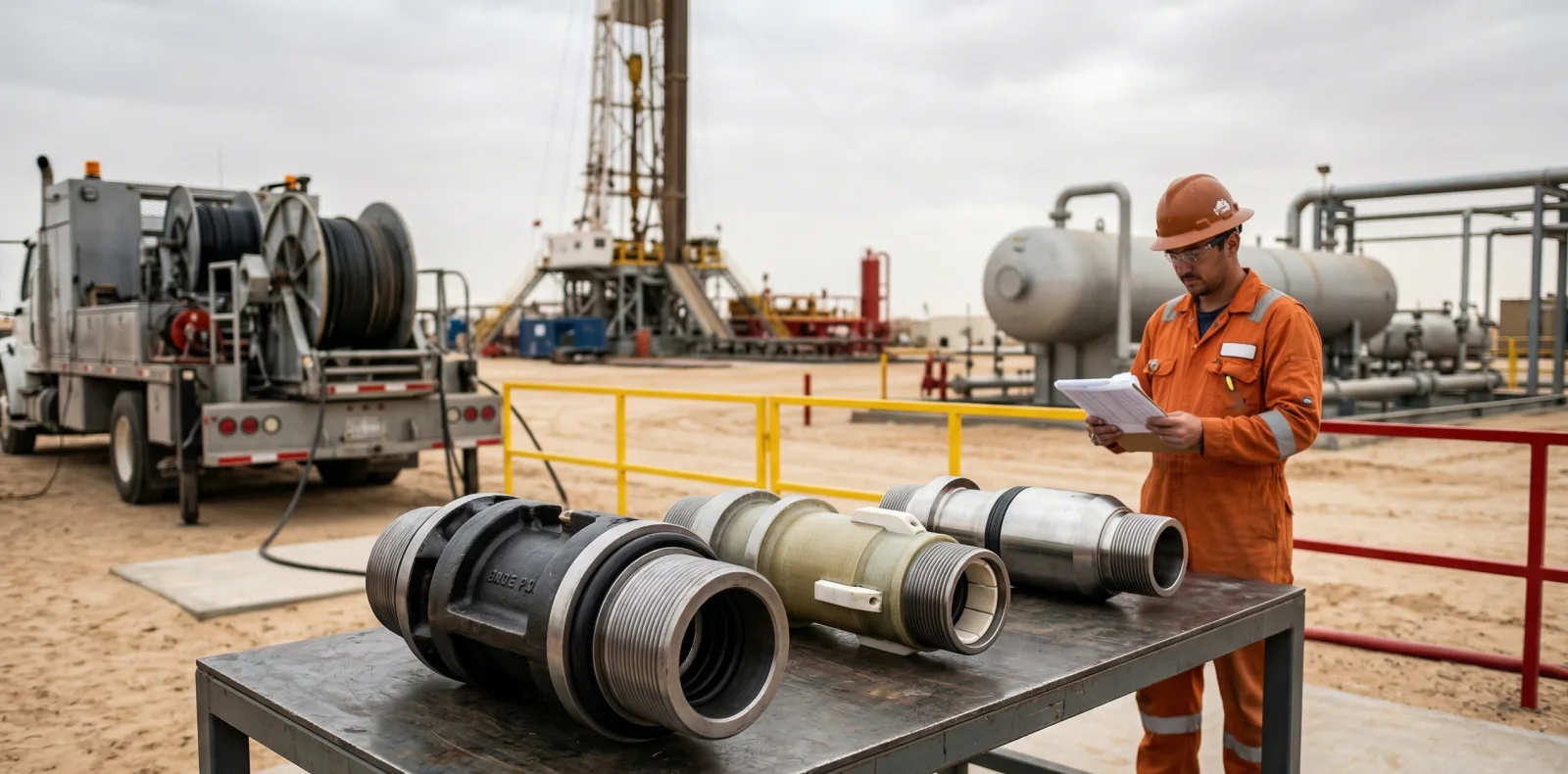
Bridge plugs provide critical wellbore isolation for abandonment, remedial cementing, and multi-zone stimulation operations. Leading manufacturers differentiate through API 11D1 validation grades, material range including cast iron and composite configurations, and casing size coverage from 4-1/2 inches to 13-3/8 inches. API Q1 certified manufacturers with in-house testing facilities offer verified seal integrity under operational conditions.
Bridge plugs provide critical wellbore isolation for abandonment, remedial cementing, and multi-zone stimulation operations. Leading manufacturers differentiate through API 11D1 validation grades, material range including cast iron and composite configurations, and casing size coverage from 4-1/2 inches to 13-3/8 inches. API Q1 certified manufacturers with in-house testing facilities offer verified seal integrity under operational conditions.
Bridge plug manufacturers serve every major well completion and abandonment program worldwide. Over 80% of well abandonments require bridge plugs for zonal isolation, making manufacturer selection a direct factor in seal reliability, regulatory compliance, and total well cost.
This directory evaluates eight bridge plug manufacturers across India and global markets. Each listing covers product range, certifications, and specialization. This helps procurement teams build qualified shortlists without months of vendor research.
What Makes a Qualified Bridge Plug Manufacturer
Five criteria separate qualified bridge plug suppliers from catalogue resellers: API/ISO certification, design validation grade, in-house testing capability, material range, and casing size coverage.
Certification under API Spec 11D1 and ISO 14310 is the baseline. These standards govern packer and bridge plug design verification, validation testing, materials, and documentation. Quality management certification ranges from Q3 (minimum inspection) to Q1 (highest-level quality management system). Design validation grades range from V6 (liquid test at minimum conditions) to V0 (zero-bubble gas-tight seal under full temperature cycling and axial loading).
In-house testing facilities allow manufacturers to verify seal integrity before shipment rather than relying on third-party labs. Manufacturers offering both cast iron and composite bridge plugs provide procurement flexibility: one supplier for permanent drillable isolation and lightweight, fast-drillout horizontal applications. Casing size coverage from 4-1/2 inches to 13-3/8 inches determines whether a manufacturer can serve the full range of well programs.
Halliburton: Full-Range Bridge Plug Portfolio
Halliburton manufactures one of the widest bridge plug portfolios in the industry, covering cast iron, composite, and high-expansion retrievable configurations from 3.5 to 20 inches casing size.
The product line includes the HERO high-expansion retrievable bridge plug, MEV0 mid-expansion V0-rated plug, Obsidian composite bridge plug for horizontal completions, and Intercept RBP gas-tight retrievable plug. Each configuration targets a specific well condition,
HQ: Houston, TX, USA
Certifications: API/ISO certified across product lines
Specialization: Full-service oilfield services; widest casing size range (3.5–20 in)
Pros: Broadest product range, global field support, proven track record across every well type
Cons: Premium pricing; long lead times for custom configurations; minimum order quantities may not suit smaller operators
Baker Hughes: Composite and Retrievable Bridge Plugs
Baker Hughes offers drillable and retrievable bridge plug configurations, with the QUIK Drill composite line and Model G retrievable plug as core products. The MidEXP RBP is qualified to API 11D1 V0-R at 5,500 PSI differential pressure and 250°F (121°C). Bridge plugs (Baker Hughes) (
HQ: Houston, TX, USA
Certifications: API 11D1 V0-R (MidEXP)
Specialization: Composite technology for horizontal completions; retrievable systems for multi-zone isolation
Pros: V0-R validated performance at 5,500 PSI/250°F; composite drillout advantage; global supply chain
Cons: Service-bundled pricing; limited standalone product sales in some regions
SLB (Schlumberger): Wireline-Set Retrievable Specialist
SLB manufactures wireline-set retrievable bridge plugs rated at 5,000 PSI differential pressure and 275°F (135°C), validated to ISO 14310 and API 11D1 V3. The wireline-set design enables rapid deployment without coiled tubing or workover rigs. Bridge plugs (SLB)
HQ: Global operations (Houston, Paris, London)
Certifications: ISO 14310, API 11D1 V3
Specialization: Wireline-set systems; integrated well intervention services
Pros: V3-validated performance at 275°F; wireline deployment reduces rig time; global technical support
Cons: Service-integrated model; limited product-only procurement options; V3 (not V0) validation grade
Maximus OIGA: Cast Iron & Composite Bridge Plugs, Vadodara India
Maximus OIGA manufactures both cast iron and composite bridge plugs at its Vadodara, Gujarat facility with in-house ISO 14310 testing capability. The company holds API Q1 and ISO 14310 certifications, covering permanent drillable and retrievable bridge plug configurations across standard casing sizes. Each bridge plug undergoes design verification testing before shipment with full material traceability documentation.
Maximus OIGA is a well completion specialist based in Vadodara, Gujarat, India. The company focuses exclusively on downhole completion tools (bridge plugs, packers, liner hangers, and flow control equipment) rather than spreading across valves, wellheads, and surface equipment. This depth-over-breadth approach concentrates engineering resources on fewer product lines with higher design maturity.
The bridge plug range covers both cast iron (permanent, drillable) and composite configurations. Cast iron bridge plugs provide long-term isolation for abandonment and remedial cementing. Composite bridge plugs offer lighter weight and faster drillout for horizontal completions and multi-zone stimulation.
Maximus OIGA holds API Q1 quality management certification and ISO 14310 product certification for packers and bridge plugs. The Vadodara facility includes an in-house ISO-certified test facility capable of design verification and validation testing. The SpectraMax branded product line, primarily established through packer systems with 200+ installations, extends to bridge plug configurations with the same engineering and testing methodology.
HQ: Vadodara, Gujarat, India
Certifications: API Q1, ISO 14310, ISO 9001
Specialization: Well completion tools specialist; full material range (CI + composite) from single source
Pros: Both cast iron and composite from one manufacturer; API Q1 + ISO 14310 certified; in-house test facility; competitive Indian manufacturing cost base; depth-focused engineering
Cons: Newer entrant compared to Halliburton/Baker Hughes/SLB; India-focused manufacturing base; smaller global installation count than multinational service companies
Need expert guidance on the right solution?
Talk to our engineers about your project requirements.
Completion Oil Tools: API Certified Indian Manufacturer
Completion Oil Tools manufactures bridge plugs, liner hangers, and production packers from its facility in Faridabad, Haryana, India. The company holds API certification and exports to 25+ countries across the Middle East, Southeast Asia, and Africa. Completion Oil Tools
HQ: Faridabad, Haryana, India
Certifications: API certified
Specialization: Completion tools manufacturing with broad export footprint
Pros: API certified; proven export track record (25+ countries); competitive Indian manufacturing cost base
Cons: Narrower bridge plug range compared to global majors; limited published validation grade data
Oilmec Asia: Permanent Bridge Plug Specialist
Oilmec Asia specializes in permanent bridge plug manufacturing from Ahmedabad, Gujarat, India. The company focuses on permanent (drillable) bridge plug configurations for well abandonment and zonal isolation applications in Indian oilfields. Permanent Bridge Plugs (Oilmec) (external)
HQ: Ahmedabad, Gujarat, India
Certifications: To be confirmed
Specialization: Permanent bridge plugs for Indian market
Pros: India-based manufacturing; bridge plug specialist (depth over breadth); Gujarat industrial ecosystem proximity
Cons: Limited published certification data; narrower product range (permanent only); primarily India-focused
Alpha Oil Tools: Full-Spectrum US Manufacturer
Alpha Oil Tools manufactures bridge plugs across every casing size, set type, temperature range, and pressure rating. The US-based manufacturer offers configurations for wireline, coiled tubing, and tubing-conveyed deployment methods. Bridge Plugs (Alpha Oil Tools) (external)
HQ: USA
Certifications: To be confirmed
Specialization: Bridge plug specialist covering every size/set/temperature/pressure combination
Pros: Widest array of bridge plug configurations; covers every deployment scenario; US manufacturing quality standards
Cons: US-centric operations; import costs for international buyers; limited published validation test data
Omega Well Intervention: V-Zero Retrievable Technology
Omega Well Intervention manufactures the V-Zero Retrievable Bridge Plug, qualified to API 11D1 V0 at 5,000 PSI and 150°C (302°F). The UK-based company specializes in well intervention tools with zero-bubble gas-tight seal performance. Retrievable Bridge Plugs (Omega) (external)
HQ: United Kingdom
Certifications: API 11D1 V0
Specialization: Well intervention; V0 gas-tight retrievable bridge plugs
Pros: V0 (zero-bubble) validated; 5,000 PSI at 150°C; purpose-built for gas-tight isolation
Cons: Narrower product range (retrievable focus); UK-based supply chain adds lead time for Asian markets
Bridge Plug Manufacturers Comparison Table
A comparison of bridge plug manufacturers reveals differentiation across certification level, material types offered, casing size range, and geographic presence. API 11D1 validation grades range from V6 (minimum) to V0 (zero-bubble gas-tight seal), with V3 and V0 being the most commonly specified grades for production and abandonment applications in India and globally.
| Manufacturer | HQ | Certifications | Materials | Casing Range | Specialization | Key Differentiator |
| Halliburton | Houston, TX | API/ISO | CI + Composite | 3.5–20 in | Full-service oilfield | Widest range + HERO high-expansion |
| Baker Hughes | Houston, TX | API 11D1 V0-R | CI + Composite | Wide range | Full-service oilfield | MidEXP V0-R: 5,500 PSI/250°F |
| SLB | Global | ISO 14310 V3 | Multiple | Wide range | Full-service oilfield | Wireline-set specialist |
| Maximus OIGA | Vadodara, India | API Q1, ISO 14310 | CI + Composite | Standard | Well completion specialist | Full material range + in-house testing |
| Completion Oil Tools | Faridabad, India | API certified | Multiple | Standard | Completion tools | 25+ country exports |
| Oilmec Asia | Ahmedabad, India | TBC | Permanent BP | Standard | Bridge plug specialist | India-focused |
| Alpha Oil Tools | USA | TBC | Multiple | Wide range | Bridge plug specialist | Every size/set/temp/pressure |
| Omega | UK | API 11D1 V0 | Retrievable | Standard | Well intervention | V-Zero gas-tight technology |
Frequently Asked Questions About Bridge Plug Manufacturers
What are the different types of bridge plugs?
Bridge plugs are classified into three main types: permanent (drillable), retrievable, and composite. Permanent bridge plugs are cast iron tools designed for long-term isolation or abandonment. Removal requires milling out. Retrievable bridge plugs can be unset and recovered via wireline, coiled tubing, or tubing for temporary zonal isolation.
Composite bridge plugs use non-metallic materials for lighter weight and faster drillout times. They are standard in horizontal completions and plug-and-perf operations. Dissolvable bridge plugs dissolve over time, eliminating retrieval or milling.
What is the difference between a bridge plug and a packer?
A bridge plug seals the entire wellbore cross-section, blocking all fluid flow through the conduit. A packer creates an annular seal between tubing and casing but allows continued flow through the tubing bore. Bridge plugs isolate zones for abandonment, remedial cementing, or multi-zone stimulation. Packers enable production or injection operations while maintaining annular isolation.
Both tools are governed by API 11D1 / ISO 14310 standards. The same validation grades (V0 through V6) apply to bridge plugs and packers, covering seal performance under pressure, temperature, and axial loading conditions.
How do I verify a bridge plug manufacturer’s API certification?
Check the API Composite List at api.org, a searchable database of all companies holding active API certifications. Look for API Q1 (quality management system) and the API 11D1 product monogram on manufacturer documentation and product markings.
Request test certificates and material test reports (MTRs) with every shipment. Ask the manufacturer for the specific validation grade achieved (V0, V3, etc.) and request the supporting test data. Manufacturers with in-house testing facilities can typically provide this documentation faster than those relying on third-party labs.
What is the difference between a cement retainer and a bridge plug?
A cement retainer includes a valve mechanism that allows controlled cement flow through the tool body for squeeze cementing operations. A bridge plug provides complete isolation with no fluid flow path. It blocks the wellbore entirely. Cement retainers are used for targeted cement placement behind casing; bridge plugs are used for permanent or temporary zone shutoff.
Many manufacturers produce both tools. Sourcing from a single API-certified supplier simplifies procurement qualification and ensures consistent quality management.
What questions should I ask a bridge plug manufacturer before ordering?
Start with certifications: confirm API Q1 quality management and specific API 11D1 validation grades (V0, V3). Request the casing size range, temperature ratings (°F and °C), pressure ratings (PSI), and material options (cast iron versus composite).
Verify whether the manufacturer operates an in-house testing facility and provides material traceability with each shipment. Confirm lead time, minimum order quantities, export documentation capability, and field installation support availability.
Related Blogs

More Information
Related News & Insights
Best bridge plug manufacturers in Asia
Thirteen bridge plug manufacturers in Asia — China, India and the UAE — compared on seven points, across drillable, retrievable, composite and dissolvable plug types.
October 20, 2026
Best downhole tool manufacturers in Asia
Fourteen downhole tool makers in Asia — China, India, Indonesia and the UAE — compared on seven points and on which of the six completion-tool families each one builds.
October 20, 2026
API 11D1 vs ISO 14310 - what a V0 rating actually certifies
What a V0 rating really means under API 11D1 and ISO 14310 — and ten checks that take a packer or bridge plug claim from the brochure line to the validation record behind it.
October 20, 2026
Indian downhole completion tool manufacturers compared: API status, plants, catalogue and lead times
Most Indian suppliers list packers, bridge plugs and liner hangers. The harder question is who actually makes the goods, where, and what documents arrive with the order. This comparison puts six Indian downhole tool manufacturers side by side on manufacture, plant location, catalogue breadth, published lead times and the documentation pack, using only what each company publishes about itself.
September 25, 2026
Zonal isolation systems
A bridge plug, a packer, a cement retainer, a straddle packer or a stage cementing collar can each be the right way to isolate an interval in a cased well. Which one depends on where the zone sits, how long the isolation must hold, and whether cement goes through the tool. This guide maps each isolation job to its tool class and its named SpectraMax models, then covers what to specify, how each tool sets and seals, and where each option stops working. It also sets out the records that ship with the order and the lead-time bands by product class, so you can plan the run before the quotation arrives.
September 25, 2026
Casing scrapers
A packer, bridge plug or cement retainer only grips and seals on a clean casing wall, and the scraper that cleans it has to fit your casing on the way down and at depth. This guide covers how a casing scraper cleans, the three main configurations, and how to size one to your casing OD and weight range, with worked ID and drift figures for 5-1/2 in, 7 in and 9-5/8 in casing. It then matches each configuration to its well condition, sets out where every option stops working, and lists the records that should ship with the order.
September 25, 2026
Gas anchors
Low fillage, fluid pound or a gas-locked rod pump usually points to the same tool below the pump: a gas anchor. Which configuration fits depends on whether the pump can sit below the perforations, how much liquid it displaces, and whether solids or deviation are in play. This guide works through the four configurations by well condition, then covers the sizing rule, the specifications a quotation has to fix, and where each option stops working. It also sets out the records that should ship with the part and the SpectraMax lead-time bands by product class.
September 25, 2026
Coiled tubing tools
"Coiled tubing tools" covers three different things: the surface spread, the intervention bottom-hole assembly, and the completion tools coiled tubing conveys and sets. Only the third group is manufactured completion equipment, and it is the group this page is about. It covers what conveyance changes about the tool itself, which of the three families (bridge plug, cement retainer, packer) suits which job, and the six inputs a supplier needs to quote one. It also sets out where each option stops, the records to ask any supplier for, and the lead-time bands by product class.
September 21, 2026
Saudi Aramco vendor registration for completion equipment suppliers
Saudi Aramco vendor registration is a prequalification on Aramco's e-Marketplace that ends in a Vendor ID, and being registered is not the same as being qualified. This guide walks the out-of-Kingdom route for a completion equipment manufacturer: how Aramco weighs financial strength, technical qualification and IKTVA local content, and which documents an international supplier actually files instead of the Saudi statutory set. It also sets out what a manufacturer can carry for your submission, what stays with you, and the records to ask any supplier for before a purchase order.
September 21, 2026
ONGC vendor registration for downhole tool suppliers: the actual sequence
Selling downhole tools to ONGC starts with a commercial gate, not the technical bid: you complete supplier self-registration on ONGC e-Procurement, get a bidder User-ID, then finish vendor enlistment before you can bid on a single tender. This guide walks the actual sequence, the documents an Indian or overseas applicant submits, how ONGC weighs a bid once local content is applied, and a realistic timeline. It is honest about what a manufacturer can and cannot do for your bid, and what to ask any supplier for in writing.
September 21, 2026