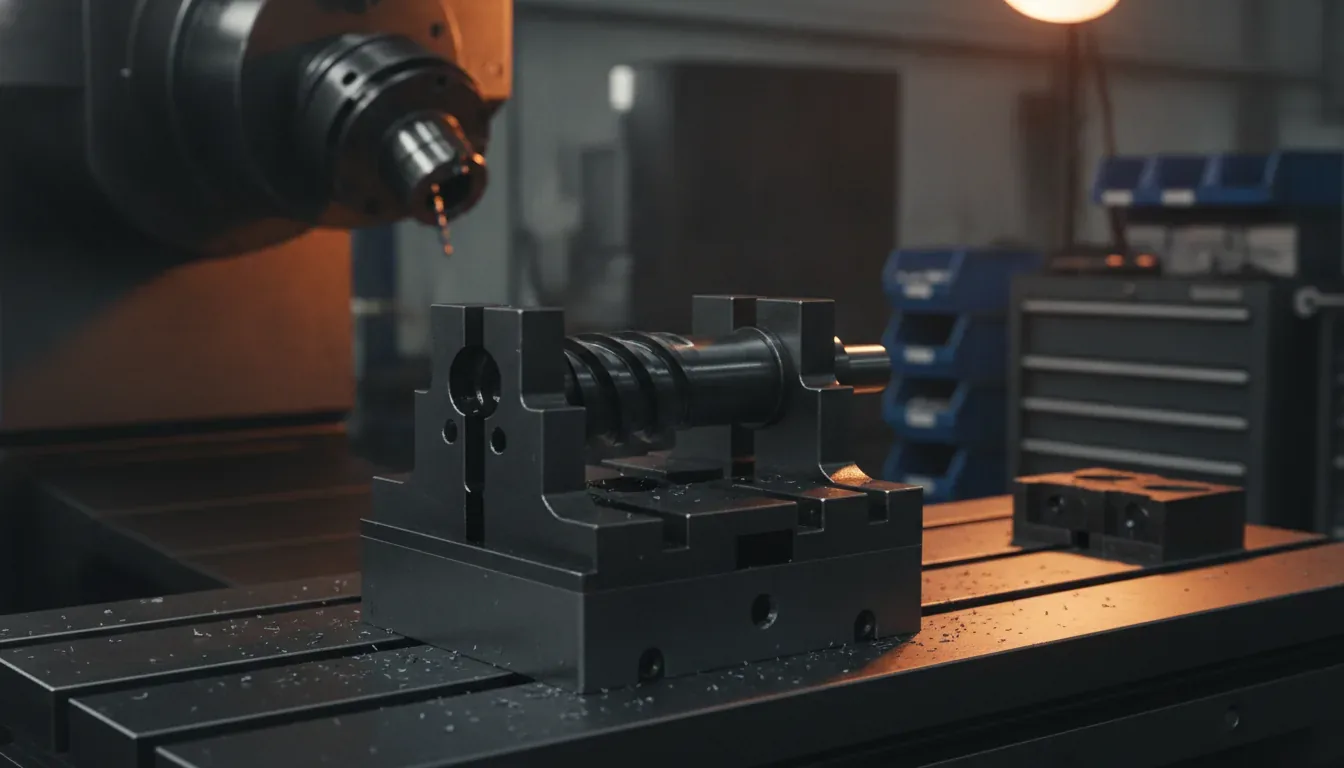
Casing scrapers
A casing scraper cleans cement, scale and perforation burrs off the casing wall so a packer, bridge plug or cement retainer sets and seals. This page covers the three types, how to size one to your casing weight range, what a quote needs, and where each type stops working. Maximus OIGA Private Limited builds the SpectraMax Casing Scraper (MCS) to order at its Manjusar / Savli plant in Vadodara. Lead time runs 1 to 4 weeks for a standard blade-block scraper and 4 to 12 weeks for a non-rotating or non-standard size.
Maximus OIGA - Casing Scrapers
SpectraMax Casing Scrapers, Engineered to Order
SpectraMax casing scrapers clean cement, scale, rust, mill scale and perforation burrs off the casing wall so your packer, bridge plug or cement retainer sets and seals, built to your casing size and weight range.
Button: Request a casing scraper quotation
Lead-time bands run 1 to 4, 4 to 12 and 8 to 16 weeks or more by product class.
The SpectraMax Casing Scraper, model MCS, is made to order by Maximus OIGA Private Limited at the Manjusar / Savli GIDC plant, Vadodara, against your purchase order, for the cleanout run before a packer is set.
What is a casing scraper, and when do you run one
Answer box (visible) A casing scraper is a downhole tool with a blade assembly, run on tubing or drill pipe, that removes cement sheath, scale, rust, mill scale, paraffin and perforation burrs from the inside casing wall. Run one before any tool must set or seal there (a packer, bridge plug, cement retainer or liner patch), and scrape across the setting depth. |
The blade assembly removes scale and debris from the internal surface of the casing string. Crews run a casing scraper on tubing or drill pipe during a workover, as the wellbore cleanup step before the completion string goes back in.
New wells need the same run. Scrape before cementing, perforating, setting packers or running completion tools, and after the casing is landed, to remove mill varnish and handling debris.
Before setting any sealing tool, the wall has to be clean. Packers, bridge plugs and cement retainers set and seal against the casing ID, and debris or burrs left there can stop a tool setting or cause it to hang up on the way down.
Whether the wall comes out clean depends on how the blades are held against it.
How does a casing scraper clean the casing wall
A casing scraper cleans by contact: hardened blade blocks, pushed outward by springs against the casing wall around the full 360-degree circumference, cut deposits off as the string is reciprocated, rotated or both, while fluid circulates through the tool bore and past the blades to carry the debris out.
The blade blocks sit staggered or spaced around the mandrel so that together they contact the full circumference of the casing. That is what 360-degree coverage means on a scraper: no strip of wall is left between blades. Some designs space the blades to touch about 600 degrees of wall at once, close to two full circles.
The springs do a second job. Because spring-loaded blades travel in and out, one blade size covers a range of casing weights for one casing OD, following the casing ID as it changes from one weight to the next.
Motion comes from the work string. You reciprocate it, rotate it, or do both, and rotation combined with reciprocation gives the most thorough cleaning where the design allows rotation.
Circulation carries the cut material away. Fluid pumped down the tool bore and up through the bypass around the blades lifts the debris to surface.
Each scraper configuration applies this same action to the wall in a different way.
What types of casing scraper are there
Casing scrapers come in three main configurations: the rotating blade-block scraper, the non-rotating scraper whose blade sleeve stays still while the string turns, and the fixed-blade or rigid scraper for heavy cement, with the casing brush and the tubing scraper as companion tools.
The types of casing scraper below differ in how the blades meet the wall. The first card is the SpectraMax model in the catalogue today.
SpectraMax Casing Scraper (MCS)
What it is: The SpectraMax model, designed to remove stuck mud, cement, embedded bullets, perforation burrs, rust, mill scale and paraffin from the inner casing wall.
Specify it by: Casing size and weight range. Each SpectraMax Casing Scraper is built to the casing size, weight range and running method on your enquiry, and the quotation states the configuration.
Rotating casing scraper
What it is: Spring-loaded blade blocks on a one-piece alloy-steel mandrel, run by reciprocation, rotation or both.
Best when: Bonded cement, scale, mill scale or perforation burrs sit on carbon-steel casing.
Watch for: String rotation speed and casing wear, because the blade body turns against the wall.
Non-rotating casing scraper
What it is: The blade elements stay still against the casing while the string rotates inside them.
Best when: You plan higher string rotation, or casing wear is a concern, because the still blades limit wear on the wall.
Watch for: The rotation speed the sleeve is built for, which the quotation states.
Fixed-blade or rigid scraper
What it is: The original design, built to remove large cement deposits, with rigid blocks that do not flex.
Best when: Heavy cement is left behind after an aborted cement job.
Watch for: Rigid blocks cannot flex to casing ID variation, so they are not a cleanup tool for the whole interval.
Casing brush (companion)
What it is: Stainless-steel wire bristles that scrub loose particulates, corrosion pits and coupling recesses that blades cannot reach.
Tubing scraper (companion)
What it is: The same tool sized for production tubing ID.
Whichever type you pick, it has to be sized to your casing first.
How do you size a casing scraper to your casing weight range
Sizing rule (visible callout) A casing scraper is sized by two numbers from your casing string: the largest casing ID it must scrape (the lightest weight in the interval), which the spring-loaded blades must reach, and the smallest drift it must pass on the way down (the heaviest weight or tightest restriction above), which the tool's gage OD must clear. |
Casing ID falls as casing weight rises, because the extra weight is wall thickness inside the same casing OD. ID is the OD minus twice the nominal wall, and drift diameter is the ID minus 1/8 in for casing up to 9-5/8 in.
Take 7 in casing from 17 to 32 lb/ft. The ID runs from 6.538 in at 17 lb/ft to 6.094 in at 32 lb/ft, a spread of 0.444 in, and the drift at 32 lb/ft is 5.969 in. A scraper for that weight range needs a blade expansion range that reaches at least 6.538 in and a gage OD that passes 5.969 in.
One scraper size covers one casing OD across a range of weights. Published size tables run one tool per casing OD with a weight range, for example 7 in, 17 to 32 lb/ft.
If the string has mixed weights, or a liner top sits above the interval, the smallest drift or ID anywhere above the scraping depth sets the largest gage OD you can run.
Two more numbers complete the size. The tool bore, the minimum ID through the scraper, sets the circulation rate through the tool and whether a ball or dart can pass. The work string connection sets the threads at each end.
Casing ID and drift by weight range
| Casing OD (in) | Weight range (lb/ft) | ID range (in) | Drift at heaviest weight (in) |
|---|---|---|---|
| 5-1/2 | 14 to 23 | 5.012 to 4.670 | 4.545 |
| 7 | 17 to 32 | 6.538 to 6.094 | 5.969 |
| 9-5/8 | 36 to 53.5 | 8.921 to 8.535 | 8.410 |
Source: nominal casing ID and drift tables. ID is the OD minus twice the nominal wall; drift is the ID minus 1/8 in. Computed 25 September 2026.
Send your casing OD, the weight in the interval and the heaviest weight above it; the quotation confirms the gage OD and expansion.
Size settles whether a scraper fits your casing, and your well condition settles which configuration to run.
Which casing scraper suits your well condition
The right casing scraper depends on four well conditions: what is on the wall (bonded cement and scale, or loose fines and corrosion), whether the string will be rotated, what the casing is made of, and the well path.
Read the table by the first column. Each row names the configuration that fits, why, and the condition under which the choice stops holding. If you will only reciprocate, the rotating blade-block, fixed-blade and brush rows all still apply.
Casing scraper selection by well condition
| Well condition | Configuration | Why it fits | Where it stops |
|---|---|---|---|
| Bonded cement sheath, scale, mill scale or perforation burrs on carbon-steel casing | Rotating casing scraper with spring-loaded blade blocks (the SpectraMax Casing Scraper, MCS) | Blades cut deposits that are bonded or built up on the casing ID | Blades do not reach corrosion pits or coupling recesses; follow with a casing brush |
| Higher string rotation planned, or casing wear is a concern | Non-rotating casing scraper | The blade elements stay still against the wall while the string turns inside them, which limits casing wear | Holds only up to the rotation speed the quotation states for that sleeve |
| Heavy cement left from an aborted cement job | Fixed-blade scraper, or a bit and scraper run | Rigid blocks cut large cement deposits, and a scraper run just above the bit drills and scrapes in one trip | Rigid blocks do not flex to ID changes, so they do not clean the whole interval evenly |
| Loose fines, corrosion pits and coupling recesses | Casing brush after the scraper | Bristles reach where blades cannot; run the scraper first, then the brush | A brush does not cut bonded cement |
| Corrosion-resistant alloy (CRA) casing, or chrome casing | Brush with stainless bristles, or blades suited to the alloy | Standard steel scraper blades are not CRA-safe | Holds only when the casing material is stated on the enquiry |
| Deviated well or horizontal well | A design stated for deviated and horizontal wells | Some designs are stated for use in vertical, deviated and horizontal wells; others are not | Holds only when the inclination is stated on the enquiry |
Tell us casing OD and weight range, what is on the wall, and whether you will rotate.
The same choices decide where in a completion or workover the scraper run sits.
Where are casing scrapers used in a completion or workover
A casing scraper run is used in new completions after the casing is landed and cemented, in workovers before a packer, bridge plug, cement retainer or liner patch is set, and after perforating to remove burrs.
In a new completion, the cleanout run removes mill varnish and handling debris from the landed casing before production. In a workover, it cleans the wellbore before the completion string is reinstalled.
After perforating, the scraper takes off the perforation burrs that would catch or damage the next tool. During a plug drill-out, it often runs on the work string just above the bit, so one trip drills and scrapes.
Step 1. Casing landed and cemented. The casing is run, landed and cemented, and mill varnish and handling debris stay on the wall.
Step 2. Perforate. Perforating leaves burrs on the casing ID across the perforated interval.
Step 3. Scrape and circulate. The casing scraper runs across the setting depth while circulation carries the debris out.
Step 4. Set the packer, plug or retainer. The sealing tool sets on a clean wall, which is the point of scraping before setting.
That is where it is used: before setting any tool that seals. In the SpectraMax catalogue those tools are sealbore packers, retrievable and permanent packers, bridge plugs and cement retainers, built in the same plant as the scraper.
For the scraper to fit that run, you specify it against your own string.
Need expert guidance on the right solution?
Talk to our engineers about your project requirements.
What specifications define a SpectraMax casing scraper
A SpectraMax casing scraper is specified by casing OD and weight range, gage OD and blade expansion range, tool bore, work string connection, rotating or non-rotating configuration, and blade and mandrel material.
Published scraper sizes in the market run from 2-3/8 in up to 22 in OD across tubing and casing. A SpectraMax casing scraper is built to the casing OD and weight range on your enquiry.
The connection follows the work string. On tubing, the scraper carries tubing threads, for example a 2-7/8 in EUE tubing connection on a 5-1/2 in scraper, with thread form per API 5B. On drill pipe, it carries a rotary shouldered connection, pin and box, with thread form per API 7-2. The quotation confirms the connection for your string.
The mandrel is heat-treated alloy steel and the blade blocks are hardened or carburized steel. The exact grade of each is confirmed on the material test report.
A casing scraper is not a pressure-sealing tool, so no seal rating applies to it. Its limits are the tensile and torsional strength of the mandrel and its connections, and the quotation states them against the string loads on your enquiry.
SpectraMax casing scraper specification matrix
| Parameter | What you tell us | What the quotation confirms |
|---|---|---|
| Casing OD and weight range | Casing OD, the weight in the interval and the heaviest weight above it | The scraper size for that OD and weight range |
| Gage OD and blade expansion range | The smallest drift above the scraping depth and the largest ID in the interval | Gage OD and expansion range, in inches |
| Tool bore | Circulation rate, and any ball or dart that must pass | Minimum ID through the tool |
| Work string connection | Tubing or drill pipe, with size and thread | EUE tubing connection per API 5B, or rotary shouldered connection per API 7-2 |
| Configuration | Whether you will rotate, and at what speed | Rotating or non-rotating build |
| Material | Casing material: carbon steel or CRA | Mandrel and blade material, with heat numbers on the material test report |
| Documentation required | The documents your QA needs | The pack that ships with the order |
Those same specifications show how a scraper differs from the other cleanout tools on the run.
How does a casing scraper compare to other cleanout tools
A casing scraper, compared with other cleanout tools, is the one that cuts bonded deposits off the wall: a casing brush scrubs loose fines and pits, a downhole magnet and a junk basket catch loose metal and debris, and a drift run with a gauge ring only proves the bore is open.
The alternatives do different jobs, and most cleanout runs use more than one. A scraper and a brush are commonly run together, scraper first.
Cleanout tools compared
| Tool | What it removes or proves | Best when | Limit |
|---|---|---|---|
| Casing scraper | Cuts bonded cement, scale, mill scale and burrs off the casing ID | Deposits are bonded or built up on the wall | Pushes loose fines rather than lifting them |
| Casing brush | Scrubs loose particulates, corrosion pits and coupling recesses | Run after the scraper, or on CRA casing with stainless bristles | Does not cut bonded cement |
| Downhole magnet | Recovers loose metal | Metal is dislodged by the scraper or already in the hole | Does not clean the wall |
| Junk basket | Catches loose debris | Debris is dislodged by the scraper or already in the hole | Does not clean the wall |
| Drift run or gauge ring | Proves a tool of a given OD will pass | Before running a tool with a tight OD | Proves passage only; it does not clean |
Answer box (visible) A SpectraMax casing scraper is a threaded work-string tool, picked up for the cleanout run and laid down before the completion goes in. Buying it from a specialist manufacturer does not touch your integrated completion bundle, because the scraper is out of the hole before any of that equipment is run. |
Each of these tools, the scraper included, has conditions under which it stops working.
Where does each casing scraper option stop working
Every casing scraper stops working when the casing ID is larger than its blades can reach, when a restriction above is smaller than its gage OD, or when the deposit is loose debris that blades push rather than cut.
- Size limit: the blade expansion range must reach the largest ID, and the gage OD must pass the smallest drift above.
- Configuration limit: a rotating tool wears casing at high rotation, and steel blades are wrong for CRA casing.
- Deposit limit: blades cut bonded material, while loose debris needs a brush, a magnet or a junk basket.
Any scraper: size limits
Visible:
Any scraper stops when the ID in the interval exceeds its blade expansion range, which leaves a band of wall uncleaned, or when a restriction above is smaller than its gage OD, so the tool will not pass.
Inside the panel:
Check a liner top above the interval as well as the casing drift, because either can be the tightest restriction on the way down.
Rotating blade-block scraper
Visible:
A rotating blade-block scraper stops being the right tool when string rotation speed or casing wear is the constraint.
Inside the panel:
Older fixed rotating designs wore the casing and cut track grooves into it, a pattern known as tram lining.
Blade retention
Visible:
Older scrapers held their blocks with bolts or rings, and it was not uncommon for them to come apart during cleanout, leaving blades lost in the hole and a fishing job to follow.
Inside the panel:
Current designs retain the blades by machined shoulders, with no bolts, screws or loose parts.
Steel-bladed scraper on CRA casing
Visible:
A steel-bladed scraper stops at CRA or chrome casing, where steel blades can contaminate or mark the alloy.
Inside the panel:
Specify a brush with stainless bristles, or blades suited to the alloy, and state the casing material on the enquiry.
What no scraper handles
Visible:
No scraper handles corrosion pits, coupling recesses and loose fines, which need a casing brush, or loose junk, which needs a magnet or a junk basket.
Inside the panel:
Plan those tools into the same cleanout run.
Stated limits like these are also the test to put to any standard a vendor quotes for a casing scraper.
Which standards apply to a casing scraper, and how do you verify a vendor's claims
Answer box (visible) A casing scraper is not covered by a product specification of its own that we could find; what a buyer can hold it to are its end connections (API 5B for tubing threads, API 7-2 for rotary shouldered connections), its material certificates and its dimensions against your casing. |
API 5B covers the threading, gauging and inspection of casing, tubing and line pipe threads. API 7-2 covers the threading and gauging of rotary shouldered connections. Neither sets requirements for the scraper body, blades or springs.
The material certificate that matters is the material test report, traceable to a heat number, which ties the steel in the tool to its chemistry and mechanical tests.
A listing that calls a tool an "API casing scraper" can mean two different things: a connection thread form, or a company quality licence. Ask which API document it means, ask for the licence number, and check its scope. Then verify it yourself in four steps.
- Name the document. Ask the vendor which API document the claim refers to: a connection thread form, or a licence.
- Get the licence number. A licence claim comes with a number; ask for it in writing.
- Search the register. Search the vendor's exact legal name on the public API Composite List at mycerts.api.org, and read the status and the scope. Only a status of Active is current.
- Record the date. Note the date you checked, because a licence status can change.
Apply the same four steps to every vendor you are comparing, Maximus OIGA Private Limited included.
That makes the paperwork that travels with the order the thing to ask for.
What documentation ships with a SpectraMax casing scraper
Each SpectraMax casing scraper order ships with a dimensional drawing showing gage OD, expansion range and tool bore, material test reports (MTRs) traceable to heat numbers for the mandrel and blades, a thread inspection record for the end connections, and a certificate of conformity to the purchase-order specification.
The documentation is traceable end to end. The heat number on each MTR matches the steel in the mandrel and blades, and the drawing matches the tool you receive.
Where your QA works from an inspection and test plan (ITP), we supply one with the order. Every document is issued against your purchase order.
The last thing to plan around is how long the order takes to build.
What is the lead time for a SpectraMax casing scraper
SpectraMax lead-time bands run by product class: 1 to 4 weeks, 4 to 12 weeks, and 8 to 16 weeks or more. A standard-size blade-block casing scraper sits in the 1 to 4 week band, and a non-rotating or non-standard size sits in the 4 to 12 week band; the quotation confirms the band for your size and configuration.
The band follows the build. A standard blade-block scraper is a machined mandrel with blade blocks and springs, with no elastomer to qualify. A non-rotating sleeve adds bearing components, and a non-standard size needs new tooling.
None of the casing scraper sellers we checked on 25 September 2026 publishes a lead time. Because each scraper is engineered to order, Maximus OIGA Private Limited publishes its bands so you can plan the run before you ask for a quotation.
A lead-time band covers building the tool, and building the tool is where the scope of this supply ends.
What does this page not cover
Maximus OIGA Private Limited does not supply rig-site crews, the cleanout job itself, or rental tools on standby with a casing scraper; it manufactures the scraper to your casing and ships it with its documentation.
- We do not supply rig-site personnel or run the cleanout job. Your service company runs the tool.
- This page does not cover a step-by-step running procedure, such as speeds or weight on the tool. The running procedure belongs to the job programme and your service company.
- It does not cover the other meanings of scraper: the pipeline pig, which pipeline work calls a scraper, engine oil scraper rings and hand scrapers. A tubing scraper appears here only as the tubing-sized version of the same downhole tool.
- It states no API licence, no pressure, temperature or load rating, and no installation count. The verification and documentation sections carry that ground instead.
Inside those boundaries, the questions engineers still ask are answered below.
Casing scraper questions engineers ask
What is a scraper in oil and gas?
In a well, a scraper in oil and gas work is a casing scraper: a downhole tool whose blades clean the casing wall before a packer, plug or retainer is set. In pipeline work, the word means a pig, a device with blades or brushes pushed through a pipeline, which this page does not cover.
What is the purpose of a scraper?
A casing scraper gives packers, bridge plugs and cement retainers a clean wall to set and seal on. It removes cement, scale, rust, mill scale, paraffin and perforation burrs that could stop a tool setting or hang it up.
What are the different types of scraper blades?
Downhole scraper blades come as spring-loaded blade blocks, fixed or rigid blades, and non-rotating blade sleeves. A casing brush uses wire bristles instead of blades and runs after the scraper.
Should a casing scraper be rotated or reciprocated?
Reciprocate a casing scraper on every run, and rotate it as well where the design allows rotation. A non-rotating scraper lets the string turn while the blades stay still against the casing.
Do I need a casing brush as well as a scraper?
Yes, where corrosion pits, coupling recesses or loose fines matter. Run the scraper first to cut bonded deposits, circulate, then run the brush.
If I buy the scraper from a specialist manufacturer, do I lose the integrated bundle?
No. A SpectraMax casing scraper from Maximus OIGA Private Limited runs on the work string for the cleanout run and comes out of the hole before the completion is run, so your integrated completion bundle is untouched.
What should a casing scraper quotation specify?
A casing scraper quotation should specify casing OD, the weight in the interval, the heaviest weight above it and the smallest drift above, the work string and connection, whether you will rotate or reciprocate, and the casing material (carbon steel or CRA casing). Add the documentation your QA needs, and the quotation confirms gage OD, expansion range and lead-time band.
Related Blogs


More Information
Related News & Insights
September 25, 2026
Gas anchors
A gas anchor separates free gas from well fluid below a sucker-rod pump, so the pump fills with liquid instead of gas locking. This page covers the four types, how to size one against your pump rate, what a quote needs from you, and where each type stops working. Maximus OIGA Private Limited builds SpectraMax gas anchors to order at its Manjusar / Savli plant in Vadodara. Lead time runs 1 to 4 weeks for dip-tube and collar-size anchors, and 4 to 12 weeks for packer-type separators.
September 25, 2026
Coiled tubing tools
Coiled tubing tools fall into three groups, and this guide covers the completion tools coiled tubing sets: bridge plugs, cement retainers and packers. It explains how coiled tubing changes reach and setting force, how to choose between the three, and the six details a quote needs. Maximus OIGA Private Limited builds these SpectraMax tools to order at its Manjusar / Savli plant in Vadodara but does not supply the coiled tubing or run the job. SpectraMax lead time bands run 1 to 4, 4 to 12, and 8 to 16 weeks or more by product class.
September 21, 2026
Saudi Aramco vendor registration for completion equipment suppliers
Saudi Aramco vendor registration ends in a Vendor ID, and a maker based in India applies through Aramco Asia. This guide covers the papers each route needs, how suppliers are scored, and why registered is not the same as qualified. It also shows what a maker can add to your file, and why it cannot get a Vendor ID for you. Maximus OIGA Private Limited makes the SpectraMax line at its Manjusar / Savli plant in Vadodara and is not a registered Aramco vendor.
September 21, 2026
ONGC vendor registration for downhole tool suppliers: the actual sequence
To sell downhole tools to ONGC, a supplier first needs a bidder User-ID, a Class III digital signature and a place on the approved vendor list. This guide covers the documents ONGC asks for, how it scores a bid, the local content rules and a realistic timeline. It also shows what a manufacturer can add through its paperwork, and why it cannot enlist or bid for you. Maximus OIGA Private Limited builds its SpectraMax completion tools to order at its Manjusar / Savli plant in Vadodara.
September 21, 2026

ADNOC ICV certification: what a completion-tool supplier actually needs
No ADNOC ICV certificate means a 0% In-Country Value score at tender award. This guide explains how a MoIAT-approved body scores your audited accounts, what documents you need, and why you renew each year. It also shows why an overseas maker cannot hold the certificate for you, and what its paperwork can add. Maximus OIGA Private Limited builds the SpectraMax line to order at its Manjusar / Savli plant in Vadodara and ships each order with that paperwork.
September 21, 2026
Best drillable bridge plug manufacturers supplying US land operators
Shortlisting drillable bridge plug manufacturers supplying US land operators starts with checks you can run yourself. This guide shows how to check a maker's licence on the API Composite List and how US operators vet a new supplier. Maximus OIGA Private Limited ships SpectraMax cast iron bridge plugs from its Manjusar / Savli plant in Vadodara and has no US office, agent or distributor. SpectraMax lead time bands run 1 to 4, 4 to 12, and 8 to 16 weeks or more by product class.
September 17, 2026
Liner Hanger Manufacturers Supplying UAE Operators
Shortlisting liner hanger manufacturers supplying UAE operators starts with checks you can run yourself. This guide shows how to check a maker's licence on the API Composite List and how ADNOC ICV and vendor registration work. Maximus OIGA Private Limited ships SpectraMax liner hangers from its Manjusar / Savli plant in Vadodara and has no office or agent in the UAE. SpectraMax lead time bands run 1 to 4, 4 to 12, and 8 to 16 weeks or more by product class.
September 17, 2026
Best oilfield equipment manufacturers supplying Qatar
Oilfield equipment manufacturers supplying Qatar face three gates: QatarEnergy registration, a Tawteen ICV score, and import checks for regulated goods. This guide explains each gate and how to check any vendor's licence on the API Composite List. Maximus OIGA Private Limited ships its SpectraMax line from its Manjusar / Savli plant in Vadodara and has no office or agent in Qatar. SpectraMax lead time bands run 1 to 4, 4 to 12, and 8 to 16 weeks or more by product class.
September 17, 2026