
Petrobras Supplier Registration for Oilfield Equipment Manufacturers
Published:
Which HSE documents an oilfield equipment supplier is asked for at vendor registration, what each one must contain and how operators check them. It covers the HSE policy, manual, registers, emergency plan, and incident and training records.
Petrobras supplier registration runs on one online registry on the Petronect portal, and it produces a Registration Certificate (CRC) for each supplier that meets one or more criteria of the family it applied for. The registry is permanently open, and a manufacturer outside Brazil can join it: the Petrobras Supplier Channel states that the registry brings together Brazilian and foreign companies, and foreign oilfield equipment manufacturers register in its Corporate Registry.
Anyone preparing a Petrobras vendor registration for the first time has five questions to settle: which portal does what, which documents each evaluation criterion needs, how technical and HSE review works for completion equipment, where Brazilian local content fits, and how long the certificate lasts. The short answer comes first.
Petrobras supplier registration in brief: what do you need to know
A foreign manufacturer registers with Petrobras through the Corporate Registry on the Petronect portal, free of charge, and receives a full or partial CRC valid for up to one year.
- Registration is free; Petronect charges its own access fee and transaction fee.
- Foreign companies use the Corporate Registry; the Simplified Registry is for Brazilian companies only.
- Petrobras evaluates legal, economic, integrity, technical and technical-HSE criteria.
- The CRC lasts up to one year, and Petrobras's own FAQ confirms it replaced the old CRCC.
- Registration is not required to bid, but a CRC can partly or fully replace qualification documents.
How does Petrobras supplier registration work, and what are Petronect and the CRC
The Petrobras Goods and Services Supplier Registry is the database Petrobras uses to evaluate companies before they take part in its hiring processes. Supplier registration runs on the Petronect portal and results in a Registration Certificate (CRC), which replaced the older CRCC.
The work is split between two organizations. Petrobras manages the families and the evaluation questionnaires, answers registration questions and evaluates each request. Petronect keeps the portal available, supports suppliers using it and trains their users. The same Petronect portal also hosts public bids and pre-qualification calls, so registration and bidding sit on one portal but remain two separate processes.
The registry works as a prior evaluation of companies, and Petrobras may use it to authorize enrolled companies in advance for future bids. Its use as a qualification tool rests on Article 22 of the Petrobras Bid and Contract Regulation (RLCP).
Petrobras issues the CRC to suppliers who meet one or more criteria of the family they applied for. Older guides and many buyers still refer to the CRCC, the Certificate of Registration and Classification (Certificado de Registro e Classificacao Cadastral). The Petrobras Supplier Channel FAQ asks "Will the Registration and Registration Classification Certificate (CRCC) be maintained?" and answers no: the CRC replaces it.
| Name | What it is | Who runs it |
|---|---|---|
| Goods and Services Supplier Registry | The database Petrobras uses to evaluate suppliers before they take part in its hiring processes | Petrobras |
| Petronect portal | The online system where supplier registration, public bids and pre-qualification calls take place | Petronect |
| Registration Certificate (CRC) | The certificate showing which criteria a supplier met in each family | Issued by Petrobras |
The registry is open to Brazilian and foreign companies, though not every part of it is open to both.
Can a manufacturer outside Brazil register as a Petrobras supplier
Yes. A manufacturer outside Brazil can register in Petrobras's Corporate Registry, which covers goods and services of greater complexity, size or value. The Simplified Registry, built around yellow-page families of local-interest, lower-complexity supply, is open to Brazilian companies only.
The families a supplier chooses decide which registry it enters. Engineered downhole completion equipment, such as packers, bridge plugs and liner hangers, meets the greater complexity, size or value test, so a foreign company making those tools registers in the Corporate Registry under the families for the tools it supplies. Petrobras assigns the family codes, so confirm each code on Petronect before answering the questionnaires.
| Corporate Registry | Simplified Registry | |
|---|---|---|
| Who can register | Brazilian and foreign companies | Brazilian companies only |
| Type of supply | Goods and services of greater complexity, size or value | Local-interest, lower-complexity supply in yellow-page families |
| Route for a non-Brazilian supplier of completion equipment | Yes, under the families for each tool | Not available |
The link to Brazil usually runs through a Brazilian distributor. Petrobras's Resale/distribution criterion connects a manufacturer's registration data to its distributor or reseller. An Authorized reseller presents a letter of authorization from the manufacturer and goes through evaluation; an Unauthorized reseller has no letter. In both cases Petrobras accepts the sale only when there is a manufacturer qualified in the family the reseller wants to supply, and legal and economic approval is in place.
For goods bids priced in Brazilian reais, a non-Brazilian supplier usually takes part through a Brazilian distributor or reseller linked to its registration. Foreign-currency bids of international scope can be answered by the foreign company directly. The participation clause of each notice settles which route applies, so read it before choosing one.
Petrobras publishes an English step-by-step guide for foreign companies on registering and filling in the questionnaires, available through the Petrobras Supplier Channel. It walks through the same registration steps on Petronect, in order.
What are the steps to register on the Petronect portal
Petrobras supplier registration has five stages on the Petronect portal, from creating a profile to receiving the CRC.
- Create your profile on Petronect: the country, the company's tax registration (the CNPJ, for a Brazilian entity), the name of the person responsible, and the email address where Petronect sends access credentials. Foreign companies can follow Petrobras's English guide for this step.
- Enter the identification data: basic, banking and supply information, supplier type, supply location, and the goods or service categories you want to compete in. These fields cannot be edited after you confirm them; corrections go through support.
- Complete the evaluation questionnaire for each criterion, using Petrobras's templates. A questionnaire cannot be edited after submission; corrections go to the Goods and Services Supplier Registration team.
- Check the results. The legal, economic and integrity criteria come back scored, with comments. The technical and Technical-SMS criteria are evaluated during contracting processes. The LFO (Line of Supply) questionnaire sets the Supply Status for each family.
- Receive the CRC. Petrobras moves to certificate issuance and issues a total or partial CRC; legal and economic approvals are recorded even before technical evaluation.
Every stage of Petrobras vendor registration online happens on the same portal, and two of them cannot be undone. Petrobras states that identification data cannot be edited after confirmation, and a submitted evaluation questionnaire cannot be edited either, so check both before confirming. Most of the work sits in step 3, in the templates and documents each criterion asks for.
What documents does Petrobras ask for under each evaluation criterion
Petrobras evaluates suppliers on legal, economic, integrity, technical and technical-HSE criteria, plus a self-declared supply line and, for resellers, a distribution link. The table sets out the Petrobras vendor registration requirements as a document set: what Petrobras checks under each criterion, and what a completion equipment manufacturer prepares for it.
| Criterion | What Petrobras checks | What a completion equipment manufacturer prepares |
|---|---|---|
| Legal criterion | Obligations with government agencies are met; the company is legally constituted in its country of origin; documents are valid at submission | Certificate of incorporation and company registration record, the letter introducing the legal representative (Annex VI), the commitment letter (Annex IX) |
| Economic criterion | Current Liquidity, Leverage and Net Worth; other indicators may apply by contract | Financial statements on Petrobras's presentation template, or the declaration waiving separate statements where it applies, and the non-bankruptcy declaration (Annex VII) |
| Integrity Due Diligence (DDI) | Reputation, suitability and anti-corruption practice | The completed DDI questionnaire |
| Technical criterion | Capacity to produce, supply tradition and performance, with requirements that vary by family; a prior Petrobras contract or PO number covers past Petrobras work | Client reference letter on the Petrobras template, quality manual and quality policy, sample inspection and test plan (ITP), product datasheets, sample material test report (MTR) traceable to the heat, sample pressure test record, factory acceptance test (FAT) procedure, GA drawings, plant address and machine list |
| Technical-HSE criterion (TEC-SMS) | The occupational health and safety management system and how it fits with environmental management | Accident report example, cover sheet, hazards, risks and aspects spreadsheet, annual training plan, legal requirements spreadsheet |
| Line of Supply (LFO) | The families the supplier declares it can supply | The LFO questionnaire, completed for each family |
| Resale/distribution criterion | Whether a reseller is linked to a qualified manufacturer | A letter of authorization for each Authorized distributor or reseller |
Petrobras publishes the Annex VI, VII and IX templates in Portuguese and English. Portuguese documentation is a separate step. Petrobras's registration pages set no translation rule, but when a foreign public document is requested in Portuguese, the route in Brazil is an apostille in the issuing country plus a sworn translation into Portuguese. Allow time for both on company records. The next question is how the technical and HSE evidence is judged for completion equipment.
How does Petrobras evaluate a completion equipment manufacturer on technical and HSE criteria
Petrobras's technical and Technical-HSE criteria are evaluated during contracting processes, against requirements set for each family, not at the moment of registration. That means a manufacturer's registration is judged on the evidence it can produce for each tool, family by family.
The Technical criterion looks at capacity to produce, supply tradition and performance. Until that evaluation happens, the supply line a company declares sits at status D, a Declaration of Interest. The technical review is where that declaration is tested, and for completion equipment the test runs on evidence rather than declaration.
The Technical-HSE criterion (TEC-SMS) verifies the supplier's occupational health and safety management system (SGSSO) and how it fits with the environmental management system (SGA) and ISO 14001. ISO 45001 is mandatory at qualification for tenders whose object has a history of serious or fatal accidents. Under Petrobras's HSE rules, a supplier holding ISO 14001 is exempt from the other environmental management requirements, and a supplier holding OHSAS 18001 or ISO 45001 is exempt from the other OHS management system requirements.
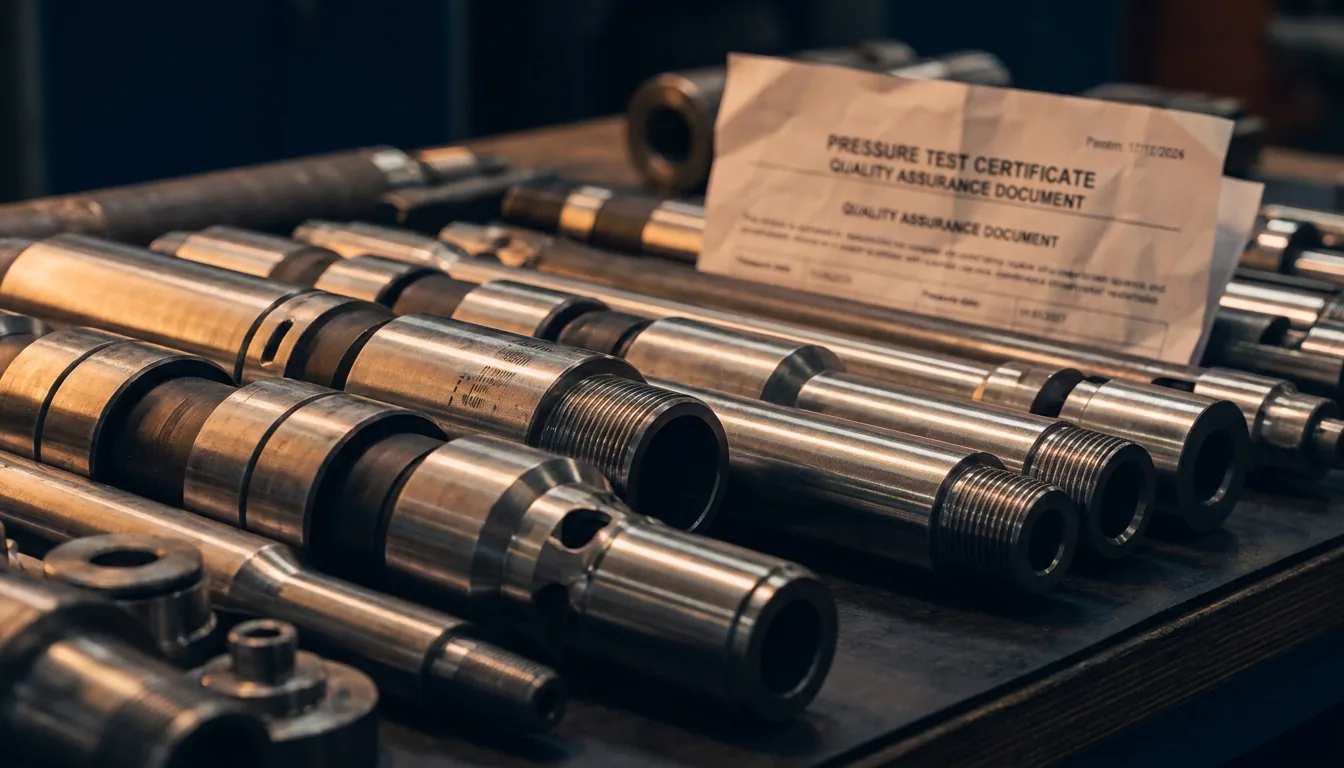
For downhole completion equipment, the reviewer's job is to match the tool that goes into the well to the tool that was tested. The records that make that match are the factory acceptance test (FAT) procedure and its records, the material test report (MTR) traceable to the heat, pressure and function test records, the inspection and test plan (ITP), and dimensional inspection reports. Whether the review happens on paper or as a technical audit at the plant, those records are what it examines.
Petrobras also asks foreign companies to understand its technical requirements, including product homologation processes, and it publishes a Quality Guide for Suppliers. Each of these evaluations ends in a status code on the supplier's record.
What do the Petrobras registration status codes and a full or partial CRC mean
Petrobras records each family's result as a Supply Status letter: D, A, Q, R or X. A full CRC means approval in all four criteria; a partial CRC means approval in at least one.
| Status | Meaning |
|---|---|
| D | Declaration of Interest: legal approval and declared technical capability; no categories appear on the CRC until the supplier qualifies |
| A | Approved in all relevant criteria |
| Q | Technically qualified, with legal and/or economic issues pending |
| R | Rejected in the technical and/or Technical-SMS criteria |
| X | Canceled: at the supplier's request, as a sanction, or because the category was discontinued |
A full CRC requires approval in the Technical, TEC-SMS, Economic and Legal criteria, and a partial CRC requires approval in at least one of them. Either way, a full or partial CRC shows exactly which criteria the supplier has met. None of these codes measures local content, which is the next question for a foreign supplier.
Need expert guidance on the right solution?
Talk to our engineers about your project requirements.
How does Brazilian local content affect a foreign equipment supplier
Brazilian local content is an obligation of the companies holding oil and gas exploration and production contracts, set as minimum percentages and enforced by the ANP. It binds the operator holding the E&P contract, not the registration: Petrobras's registration criteria are legal, economic, technical, technical-HSE, integrity, supply line and resale, and local content is not among them.
The policy is defined by the Ministry of Mines and Energy (MME) and the CNPE, the National Energy Policy Council, and the ANP (Agencia Nacional do Petroleo, Gas Natural e Biocombustiveis) implements it through regulation and enforcement of each commitment. Its main instrument is the minimum mandatory percentage of local content written into E&P contracts.
Local content of goods and services (conteudo local) is measured by ANP-accredited certifying bodies, following the measurement rules in the Cartilha de Conteudo Local. Those rules count value produced in Brazil, so imported equipment, such as a downhole tool machined in Vadodara, is generally counted as non-local unless a local content certification shows otherwise.
Petrobras's offshore completion work centres on the pre-salt in the Santos Basin and on the Campos Basin, and that work runs under E&P contracts. The ANP is consulting on equal opportunities and a right of preference for Brazilian suppliers under E&P contracts, under CNPE Resolution.
For a buyer or distributor, the practical step is to ask two questions before quoting an imported tool: does this contract item carry a local content commitment, and does it require a local content certificate? The notice and the contract decide, not the registration. The other planning question is timing: how long registration takes and how long the certificate lasts.
How long does Petrobras registration take, and how long does a CRC stay valid
Petrobras does not publish a processing time for any stage of supplier registration. A CRC lasts up to one year, and Legal and Economic renewal should be requested 60 days before expiry.
The CRC's validity is set by the earliest expiry among the Technical, Economic and Legal criteria. The Economic and Legal criteria are renewed annually, with the request made up to 60 days before expiry; the Technical criterion is extended automatically while technical approval holds. A pre-qualification register is valid for up to one year from issue and can be updated at any time.
The fixed points in the timeline are the bid windows. Under Act 13,303/16, Article 39, the minimum period for bid submission is 5 or 10 business days for goods, 15 or 30 business days for works and services, and at least 45 business days where the award is decided on best technique. Because a goods bid window can close in 5 business days, finish the legal, economic and integrity stages before the first notice in your family appears.
| Item | Period |
|---|---|
| CRC validity | Up to one year, set by the earliest expiry among the Technical, Economic and Legal criteria |
| Legal and Economic renewal | Renewed annually |
| Renewal request | Up to 60 days before expiry |
| Technical validity | Extended automatically while technical approval holds |
| Pre-qualification register | Up to one year from issue; can be updated at any time |
| Minimum bid windows (Act 13,303/16, Article 39) | Goods: 5 or 10 business days. Works and services: 15 or 30 business days. Best technique: at least 45 business days. |
The remaining practical question for a first-time registrant is what registration costs.
Does Petrobras charge for supplier registration
No. Petrobras charges no fee for supplier registration, so registration is free. Petronect charges its own fees: an access fee to companies interested in public opportunities, and a transaction fee to the winning company in a bidding process. Petronect sets the amounts, and each bid notice states the terms that apply.
Because registration is free, treat any message asking for payment to register, speed up an approval or issue a CRC as a suspicious communication.What changes once the CRC is issued is the way the supplier hears about bids and keeps its record current.
What happens after you receive the CRC
A CRC lets a registered supplier receive email notice of new Petrobras announcements in its families and use the certificate in place of some or all qualification documents. Five practical points follow from that:
- Registered companies receive email notifications when a new announcement on Petronect matches their families.
- In Petrobras tenders, the CRC can partly or fully replace the qualification documents a notice asks for. Registration is not required to bid, since bids are open to anyone who meets the notice.
- Pre-qualification calls are published on Petronect and open to any party. Petrobras publishes the approved list there, and after the appeal period approved companies can be registered automatically.
- Restricted bids for companies that pass pre-qualification are preceded by a Restricted Bid Notice in the Diario Oficial da Uniao (DOU) and on Petronect.
- Keep registration data up to date. A Brazilian entity in the chain, such as the distributor, is suspended on Petronect if its CNPJ shows Null, Suspended, Ineligible or Canceled status with the Federal Revenue of Brazil, until the status is resolved.
A supplier may disclose a valid CRC to buyers, without Petrobras's trademark or graphics. Misuse of the certificate is serious misconduct and carries registry sanctions. All of it depends on what the manufacturer behind the registration can supply.
What does Maximus OIGA Private Limited provide for a Petrobras registration file
Maximus OIGA Private Limited manufactures SpectraMax downhole completion equipment, engineered to order at its plant at Plot 365, Savli GIDC Road, Alindra, Vadodara, Gujarat, India. The range covers packer systems, bridge plugs and cement retainers, liner hangers, flow control systems, float equipment, stage cementing tools, and sealing and packing components. For a buyer or distributor building a Petrobras file, the company supplies the vendor registration documents that Petrobras's criteria draw on, and it completes supplier pre-qualification questionnaires as part of vendor approval.
| Record group | What it contains |
|---|---|
| Company records | Certificate of incorporation and CIN record, GST registration, PAN, bank details on company letterhead |
| Quality records | Quality manual and quality policy, sample inspection and test plan (ITP) |
| Product and test records | Product datasheets, sample material test report (MTR) and pressure test certificate, GA drawings on request |
| Plant | Plant address and machine list; plant audit by customer QA teams by arrangement |
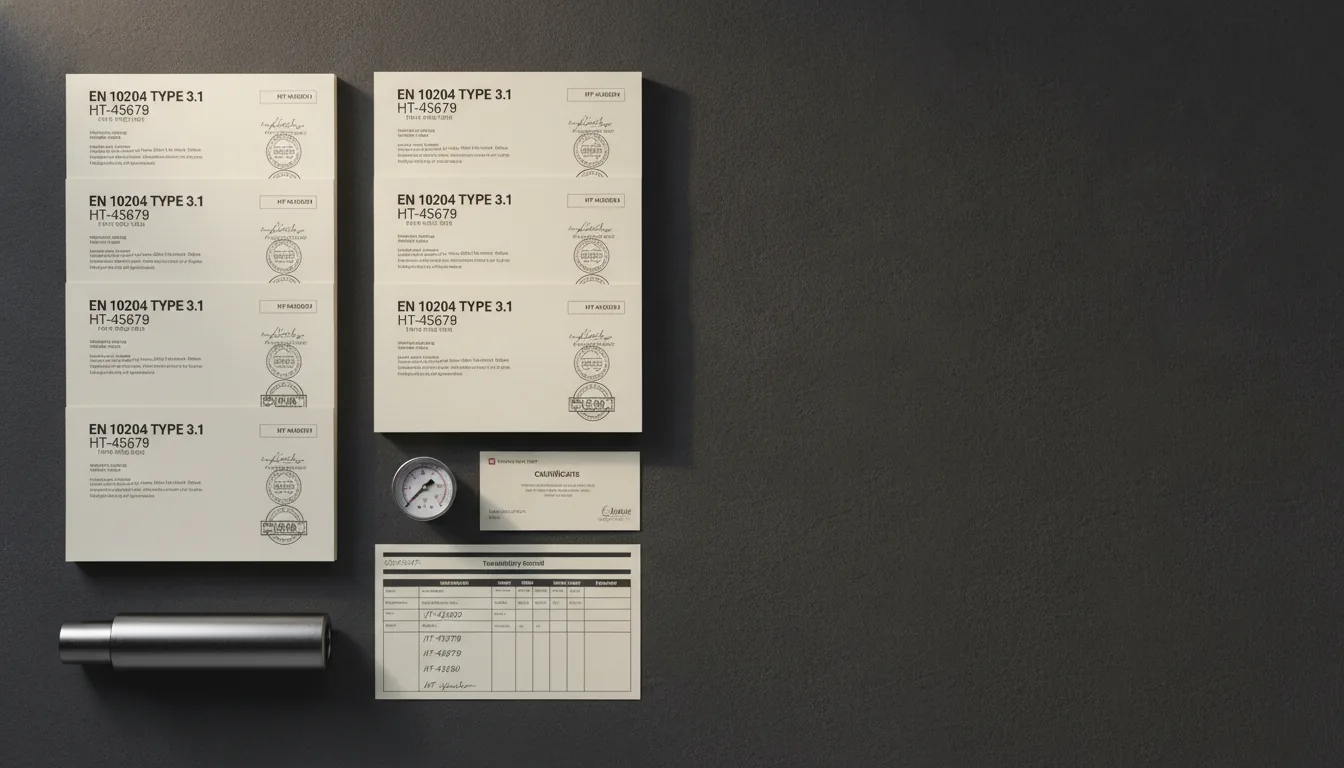
Each shipment carries MTRs traceable to the heat, dimensional inspection reports, a pressure test certificate for each unit and certificates of conformance. Every quotation states the lead time by product class, in bands of 1 to 4, 4 to 12 and 8 to 16+ weeks, so a buyer can set it against a bid window before committing.
On a Petrobras award, the tools reach the buyer through the Brazilian distributor or reseller the buyer works with, linked to the manufacturer under the Resale/distribution criterion, or directly where a notice is international in scope. With the records in hand, the remaining work is deciding what to prepare first.
What should a manufacturer prepare first
Petrobras supplier registration rewards the manufacturer that has its families, documents and distributor link ready before the first notice appears.
- Pick the families for the tools you will supply, and confirm on Petronect that they place you in the Corporate Registry.
- Prepare the legal, economic and integrity documents on Petrobras's templates.
- Assemble the technical and HSE evidence pack: MTR, ITP, FAT procedure, test records and the HSE documents.
- Agree the distributor or reseller link and issue its letter of authorization.
- Put the CRC renewal in the calendar 60 days before the certificate expires.
Until a family is evaluated, the supply line sits at status D, a Declaration of Interest, so completion equipment is judged on evidence rather than declaration, and that evidence is the set of documents a buyer can request now.
Frequently asked questions
How do I register as a Petrobras supplier?
You register as a Petrobras supplier on the Petronect portal, in five stages: create a profile, enter identification data, complete the evaluation questionnaires, check the results and receive the CRC. Foreign companies use the Corporate Registry. Petrobras vendor registration online runs entirely through that portal, and Petrobras publishes an English guide for foreign companies.
What are the Petrobras vendor registration requirements?
The Petrobras vendor registration requirements are set by criterion and by family: legal, economic, integrity, technical and technical-HSE, plus a self-declared supply line and, for resellers, a distribution link. Documents must be valid at submission. Technical requirements vary by family, so the families a supplier chooses decide much of what it has to provide.
Is there a Petrobras vendor registration form?
There is no single Petrobras vendor registration form. The form is the set of online evaluation questionnaires on Petronect, one for each criterion, filled in using Petrobras's templates. Several templates, including the legal representative letter, the commitment letter and the non-bankruptcy declaration, are published in Portuguese and English. A questionnaire cannot be edited after submission.
What is CRCC Petrobras?
CRCC Petrobras refers to the older Certificate of Registration and Classification, the certificate Petrobras used to issue to registered suppliers. Petrobras no longer maintains it: its FAQ states that the Registration Certificate (CRC) replaces the CRCC. A supplier looking for a CRCC today needs the CRC, which is valid for up to one year and issued as a full or partial certificate.
Do you need a CRC to bid in Petrobras tenders?
No. Petrobras tenders are open to any company that meets the requirements of the notice, so a CRC is not required to bid. A CRC still helps: it can partly or fully replace the qualification documents a notice asks for, and registered companies receive email notice of new announcements in their families.
Is Petrobras supplier registration free?
Yes. Petrobras supplier registration is free: Petrobras charges no registration fee. Petronect charges an access fee to companies interested in public opportunities and a transaction fee to the winning company in a bidding process. Petrobras asks suppliers to report any suspicious communication requesting payment for registration to cc-cadastrodefornecedores@petrobras.com.br.
Where are Petrobras tenders published?
Petrobras tenders are published on the Petronect portal, where pre-qualification calls also appear. Restricted bids, open only to pre-qualified companies, are preceded by a Restricted Bid Notice in the Diario Oficial da Uniao (DOU) as well as on Petronect. Registered suppliers receive email notice when a new announcement on Petronect matches their families.
Who wrote this guide and how was it checked?
This guide is published by Maximus OIGA Private Limited, a manufacturer of downhole completion equipment in Vadodara, Gujarat, led by CEO Krishna Tikkisetty. Its sources are the pages of the Petrobras Supplier Channel (Canal Fornecedor) and ANP local content sources, and it was checked by the company's engineering and quality team. It exists to help suppliers and buyers prepare a Petrobras registration file.
Related Blogs
More Information
Related News & Insights
Sonangol Angola Vendor Registration for Completion Equipment Suppliers
How completion-equipment suppliers register to sell in Angola. Registration on the ANPG portal comes first, because only registered suppliers can bid. Sonangol vendor registration comes second and covers Sonangol’s own companies.
November 20, 2026
NNPC Nigeria vendor registration for oilfield equipment suppliers
How NNPC vendor registration on SAP Ariba and NipeX NJQS qualification work, and why the bidder is in practice a Nigerian-registered company. Written for Nigerian bidders and the overseas makers who supply them: who files what, how Nigerian content is scored, and how SpectraMax tools clear into Nigeria.
November 20, 2026
Markets We Supply: Lead Times, Export Documentation and Field References
Maximus OIGA builds SpectraMax completion tools to order at its Vadodara plant. It ships to India, the Middle East, Southeast Asia and the US, with quality records and export papers included in every order.
November 20, 2026
The documentation pack an operator will ask you for
What a downhole tool's documentation pack must contain — mill test reports, heat traceability, the ITP and certificate of conformity — and nine checks to run before you sign off.
October 20, 2026
Best cement retainer and float equipment manufacturers in Asia
Seventeen cement retainer and float equipment makers in Asia: nine make retainers, fourteen float equipment, six both. Compared on seven points, unranked, every claim sourced.
October 20, 2026
Best bridge plug manufacturers in Asia
Thirteen bridge plug manufacturers in Asia — China, India and the UAE — compared on seven points, across drillable, retrievable, composite and dissolvable plug types.
October 20, 2026
Best packer manufacturers in the Middle East
Twelve oilfield packer makers for Gulf wells: five build in the Gulf, seven ship in from India and China. Compared on six points, unranked, every claim sourced.
October 20, 2026

Best liner hanger manufacturers in Asia
Eleven liner hanger manufacturers in Asia — four in China, six in India, one in the UAE — compared on seven points, from spec data and lead times to field running support.
October 20, 2026

Oil well tool manufacturers: global ranking by product family
Twenty-four completion tool makers, majors and independents on the same rules — five global service companies and 19 makers in the US, India, China and the UAE, across six families.
October 20, 2026
Downhole completion equipment manufacturers in Southeast Asia
Eight downhole completion makers with a plant in Southeast Asia, and six that import in — compared on the same points, plus the local-content rules that decide who you can buy from.
October 20, 2026