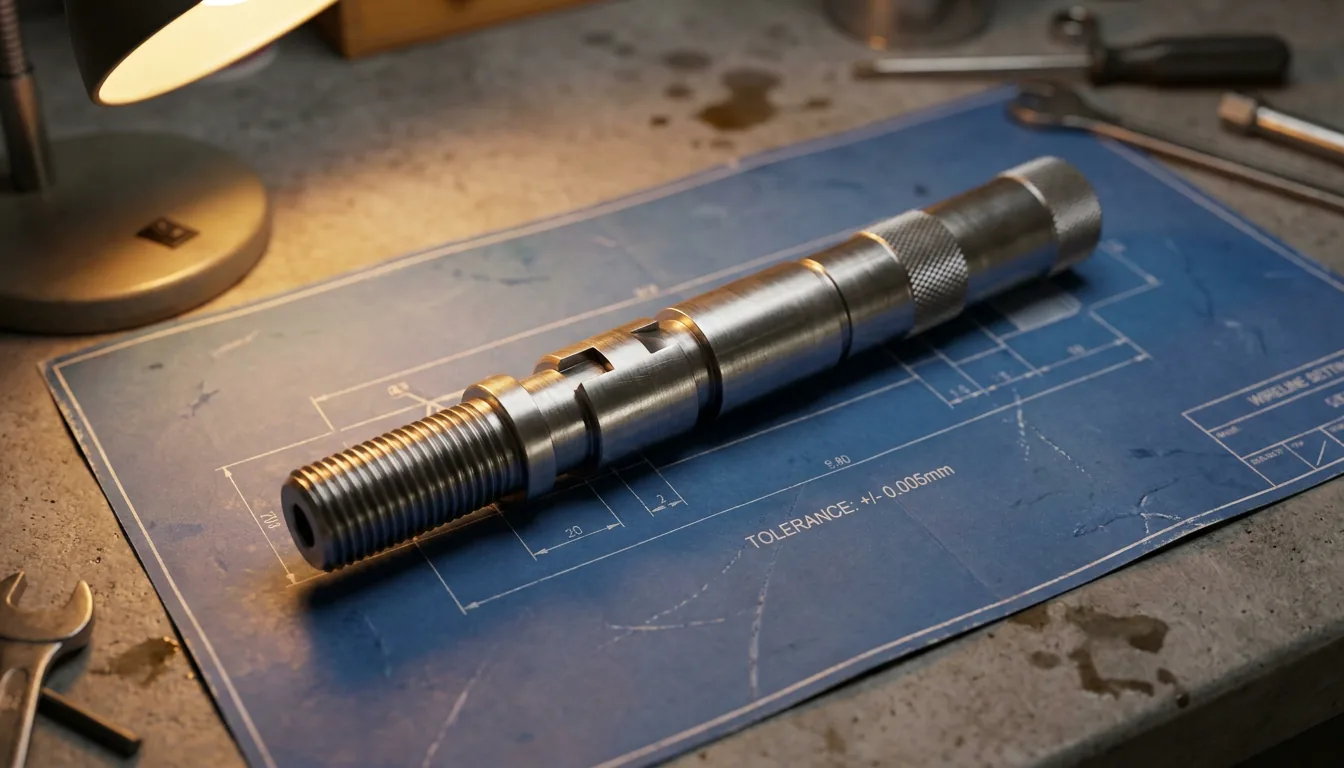
Frac Plug Setting Tools for Wireline Completions
Published:
A frac plug setting tool has to match the plug on four points: stroke, setting force against the plug's shear value, the adapter kit and the power source. Baker-style size 10 and size 20 wireline tools are the common references, and the size follows the plug and the casing.
A frac plug setting tool must match the plug on four points: stroke, setting force against the plug's shear value, the adapter kit and the power source. Baker-style size 10 and size 20 wireline pressure setting tools are the common reference sizes, and the size follows the plug and the casing it is run in.
In a plug and perf completion, the wireline setting tool and the wireline-set plug are a matched pair, and a mismatch shows up as a failed set at depth. The plug goes in on electric line, the tool strokes a setting sleeve against it, and the tool then separates at a shear stud. This guide covers the tool classes, the five matching points (casing and tool size, stroke, setting force, the adapter kit and the power source), pump-down, what changes with composite, dissolvable and cast iron plugs, the failures a mismatch causes, redress between runs, and who supplies both the plug and the tool. The short version comes first.
What should you know about frac plug setting tools, in brief
A wireline setting tool sets a plug by stroking a setting sleeve against a held mandrel until the plug is set, then releasing from it at a shear stud, and the plug and tool must be matched for stroke, force and interface.
- Setting tools fall into four classes: power-charge wireline, hydraulic non-explosive wireline, electric non-explosive wireline, and hydraulic or mechanical tools on tubing or drill pipe.
- Five points decide the match: casing and tool size, stroke, setting force against shear value, the adapter kit, and the charge or power source.
- Baker-style size 10 and size 20 differ in stroke (about 5.7 in. against about 10.8 in.) and in maximum setting force (35,000 lb against 55,000 lb), per the manufacturer's published table. Confirm both against the drawing of the tool in the string.
- A mismatch shows as a preset, a soft set or a tool that does not release.
- Redress is a pre-job question: seal replacement and oil fill decide whether the tool sets.
- When the plug and the tool come from different suppliers, agree in writing who owns the interface.
What does a setting tool do in a plug-and-perf string
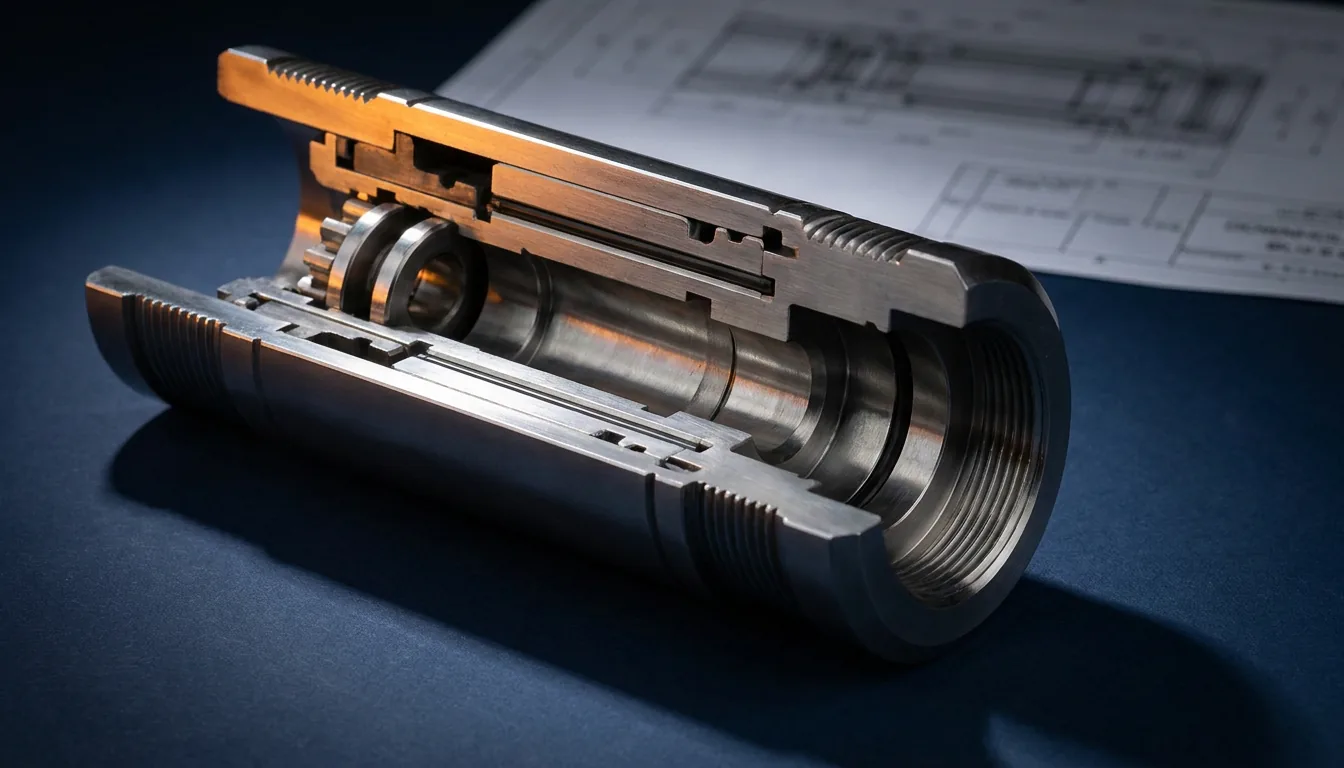
A setting tool converts stored energy (gas pressure from a power charge, hydraulic pressure or an electric motor) into a controlled stroke that sets a plug and then releases from it. The tool does not work alone. In a plug-and-perf string it is one part of the wireline BHA, and the plug depends on it to set.
The tool string runs in this order: the wireline, one or more perforating guns, the setting tool, the adapter kit and the plug. The adapter kit releasably connects the plug to the setting tool and carries the setting force into it. A string may also include sinker bars, centralizers, rope sockets and pump-down fins.
A casing collar locator in the string lets the crew correlate setting depth. The firing signal reaches the tool as an electrical signal down the wireline, and in a power-charge tool it ignites the charge. The tool then works in four steps:
1. The firing signal ignites the power charge, or starts the electric or hydraulic power in a non-explosive tool.
2. Pressure moves the piston and piston rod, which push the setting sleeve down against the plug while the wireline holds the setting mandrel.
3. The plug's element compresses and its slips travel up the cones and bite the casing, so the tool can set the plug.
4. The pull on the mandrel rises until the shear stud shears. The tool and adapter kit come out of the hole, and the plug stays set.
The same tool sets bridge plugs, frac plugs, cement retainers and packers. Patent descriptions note that setting a bridge plug often takes more than 20,000 lb of force. Four classes of tool do this job, and the next section sets them out.
Which setting tool types are in use, and what does each set
Setting tools fall into four classes by what powers the stroke and how the tool is conveyed: power-charge wireline, hydraulic non-explosive wireline, electric non-explosive wireline, and hydraulic or mechanical tools on tubing or drill pipe.
| Class | What powers it | Conveyed on | Typically sets | Confirm before use |
|---|---|---|---|---|
| Power-charge wireline pressure setting tool | Gas pressure from a burning power charge, acting on pistons | Electric line (e-line) | Bridge plugs, frac plugs, cement retainers and packers | Size class, stroke and force against the plug, charge type, seal and oil condition |
| Hydraulic non-explosive wireline setting tool | Hydraulic pressure; some designs show the setting force in real time and allow a surface performance test | Electric line | Bridge and tubing plugs, packers and casing patches | Compatible surface equipment, and that the plug's force demand is within what the tool delivers |
| Electric non-explosive wireline setting tool | Electric power, with no power charge, igniter or oil | Electric line | Plugs whose force demand is within the tool's range | The tool's stroke and force against the plug, and what field redress remains, if any |
| Hydraulic setting tool or mechanical setting tool on tubing or drill pipe | Hydraulic pressure or mechanical movement applied through the string | Tubing or drill pipe | Plugs and retainers set without electric line | Tool size against casing, how the setting pressure or movement is applied, and the connection to the plug |
Baker-style size 10 and size 20 describe the interface and the outside diameter class of a wireline setting tool. The convention comes from the Baker E-4 wireline pressure setting assembly. Several manufacturers make equivalents to the same interface, and buyers search for them as Baker 10 and Baker 20 wireline setting tools. The same Baker-style tool serves as a setting tool for bridge plug, frac plug and cement retainer work.
A non-explosive setting tool removes power charges and igniters and, in some designs, field redress, and some report the applied setting force in real time. They need compatible surface equipment and a plug whose force demand the tool can meet. Which of these tools a given plug can use is a matching question, and the next section sets out the five points.
How do you match a setting tool to a plug
A setting tool match rests on five points: casing and tool size, stroke, setting force against shear value, the adapter kit, and the charge or power source.
| Point | What decides it | What the plug supplier gives you | What the tool supplier gives you |
|---|---|---|---|
| Casing and tool size | The casing the plug runs in sets the plug's outside diameter and the tool size class. Common industry practice pairs size 10 with composite plugs designed for casing of 5 in. and smaller, and size 20 with casing of 5.5 in. and larger. | The casing size and weight the plug is designed for, and its outside diameter | The tool's size class and maximum outside diameter |
| Stroke | The tool's stroke must at least equal the stroke the plug needs to set fully. The setting sleeve moves against the held setting mandrel by the length of the stroke. Too little stroke leaves the plug not fully set or the tool not separating. | The stroke the plug needs | The tool's stroke: about 5.7 in. for size 10 and about 10.8 in. for size 20 |
| Setting force against shear value | The tool must deliver enough force to set the plug, then exceed the shear value of the stud or ring so that the tool releases. | The force the plug needs and its shear value | The tool's maximum setting force: about 35,000 lb for size 10 and about 55,000 lb for size 20 |
| Adapter kit | The kit joins the plug to the tool, so its threads, setting sleeve and shear member must suit both. | The adapter kit part and thread, and the shear member it carries | The tool's connection and setting sleeve details |
| Charge or power source | A slow-set charge and a standard charge are offered for both sizes, and the choice follows the manufacturer's specification guide. For a non-explosive tool the point becomes the tool's own power and its surface equipment. | The force demand the charge or power source must meet | The charge options for the tool size, and the specification guide that selects between them |
The manufacturer's published table for the Baker-style size 10 and size 20 wireline pressure setting assemblies lists a maximum setting force of about 35,000 lb for size 10 and about 55,000 lb for size 20. Stroke is about 5.7 in. for size 10 and about 10.8 in. for size 20, nearly double. Maximum outside diameter is about 2.75 and 3.25 in. for size 10 and about 3.8 and 4.125 in. for size 20. The standard maximum hydrostatic pressure at setting depth is up to 15,000 psi for both sizes. These are the manufacturer's figures for the named tool sizes, not ratings of any other tool, so confirm each one against the drawing of the tool in the string.
Matching a setting tool to the plug always comes back to the tool's own published limits. Setting force depends on the well conditions and on the device being set. The manufacturer says devices from other makers should be tested with the tool, and that the specification guide for each tool must be followed strictly when choosing the size. One published plug design shears a ring at 30,000 lb, which shows why the shear value belongs on the requisition beside the stroke. A correct match on paper still has to survive the trip to depth, and that is the pump-down stage.
What does pump-down ask of the setting tool and the tool string
Pump-down stresses the setting tool's seals and the plug's assembled position, because the string is pumped to depth under hydrostatic pressure and fluid flow. The wireline BHA is run to the kickoff point, and the crew then starts to pump down to target depth, so the match has to hold through the trip as well as at the set. Four demands follow.
- The plug's slips and element must stay as assembled. Fluid bypass can cause premature setting or make the element swell, and plug providers give pump rate and speed limits to prevent it.
- The tool's seals must hold against hydrostatic pressure. In one published account, a gas-chamber seal failure floods the power charge and causes a premature stroke, and the author names it the largest cause of presets.
- The tool's hydrostatic rating must exceed the pressure at setting depth, so check the manufacturer's published table (up to 15,000 psi standard for size 10 and size 20) against the well, and confirm it against the drawing of the tool in the string.
- The string should carry a casing collar locator, so that setting depth can be correlated.
Tool string length, crossovers and recoil also matter. One manufacturer's published concerns are that a short tool may lack damping stages, a crossover adds air volume that can reduce setting power, and recoil can damage perforating guns and running tools in the gun string. Strings may also include pump-down fins and sinker bars, and the tool supplier should confirm the tool works with every part of the string. Treat these as questions for the tool supplier. The plug types that run in this string add their own differences at the setting stage.
Need expert guidance on the right solution?
Talk to our engineers about your project requirements.
Composite, dissolvable and cast iron plugs: what changes at the setting stage
The setting stage depends on each plug's own stroke, force and shear value, not on the plug's material class.
| Plug class | What the setting stage depends on | Watch for |
|---|---|---|
| Composite plug (the most common construction) | The plug is matched to a tool size by casing size, and it is designed around the tool's stroke and force limits. | The plug's stated stroke and shear value against the tool's |
| Dissolvable plug (no mill-out needed) | The plug is set like other wireline-set plugs through an adapter kit. It begins to react to wellbore fluid once exposed, so run time before setting is part of the plan. | String delays and pump-down time |
| Cast iron bridge plug | Cast iron bodies are heavy and add string weight, so string weight and pump-down speed matter. Wireline-set cast iron bridge plugs are set on electric line. | String weight and the adapter kit |
The setting differences between a composite frac plug, a dissolvable frac plug and a cast iron bridge plug come down to each design's own envelope, and no published source ranks the three by the force they need. Whether a plug is millable or drillable decides how it leaves the well, not how it sets. The full comparison of plug materials is covered in separate guides, and this section stays with the setting stage. When any matching point is wrong, the failure shows at depth, and the next section covers what that looks like.
What goes wrong when a setting tool and a plug are mismatched
A setting tool and plug mismatch shows up as one of four failures: a preset, a soft or incomplete set, a tool that does not release, or a stuck tool after a shear stud fails to shear as designed. Each one is a failed set, and each has a cause that can be checked before the run.
- A preset starts with a gas-chamber seal failure. The charge floods and hydrostatic pressure causes a premature stroke. The E-4 wireline setting tool uses seven seal sets, so the seal check covers all seven, and seals are replaced after every run.
- A soft set comes from a leak at the oil-chamber or piston-rod seal, which lets hydrostatic pressure work against the setting force. Too little oil limits the stroke and leaves an incomplete stroke, and too much oil can cause a premature stroke through thermal expansion. Fill the oil to the manufacturer's procedure.
- A tool that does not separate from the plug means the force was too high or the stroke too long for the tool. Check the stroke and force against the plug's requirement, using the matching table above.
- A stuck tool follows when shear bolts or studs do not shear as designed. That can leave the tool stuck in the hole or fail the wireline, and a stuck tool becomes a fishing job. Check the shear value and the condition of the stud.
These are failures of a pair, so the plug supplier and the tool supplier both appear in the root cause. This guide states no cost for any of them. Each costs time on location, and a stuck tool adds a fishing job to it. Keeping the tool able to set depends on what it gets between runs.
What does a setting tool need between runs
A power-charge setting tool needs a full redress between runs: seals replaced, oil refilled to level, trapped gas bled. Redress returns the tool to a condition where it can set again, and it is a procurement question as much as a field task.
- O-rings are replaced after each use, and each one must be in perfect condition before it goes back in.
- The oil level is filled to the level the temperature calls for.
- Trapped pressure is bled before the tool is taken apart.
High-pressure gas stays trapped in the tool after firing, so bleeding comes before disassembly. Do not bleed the tool while it is suspended from the wireline. The manufacturer's design uses a piercing disk bleeder system, and the older manual bleeder valve on sizes 05, 10 and 20 is obsolete. Point vents away from people, work in a restricted area and wear personal protective equipment. Follow the manufacturer's published procedure for every step.
Three questions belong in the pre-job meeting:
- Who redresses the tool, and do they understand its operation, seal replacement and oil fill?
- Are the redress kits for this tool size on location?
- Is the procedure the manufacturer's published one?
Some non-explosive tools are designed to cut or remove field redress. Redress covers one tool, and the question of who stands behind the plug and the tool together comes next.
Who supplies both the plug and the setting tool, and who owns the interface
The interface between a plug and a setting tool is owned by whoever supplies the adapter kit and states the stroke, force and shear value, so buyers should ask for that in writing.
Who supplies both the plug and the tool decides where that ownership sits. A plug and its setting tool reach the well by one of three routes: one supplier makes both, the plug supplier provides the adapter kit for a Baker-style wireline tool that the wireline company owns, or the plug and the tool come from different suppliers. In every route the adapter kit is the only part that touches both, so it is where ownership has to be settled.
Ask the plug supplier and the tool supplier for these six items in writing:
- The interface drawing that shows how the plug, the adapter kit and the tool connect.
- The adapter kit part and thread, and who supplies it.
- The stroke and the setting force the plug needs.
- The shear value and the interface tolerance around it.
- The tool sizes the plug was tested with.
- Who is responsible if the tool does not release.
Maximus OIGA Private Limited makes SpectraMax completion tools engineered to order at its plant in Vadodara, Gujarat. Its catalogue lists cast iron bridge plugs for wireline setting, the SpectraMax WBP Wireline Set Bridge Plug and the Cobra Slim Cap Wireline Set Slim Bridge Plug, along with the SpectraMax HM Tubing Set Bridge Plug and the SpectraMax PCR Mechanical Set Cement Retainer. The catalogue also lists the SpectraMax Force Hydraulic Setting Tool, which uses hydraulic pressure to trigger mechanical movements and sets packers and bridge plugs. The company describes its hydraulic setting tools as setting plugs and retainers on tubing or drill pipe.
Send the plug type, casing size and setting interface, and engineering confirms in the quotation what Maximus OIGA Private Limited supplies against the interface drawing. A complete requisition covers ten points, and the checklist below lists them.
What should a setting tool selection checklist cover
A setting tool selection checklist covers ten points, in the order a requisition should answer them.
1. Casing size and weight.
2. Plug design and outside diameter.
3. Tool size class.
4. The stroke the plug needs, against the tool's stroke.
5. Setting force against the plug's shear value.
6. Adapter kit and threads.
7. Charge or power source.
8. The tool's hydrostatic rating, against the pressure at setting depth.
9. Redress: who does it, with which kit and to which procedure.
10. Who owns the interface and answers a failed set.
Specify together, not in sequence: name the plug and the setting tool on the same requisition, and confirm redress kit availability before the campaign rather than between stages. The interface is the one place both suppliers touch, so name an owner for it.
Frequently asked questions
What is a Baker 20 setting tool in wireline plug setting?
A Baker 20 setting tool is a Baker-style size 20 wireline pressure setting tool, the E-4 size 20 assembly. It uses gas pressure from a power charge to stroke a piston and set bridge plugs, frac plugs, cement retainers and packers on electric line. The manufacturer's published table lists a maximum setting force of 55,000 lb and a stroke of about 10.8 in. Confirm both against the tool's drawing.
What is the difference between a size 10 and a size 20 setting tool?
A size 20 wireline setting tool has about twice the stroke of a size 10 (about 10.8 in. against about 5.7 in.), a higher maximum setting force (55,000 lb against 35,000 lb) and a larger outside diameter. A Baker 10 setting tool for wireline work suits composite plugs designed for casing of 5 in. and smaller, and a Baker 20 setting tool suits 5.5 in. and larger.
How does a wireline setting tool set a frac plug?
The tool holds the plug's mandrel while its setting sleeve is pushed down against the plug, which compresses the element and sets the slips. When the pull on the shear stud reaches its shear value, the tool separates and the plug stays set.
Can a frac plug be set without explosives?
Yes, a frac plug can be set without explosives. A non-explosive setting tool is powered hydraulically or electrically and needs no power charge or igniter, and some report the applied setting force at surface. The plug's force demand must still be within what the tool delivers.
What happens if the setting tool and the plug do not match?
A mismatched frac plug setting tool and plug produce one of four results: a preset, a soft or incomplete set, a tool that does not separate from the plug, or a stuck tool. The cause traces to stroke, force, shear value or seal condition, so confirm all four before the run.
Related Blogs
.webp)
More Information
Related News & Insights
Incoming Inspection: How to Verify a Supplier's Certificates
Incoming inspection verifies a supplier's certificates against the purchase order, the marking on the tool and a source the supplier doesn't control before the tool is accepted. The checks run in order: document set, certificate type, licence marking, heat number, physical measurement. A mismatch means the tool is held and a non-conformance report is raised.
November 24, 2026
Insulating Packer Fluid: Selection for Thermal and Steam Injection Wells
Insulating packer fluid sits in the annulus above the packer and cuts heat loss from tubing to casing by limiting conduction and convection. In steam injection and SAGD wells, choose it together with the packer, based on conductivity, high-temperature behavior, elastomer and casing compatibility, and removal at workover.
November 24, 2026
Shell and BP Supplier Qualification for Completion Equipment
Shell and BP both pick suppliers through SAP Ariba sourcing events, after assessing financial position, technical capability and the ability to deliver safely. Qualification starts with the buyer's invitation, so equipment manufacturers should have their records ready before it arrives and register second.
November 24, 2026
HSE Documents an Oilfield Equipment Supplier Must Provide
This guide covers the HSE documents an oilfield supplier submits for vendor registration: the policy, manual, risk and legal registers, emergency plan, incident, training and audit records, and any ISO 45001 or 14001 certificate. It shows what each one must contain, and how operators check it against the sites and work it claims to cover.
November 20, 2026
Which API Specification Covers Which Tool, and How to Read a Licence Number
A certificate on a letterhead isn’t proof. This guide maps common completion tools to the API specifications that cover them, explains how an API Monogram licence number is built, and shows how to check it on the API Composite List before a part reaches incoming inspection.
November 20, 2026

Petrobras Supplier Registration for Oilfield Equipment Manufacturers
Which HSE documents an oilfield equipment supplier is asked for at vendor registration, what each one must contain and how operators check them. It covers the HSE policy, manual, registers, emergency plan, and incident and training records.
November 20, 2026
Sonangol Angola Vendor Registration for Completion Equipment Suppliers
How completion-equipment suppliers register to sell in Angola. Registration on the ANPG portal comes first, because only registered suppliers can bid. Sonangol vendor registration comes second and covers Sonangol’s own companies.
November 20, 2026
NNPC Nigeria vendor registration for oilfield equipment suppliers
How NNPC vendor registration on SAP Ariba and NipeX NJQS qualification work, and why the bidder is in practice a Nigerian-registered company. Written for Nigerian bidders and the overseas makers who supply them: who files what, how Nigerian content is scored, and how SpectraMax tools clear into Nigeria.
November 20, 2026
Markets We Supply: Lead Times, Export Documentation and Field References
Maximus OIGA builds SpectraMax completion tools to order at its Vadodara plant. It ships to India, the Middle East, Southeast Asia and the US, with quality records and export papers included in every order.
November 20, 2026
The documentation pack an operator will ask you for
What a downhole tool's documentation pack must contain — mill test reports, heat traceability, the ITP and certificate of conformity — and nine checks to run before you sign off.
October 20, 2026